MESDAMES ON THE MOVE: MAY 2023

It’s spring and the Mesdames have come roaring back from winter with events, publications and even better, terrific recognition from our writing communities!

Do come out and meet us in person at our many events in May and June!

CONGRATULATIONS!!

MME MELISSA YI WINS THE DERRINGER!

Mme Melissa Yi

Mme Melissa Yi’s is the winner of this year’s Short Mystery Fiction Society’s Derringer Award in the “short” Short Story category for her story “My Two Legs”. It appeared in Alfred Hitchcock’s Mystery Magazine, Issue September/October 2022.

“My Two-Legs” is told from the point of view of a loyal dog desperate to save his human, his “two-legs”, who’s been the victim of a terrible crime. Melissa based her hero on her family’s beloved late dog.

Medals will be given out to the winners of the four Derringer categories at Bouchercon 2023 in San Diego.

And Melissa’s reworked fairy tale, “White Snow and the Seven Dreams” placed third for the Joy Kogawa Award for Fiction, beating out over 200 entries!

CWC AWARDS OF EXCELLENCE – FOUR NOMINATIONS!

The Mesdames and Messieurs of Mayhem hit it out of the park this year with four nominations for the CWC Awards of Excellence, three for Best Short Story and one for Best Novella! And two of the stories are from our fifth anthology, In the Spirit of 13, edited by Donna Carrick and published by Carrick Publishing.

The winners of the Crime Writers of Canada Awards of Excellence will be announced on Thursday, May 25th, 12 noon via video. Here’s the link: Crime Writers of Canada – Crime Writers of Canada – Home (crimewriterscanada.com)

Sylvia Warsh’s chilling thriller, “The Nature of Things”, was published in Ellery Queen Mystery Magazine, Issue May/June 2022. A divorced man vacationing at a cottage learns that spying on his neighbors and fantasizing about them can prove fatal.

Blair Keetch’s story, “To Catch a Kumiho”, is part of In the Spirit of 13. Korean mythology tells of a fox-tailed demon or kumiho. Little does the P.I. hero of Blair’s story suspect that he’s about to encounter one in human form…

M. H. Callway has two nominations. The first is “Must Love Dogs – or You’re Gone” for Best Short Story. In this black comedy, Frieda must work off her late ex-husband’s debt to a Russian gangster in a dog grooming salon. It appeared in Gone, An Anthology of Crime Stories, Red Dog Press, November 2022.

Her novella, Amdur’s Ghost, is also part of In the Spirit of 13. In this adventurous tale, Dr. Benjamin Amdur, newly appointed to the most obscure public health department in Ontario, is forced to search for his missing predecessor by the new Minister of Health. With no leads, he consults the town’s self-proclaimed medium.

NEW BOOKS AND PUBLICATIONS!

Mme Rosalind Place‘s story “Too Close to the Edge” will appear in the horror anthology, Dastardly Damsels, Crystal Lake Publishing. Publication date to be announced.

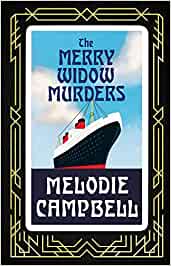
Melodie Campbell’s new book, The Merry Widow Murders, published by Cormorant Books, will be released on Saturday, May 13th . The official launch event is at MOTIVE, Crime and Mystery Festival, Toronto, June 2, 2023.

1928 AT SEA: Lucy Revelstoke, unconventional widow of a young British lord and daughter of a Canadian mobster, is crossing the Atlantic on a state-of-the-art ocean liner. Rubbing elbows with the era’s elite and reconnecting with her husband’s aristocratic friend, Tony, should make for a swell trip. But a dead body dumped in Lucy’s stateroom the first night of the voyage threatens to capsize the new life she’s built for herself.


Who is this dead man? And how did he get into her room?


Together with Tony, plus her pickpocket-turned-maid Elf, Lucy rushes to investigate, just steps ahead of the authorities who will certainly dig too deeply into her dodgy Canadian past.

Melodie’s book is already getting great reviews. Maureen Jennings, author of the Murdoch Mysteries and the Paradise Café series, writes:

“Delightful is one of the first words that come to mind. The 1920s shipboard setting is beautifully observed; the plot will keep you guessing and the heroine, is … well …delightful. Not to be missed.”

MAY EVENTS!

TORONTO PUBLIC LIBRARY

Toronto Public Library,  Ashdale-Gerrard Branch: On Thursday, May 4th at 7 pm, Mmes Lisa De Nikolits, Rosemary McCracken, Lynne Murphy and M. Blair Keetch will be sharing their crime writing journeys in the program, So You Want to Be a Crime Writer? Moderated by Mme M. H. Callway. The branch is located at 1432 Gerrard Street East. More details in the link below:

So you want to be a crime writer? : Gerrard/Ashdale : Program : Toronto Public Library

WORD ON THE STREET

Word on The Street takes place at Queen’s Park Crescent, May 27 and 28th, from 11 am to 5 pm at Queen’s Park Crescent, Toronto.  WOTS features over 100 Canadian and Indigenous authors and Canada’s largest book and magazine marketplace. The Mesdames will be sharing a table with Mme Caro Soles.   Mme Lisa De Nikolits is a featured author at Word on the Street on Sunday, May 28th.

We will be posting details of our table location and the names of the Mmes and Monsieurs attending as soon as these become available. Annual Festival | The Word On The Street Toronto

JUNE EVENTS – MARK YOUR CALENDARS!

Toronto International Festival of Authors

MOTIVE Crime and Mystery Festival returns this year from June 2 to 4th at Harbourfront in Toronto. See this link for information on guest authors and tickets.  MOTIVE Crime & Mystery Festival (festivalofauthors.ca)

Mme Melodie Campbell will be a featured author.  The launch of her 17th book, The Merry Widow Murders, will take place immediately after Opening Ceremonies on June 2, as part of the festival. Maureen Jennings will be in conversation with Melodie.

Melodie will be conducting a Masterclass in comedy writing on Sunday, June 4th, 1-2:30 pm: “Kill them with Comedy!  How to write Humour into your Crime Stories.”  And she will be interviewing renowned author Linwood Barclay.

Crime Writers of Canada will be hosting a table where author members can sell their books. Readings by CWC authors are also scheduled. Several Mmes will be partaking in these activities and we’ll be keeping you posted on the details.


CRIME WRITING IN A COLD CLIMATE

Lynne Murphy

Mme Lynne Murphy will be hosting Crime Writing in a Cold Climate, a series of 4 virtual lectures on Canadian crime writers. The lectures are for Senior Adult Services in Toronto Annex and will take place on Friday afternoons from June 2nd to 23rd, 1:30 to 3:00pm.

Lynne is having a guest writer each week. M.H. Callway will speak about police procedurals, Rosemary McCracken about cozies and Melodie Campbell about thrillers. True crime author, Lorna Poplak, will talk about her research on historical Canadian crime. This is a ticketed event.

MORE NEWS AND EVENTS!

Marian Misters

Great news! Mme Marian Misters announced that Sleuth of Baker Street Bookstore in now a used mystery bookstore. What better place to find that rare mystery you’re eager to read? Sleuth’s will also order any book on request. The store will be open Friday to Sunday, every second week from 12 noon to 4 pm as of April 21st. For more details, please visit Sleuth’s website at https://sleuthofbakerstreet.ca/

Peter Robinson, was one of Canada’s greatest crime writers. He won six CWC awards for his writing and his Inspector Banks books became a hit series on ITV (UK). More than that Peter was friend and mentor to many emerging Canadian crime writers, including some of us Mesdames.

Sadly Peter passed away in October, 2022. His Celebration of Life will take place on Thursday, May 18th, 6 to 9 pm at Balmy Beach Club, 360 Lake Front, Toronto. (Foot of Beech Avenue, south of Queen St. East).

It will also be the launch of his last book in the Inspector Banks series, Standing in the Shadows.

Posted in News | Tagged , , , , , , , | Leave a comment

NEWS FLASH! Melissa Yi Derringer Winner!

Melissa Yi

Huge congratulations to Mme Melissa Yi for winning this year’s Derringer for Best Short Short Story! “My Two-Legs” was published in 2022 in the September/October issue of Alfred Hitchcock’s Mystery Magazine.

In her moving story, a loyal dog strives to rescue his wounded human, his “two-legs”, who has been the victim of a crime. Melissa based her animal hero on her family’s beloved late dog.

AND Melissa’s re-imagined fairy story, “White Story and Seven Dreams”, placed third for the Joy Kogawa Award for Fiction!

Posted in News | Leave a comment

NEWS FLASH! CWC Awards of Excellence Shortlists

Great News for the Mesdames and Messieurs of Mayhem!

Delighted that two works from our latest anthology, In the Spirit of 13, (Carrick Publishing, 2022) have been nominated for the CWC Awards of Excellence.

M. H. Callway’s light-hearted satire, “Amdur’s Ghost”, is a finalist for Best Novella. And Blair Keetch’s eerie thriller, “To Catch a Kumiho” is short-listed for Best Short Story.

A big thank you to publisher and editor, Donna Carrick, Carrick Publishing, to copy editor, Ed Piwowarczyk and cover designer, Sara Carrick, for making our anthology a book to be proud of.

From L to R below: M. H. Callway, Blair Keetch, Donna Carrick and Ed Piwowarczyk.

Sylvia Warsh

Two short stories by the Mesdames are also finalists for the CWC Award of Excellence for Best Short Story.

Sylvia Warsh’s scary thriller, “The Natural Order of Things”, which appeared in the May/June issue of Ellery Queen Mystery Magazine and

M. H. Callway’s comedy story, “Must Love Dogs – or You’re Gone” in GONE, An Anthology of Crime Stories, Red Dog Press.

Posted in News | Tagged , , , , , , , | Leave a comment

APRIL STORY: There Be Dragons by Jane Burfield

13 Claws Anthology

Our April story, “There Be Dragons”, is from our third anthology, 13 Claws, (Carrick Publishing, 2017.) All the tales in the collection involve animals…and crime. Many are our dear companions, cats and dogs; others are perhaps, as in Jane’s story, a little unusual.

Jane is a master short fiction author. Her work has won and been short-listed for many awards, including The Bony Pete and the CWC Award of Excellence.

“There Be Dragons” was a finalist for the 2017 CWC Award for Best Short Story. In this story, three children, grieving the loss of their mother, stumble on their strange and mystical heritage.

THERE BE DRAGONS

By Jane Petersen Burfield

For a murder, it was both necessary and satisfying. No one had deserved this fate more. No one could threaten her family and get away with it.

She swam in the darkening water as the sky glowed in the west. Soon the fireflies would dance, and she could forget, just for a while, what she had lost and what she had become.

“There be dragons,” Katie read aloud from the illustration. As she squinted at the map in the old book, the creatures that illustrated the manuscript swirled. A soft green glow lit the map from within. Startled, Katie let the book slip from her fingers onto the dusty desktop.

“We’re not supposed to touch that book,” Georgie mumbled. Ever since their mother had died, he’d spoken in soft whispers.

“I know, Georgie.” She sat in the chair behind the carved oak desk and turned over another page. “Where do you think the dragons lived? I’m not sure I believe in dragons. Maybe they lived a long time ago.”

“Of course, there are dragons,” Georgie murmured. “Mother told us about them. She showed me one once. I remember going out to the garden with her. We ran around the pond. There was a splashing sound, and a dark shadow came out of the water. A man came out of the trees. Mother pushed me behind her. There was a flash of light, like lightning. I think the man ran away.”

“Did you dream that?” Katie closed the book, sending a gentle swirl of dust from the neglected desk flying around the library.

“No,” Georgie said hesitantly. “No! I remember. I remember the eyes in the pond. Something chased the man, and then disappeared. I think it was a dragon.”

“Well, we could use a dragon now. Creepy Gerry is here bothering Emma. He keeps turning up wherever she is. He follows her. And Dad isn’t even aware of it.”

“Emma is old enough to look after herself.” Georgie peered into the forbidden cupboard in the desk where the book had been.

“No, she’s not,” Katie said. “She’s only 17. And he keeps going after her.”

“We’ll watch out for her, Katie, and Grandmother Lowe will be here soon. She’s scary enough to take care of anything. We’d better get downstairs before Dad finds us up here. He’ll be mad if he knows we opened the secret cupboard.”

“Okay, Georgie.” She put the forbidden book back and locked the cupboard door, closing the outer panel in the desk so it couldn’t be seen. “I’ll put the key back in Father’s drawer later when’s he’s having coffee in the garden.”

“I’ll go out with him, Katie. I can keep him away and I love the fireflies.”

“You love that garden. Lilacs, lilies, crickets and the fireflies in the trees. Mother loved it too, I remember.”

“I really like fireflies the most. They are magical.” Georgie headed for the door, listening carefully for anyone outside. In the darkened hall, they turned toward their bedrooms.

***

Peter Drake walked around the dining room to look out on the stone patio. Almost time to summon the kids for supper. Their large stone house sat well back from Barrie Road at the end of a wooded drive. It was very similar to the family home they had left in Wales, complete with dragon gargoyles under the eaves. Now, in the late afternoon, sunlight made the dining room and patio outside a drowsy haven.

He stared at the pond, sitting like a jewel amongst the trees. In certain lights, he swore he could see Maria, but dusk was the best time. The woods were silhouetted against the darkening sky, and the fairy lights danced. He had always loved the little glow bugs that drew him outside. Maria swore they were magical, but he had scoffed at her. Still, unexplained things went on in the garden. Mysteries.

Ginny, their housekeeper, banged the gong for dinner. She loved banging that gong. Ginny had driven Maria mad with the noise, but she had kept their house and lives tidy. How could he deny such a small source of joy to his inherited help?

At dinner, Emma was missing.

“Where’s Emma?” Peter asked. “I thought she was home from her weekend with her friends.”

“She’s tired, Peter. Asked to stay upstairs. I’ll take her a tray later,” Ginny said as she served plates of salad.

Katie stabbed at a crouton, and it skittered across the tablecloth. “She thinks Cousin Gerry is still here. He left this afternoon, thank heavens. I hope he doesn’t come back.”

“Gerald asked to visit,” Peter said. “We don’t have many relatives. I want you to know both sides of your family.”

“We know enough about your family, Dad. We don’t need to see Gerry.” Georgie buttered one of Ginny’s soft dinner rolls, ignoring his salad.

“You don’t know everything about our family. But I’ll tell you more someday when I think you are ready. Now, what did you learn today?”

Living in the country meant that Katie and Georgie had to bus to school and could rarely invite friends over. They had to watch the news or look up a new subject on the computer every day to answer their father’s hated ritual question over dinner. He asked every night, trying to be a good parent.

“We learned about China, Dad.” Georgie passed the butter to Katie, who was pointing at it as inconspicuously as she could so her father wouldn’t get annoyed. “And we looked up some Chinese myths. On Friday, Miss Andrews showed us pictures of dragons in a really neat book. She said they represent power. They were amazing!”

“Dragons are common in many myths and fairy tales. Katie, don’t manhandle the rolls.” Peter turned back to Georgie. “There are beautiful illustrations in the Lang fairy-tale series. I particularly like the ones in The Green Fairy Book. I’ll have to find you my copy in the library.”

“Sometimes, Dad, I wish they still existed. I almost believe they do.”

“Georgie, we talked about that. Evening shadows can make us believe almost anything. But you know they are just shadows.”

“But, Dad, I saw one last year. I know I did!”

“Georgie, you have a vivid imagination, just like your mother.”

Katie and Georgie looked at their dad in surprise. Peter rarely talked about their mother, and it had been more than two years since her death.

After wiping his chin with his napkin, Peter turned to Katie. “Now what did you learn today?”

She winced and began to recite the trivia she had looked up.

***

After dinner, while Ginny cleaned up, Katie headed outside along the path off the patio. The water in the pond seemed flat black, reflecting the fairy dance of firefly light. She walked farther around the pond as sunset shone through the trees. She wasn’t worried about finding her way back to the house after dark. Unusually good night vision was a family trait, her mother had told her. And the house would glow with the lights from the family’s rooms.

She looked into the water, hoping to see the shape she had seen so many times before. Tonight, there was nothing there, or nothing she could see. Katie sat down on the bench installed in memory of her mother. She stroked the carved figures on the wooden side, and thought about her. A ripple on the surface of the darkening water drew her eyes away from the silhouette of the house. As the dark waters started to stir, her hopes grew.

“There you are Katie. I thought I’d join you on your walk.” The water’s surface grew flat again as her father appeared.

Katie took her father’s hand and asked, “What really happened that night? The night Mother died?”

Her dad’s hand clenched slightly. “Why do you want to know, sweetheart? I’ve told you what I can.”

“You never talk about her or about what happened. All I remember is hearing something across the water. And you ran out. Georgie ran behind you, and I tried to stop him. It was getting very dark. I saw you struggling with someone. He broke away. And then something reared up out of the water, hit the man and swept him in. Something very large. Where was Mother? What happened to her?”

Her dad squeezed her hand. “I know it’s confusing. Let’s go back to the house.” They turned away from the water, and started to walk up the patio to the house. “I think it’s time, Katie, for me to tell you what I know. I’m not sure Georgie is old enough yet. Emma knows some of it. We’ll find a time to talk tomorrow when we won’t be interrupted.”

As Katie glanced back at the water, a flicker of light beneath the surface lit a large body in its depths. More flickers of light matched the fireflies above.

***

School the next day seemed interminable. Katie longed to be home for the planned meeting. Emma was waiting for her in the kitchen with juice and Ginny’s ginger cookies when she arrived home. Being away at boarding school had changed Emma. She now wanted to spend time with her little sister.

“Do you think he’ll tell us about Mother, Em?” Katie asked.

“I hope so, Katie. Don’t bug him for details. This is hard for him. You don’t see him every night after you and Georgie go to bed. He sits looking out the window at the pond. He can sit there for hours.”

“Did he ever tell you what happened? I was young then, just 10, and Georgie was very little. He never said anything to us.”

Emma refilled Katie’s juice glass. “He rarely talks about Mother. Or the creature.”

“So you believe in the creature, too?”

“I do, Katie. I do. It protects us. But the creature knows people are scared of it, so it doesn’t often let itself be seen.”

“What happened that night? What did you see?”

“I’m not sure, Katie. I saw something, but I’m not sure what. A man grabbed Mother outside on the patio. He dragged her around the pond. Then something hit him as he held her. I swear it looked like an animal claw. Then it got really confusing.”

The girls heard the front door open and their father call for Ginny. They listened to him settle in the dining room, where they knew he would be looking out the window, even though dusk wouldn’t fall for another few hours. They looked at each other, and went quietly to join him.

“Hello, my little ones. How was your day?” He poured himself a whiskey.

“The usual, Dad,” said Emma.

“Same here” said Katie. “Are we going to talk about Mom before Georgie gets home from soccer?”

“Yes, I guess so. We should.” He walked over to close the dining room door, and sat at the table, his back to the windows. “I’m not sure where to start. There are things about your mother’s side of the family that few people know. But someone found out, and Maria had to be protected.”

“Who threatened her? You’ve never told us this,” Emma said.

“Your mother was…special. Her family goes back a long way in Wales. They were never rulers, but ruler makers. And they had some unusual abilities.”

“Like what, Dad?” Katie asked.

“They were—they are—deeply connected to the old world, to the magical side that most people have forgotten about or scoff at. They understand magic. And because of that, they are in danger.”

“So that’s why we left Wales.” Emma held Katie’s hand tightly in her own.

Peter got up from his chair and came around the shining wood table to stand near them. Taking both their hands, he said, “Yes. Your mother had to leave for her safety. We brought your grandmother and your great-grandmother with us. We thought we’d all be safer over here, but they found us. They sent a man to try to kidnap your mother.”

“Who are they?” Emma asked.

“I’m not sure. I believe they belong to another old family who knows the secrets of power. The man that night tried to capture your mother. She decided she needed to keep you safe.”

“How?” Katie turned to look at the pond.

“Your mother knew you would be in danger if they knew she was still alive.” Peter looked at the girls. “What I’m going to tell you now is a secret, a very important secret. Your mother vanished to protect you. The police believe that she fell or was pushed into the pond, but they never found her body. They only found blood on a rock nearby and ripped material from the dress she was wearing on the rocks and bushes where the water cascades down to the lake. They think her body was swept out of the pond into the lake. The water runs pretty fast over the cliff, especially when it rains.”

“What about the man? Did he drown in the pond, too?”

Peter shifted in his chair, to half face the water. “They never found him. The police thought he may have survived. That he climbed out of the pond at the far end.”

“But so could Mother!” Emma got up to stand by the fireplace where she could see his half-turned face.

“We thought it best for your sake to say she died. I don’t know if we were right.”

“Is Mother still alive?” Katie sat with her shoulders coat hanger-straight, clutching the arms of her chair, looking at her father with wide-open eyes.

“No one is to know what I’ve told you. Including Georgie. He’s too young. You all will be in great danger if this becomes known.”

They heard the front door open, and Ginny’s cheerful voice bounce down from the front hall. “Hello. Anyone here? Oh, there you are.” She peeked into the dining room. “I’ll put the kettle on and make a quick dinner.”

When she’d gone, Peter said: “We’ll talk more about this another time, girls. It’s important that you know. Remember, keep the information secret.”

***

Katie was glad to go upstairs with Emma. Their mother was, seemingly, alive. And if she hadn’t died, where was she? When could they see her?

“Katie, I want to show you something.” Emma pulled her sister into her bedroom. “After mother disappeared, I found her jewelry box hidden at the back of her closet. And in it, I found this.” She held up a very old necklace—a dark red stone shining from an intricately woven gold shield, hanging on a long rose-gold chain. “I think this is what the intruder wanted. I don’t know what to do with it now. I’m nervous to leave it in the house.”

“Wow, Em.” The necklace shone with more brilliance than the window light should have given it. Katie examined it, holding the chain so the pendant flashed. “But why did you take it?”

“I wanted something that was Mother’s. Sometimes I wear it under my top.”

“Be careful, Em. Put it back in the closet. Dad might look for it now that he’s told us about Mother.”

“No, he won’t. He doesn’t like to look at anything that reminds him of her. He doesn’t even go into the living room, because her picture above the fireplace makes him sad.”

Katie shook her head and walked over to Emma’s window. “I don’t know what to think about what Dad told us. If Mother is alive, where is she?”

She looked out at the pond, but nothing was stirring.

***

Peter, too, looked out toward the pond in late afternoon sun. Had he been wise to tell the girls? But if anything happened to him, they needed to know.

He knew she was in the water, benign and protective, but he had never seen her. The ability to see the magic was given only to Maria’s daughters. Neither he nor Georgie could see her. He could hear her, and occasionally he saw a shadow move. Nothing more.

***

Dinner was very silent, except for Georgie talking about the upcoming school play. Peter for once did not question them about what they’d learned that day.

After dinner, Katie waited in the dark hallway outside the dining room. When Peter stepped onto the patio, and walked toward the sunset-lit trees around the pond, she followed him.

Fireflies, lively tonight, hovered between tree branches and above the pond. And in the water, light seemed to shine upward.

“Ah, Katie. It’s a beautiful evening. I thought some fresh air might clear my head.”

“May I walk with you, Dad? I’ve finished my homework.”

“Of course. How are you feeling about what I told you today?”

“Why is all this happening to our family? Why are the people coming here, coming after us? And where is Mother now?”

“They think your mother—and now perhaps you and Emma—know about something they want. It’s hard to explain. The women in our family are special. They have special sight, and special abilities.” He took Katie’s hand. “Have you ever seen anything…peculiar…in the pond? A creature?”

Katie looked up at her dad. “I know there is something in the pond. I’ve never seen it clearly, but I know it’s there.”

“You do have the special sight, then, Katie.”

“Georgie says it saved us from the strange man before Mother disappeared.”

“I was surprised when Georgie said he saw something. Usually only the women have the sight. Maybe young children do, too.”

“Where did this creature come from, Dad? I’m not afraid of it.”

“The creature is a female, like you and Emma, and your mother. It’s part of your heritage, your Welsh family.”

“Can Emma see her?”

“Yes, she has the sight, too. You both see many things other people don’t. Have you ever tried to talk to the creature?”

“Sort of, Dad. Once I sang a lullaby Grandma Lowe used to sing to us. One that Mother knew. There was a ripple. It was too dark to see, but I wasn’t afraid.”

“You were singing to your great-grandmother. We brought her with us from Wales, but she got very sick on the journey, and so she left her human form. She’s the creature, the dragon in the pond. She is powerful and protects you, indeed all of us. There is still danger for her, though. Few people believe that dragons still exist, but…”

“Why do those other people want to hurt us?” Katie slipped her hand back into her father’s as they reached the far side of the pond. From there, the sun reflected on and through the water, and she saw the large, dark shape, followed by a smaller shape.

Peter stopped and looked intently at her. “There is a book, a valuable book that belongs to our family. We brought it with us from Wales, and I hid it in the house. It’s about dragons. In the historian world, it would cause a sensation.”

“I know about the book, Dad. It’s beautiful. The pages shine.”

Peter glanced quizzically at her, but continued. “There’s also a pendant made from a rough garnet set in Welsh gold. It goes with the book. Strange things happen when the two are close to each other, so I hid them in two different places. I think that’s what the men are after. I don’t know how they found out about them, because only our family knows.”

Katie and Peter sat down on the memorial bench, Peter’s fingers automatically searching to rub the inscription to Maria.

“Did you tell Cousin Gerry about it, Dad?”

“Yes, unfortunately. Yes, I did.”

“Dad, I don’t know how to say this. I’ve seen him in the upper hallway, several times, where he has no right to be. He spies on us. And he follows Emma. I don’t like him at all. Neither do Emma and Georgie.”

Peter sighed and looked into the water. “Gerry’s never been as reliable as he could be. But I thought, I hoped, he would protect our family if need be. It’s possible he’s behind it. I hope not. But I don’t know.”

“Is there anyone else who knows?”

“Just your Grandma Lowe. I’ve left a letter for our lawyer in case something happens to me. Other than that, we’ve told no one. I think Ginny suspects something, but I don’t want to put her in danger. She’s a good woman. I’ll be glad when Grandma Lowe returns from Wales.”

The water rippled, and a black tail tip emerged.

“It’s time.” Peter stood up and brought out a silver whistle. “Would you like to meet your great-grandmother, Katie? I mean, meet her again. You knew her in Wales when you were very little.”

“I remember her. Oh, yes, Dad. I would.”

Peter blew one long note on the whistle. Suddenly, a dark green head emerged from the water, followed by a scaled back, bright wings and a pointed tail.

“Margaret, here is your great-granddaughter, Katie.”

The creature pulled herself up onto a rock, and spoke in a gravelly voice. “Hello, little one. You have grown since I last talked with you.”

“Great-grandmother! I am so glad to see you. I wish Mother were here, too.”

The dragon moved closer to Katie and her father. An ethereal wing wrapped around the girl’s shoulders, nudging Peter aside. He looked startled, but then moved back.

“Well, little one, your mother is not too far away. I tell her how you are and what you are doing. She so much wants to come back to you. But your father and I decided that for everyone’s safety, she should stay hidden. Like the locket and the book. I know you have seen both. Keep them separate, and keep them safe.”

“Margaret, I wish I could see you.” Peter looked in the direction of the rock beside the bench. “I’m grateful for your protection of the children.”

“I will always protect my little ones, Peter. Don’t worry.”

Katie watched as she unwrapped her wing. She slid off the rock, and back into the water. Just before her head went under, she said, “Remember, keep the treasures safe. I’ll be here.”

***

The rest of the week slipped by quickly. Emma and Katie would quietly ask their dad questions, but he rarely answered them, pretending Ginny or Georgie were about to enter the room.

On Thursday night, Ginny called Peter to the phone.

“Hi, Peter. It’s Gerry. I’d like to come down.”

“Gerry. We’re busy this weekend. Perhaps another time?”

“I need to see you. Now.”

“Sorry. As I said, we are busy. The kids are in a play at school. Before their holidays begin.” Peter listened as the receiver slammed down. He hoped not to hear from Gerry again.

***

Katie was glad the school year was almost over. On Friday afternoon, she went upstairs to put on her costume and asked Emma for help with her makeup.

Emma applied mascara to Katie’s lashes, and stood back to study her handiwork. “Beautiful. You are growing up fast.”

“I wish Mother could see me.” Katie looked into the old dresser mirror, through silvered reflections, imagining what she would look like in a few years. Her mother’s dress, hemmed up with tape and held in by a belt, outlined her maturing shape. Her copper hair had darkened over the winter, but the summer sun would lighten it back to a blaze. Her green eyes were her mother’s color. She glowed, much like the afternoon sun outside the window.

Trailing skirts just a bit too long for her, Katie stepped down the stairs, surprised to see her father at the bottom. “You look so much like your mother, Katie. I’m not surprised you have her gift.”

“Thanks, Dad.” She paused on the stairs, aware of a new feeling. Power? Could it be power? “We should go. Is Ginny in the car?”

“Yes, ready to go.” Peter called up the stairs. “Georgie!”

“Coming, Dad.” The small boy tumbled past Katie on the stairs. His old-fashioned suit, expertly recut by Ginny from Peter’s old jacket, made him look like he had stepped out of a movie. “I’m excited.”

“I know, son.” Peter locked the front door, and they left for the school.

Nearby, watching them go, was a man dressed in black.

***

The play—a reenactment of village life 150 years ago during Canada’s Confederation—was a success. As the audience clapped for their own children, if not for other cast members, Katie fought an urge to get home. She didn’t want to stay for the reception and the congratulations, the groups of neighbors gossiping, the kids running to burn off energy after sitting still for an hour. She just wanted to go home.

After a few minutes of lemonade, cookies and chat, she whispered to Peter that something was wrong. He looked at her, this little die-cut version of Maria, and knew they must go. Ginny rounded up Georgie while Emma, Katie and Peter headed outside to their car.

The drive through the darkening woods was silent. Even Georgie seemed to feel anxious now. As they turned down their long driveway, a light shone from the far side of the house.

Peter told everyone to stay in the car. He got out and ran around to the back. When he didn’t return, Emma scrambled out the door, followed by Katie. Ginny kept Georgie with her inside the car.

The girls ran around the house to the patio. The dining room door stood open, the glass in shards on the ground. Inside, Peter was wrestling with a man.

Katie tried to run in to help. Emma held her back, but Katie broke free. She shot inside and leaped on the man’s back. He tried to shift her, but she hung on. Peter hit him hard. Katie and the man fell to the carpet.

Peter pulled Katie up and hugged her. She could feel him shaking. He collapsed in a chair, while Georgie and Ginny burst into the dining room. Emma dialed 911 for the police.

“What happened? Who is he?” Georgie pushed away from Ginny and tried to pull off the man’s mask off before Peter grabbed him.

On the floor, the intruder groaned, then stirred.

“Find some rope, or duct tape,” Peter ordered. “Emma, did you call the police? Katie, go to the front to wait for them. Georgie, stay back.”

Suddenly, the intruder scrambled up and dug into his pants pocket. A glittering knife appeared in his right hand. He lunged for Georgie and grabbed him. Keeping an eye on Peter, he dragged Georgie by the boy’s collar across the room to the outer door. “Don’t come any closer, Peter. Give me the book and the necklace and I’ll leave. I’ll keep Georgie with me. Give them to me or he’ll die.”

“Gerry!” Peter recognized the intruder’s voice. “Why are you doing this? These are my children!”

“Money, Peter. Just money.” He yanked Georgie to his feet with his left hand. “You have valuable things. With Maria dead, you don’t need them anymore. And I do.”

“I can’t believe you’d betray us like this, threaten my kids.”

“You heard me.” Gerry moved back, a firm hold on Georgie. “Give me the book and the necklace or Georgie will get hurt.” He brandished the knife. “I mean it.”

Suddenly, Georgie kicked backward hard, striking Gerry in the shin. Gerry yelled in pain and loosened his grip on the boy’s collar. Georgie broke free and rushed out the dining room door.

Katie watched Georgie run toward the bench on the far side of the pond with a cursing Gerry, knife still in hand, in close pursuit. She rushed after them. Georgie and Gerry were beside the water, with Gerry closing the gap between him and the boy. Then, to her amazement, she saw a large golden claw come out of the water. Gerry turned, his eyes widened, and he dropped the knife. The claw reached up, hooked Gerry and dragged him under.

Katie screamed. Light shot up into the sky like fireworks. The water surface quivered with the struggle beneath.

Peter and Emma came running up to her. Katie could only point. Georgie shouted about Gerry in the now-quiet pond.

“Georgie, listen to me,” Peter said, spotting the knife and pocketing it. “The police will be here soon. Tell them Gerry fell into the water.”

“Yes, sir,” said Georgie.

He turned to Katie. “You understand, don’t you, Katie? Do not tell them what you saw. Say the same thing.”

Katie nodded. Looking at the water surface, now lit by fireflies, she couldn’t believe anything had happened. The surface, as smooth and dark as oil, reflected the last of the sunlight. At the far end of the pond, she saw two dark shapes emerge from the water and, with a swirl of wings, lift into the sky.

She heard running footsteps, and knew the police were close. And as they arrived at the pond, she saw two magnificent dragons, one large, and one smaller, fly through the twilight, and out over the trees. She shivered as fireflies danced around her. She knew she had just seen her mother and knew she would see her again. Then she could see nothing but the last of the twilight, shining through the trees.

***

Later that night, after having Ginny’s restorative cups of cocoa, the girls relaxed in Emma’s bedroom. Emma hugged Katie and pulled the garnet pendant out from under her blouse. Soft light infused the space around them.

“That was quite a day, Katie.”

“I’m so glad it’s over. I’m glad Mother is alive. I’m glad there’s some magic in the world. Most of all, I’m glad we’re safe again.” Katie settled back down on the bed.

The sisters smiled as the pendant lit up, fire-like. They would keep it and the book safe. They would keep their family safe.

And soon, Katie knew, they would see what happened when they put the pendant and the dragon book together.

THE END

Posted in News | Leave a comment

BREAKING NEWS: SHETLAND NOIR AND MORE

At the international Shetland Noir Conference, Mme Lisa de Nikolits will moderate a panel, When you don’t know who to trust, with thriller writers Shari Lapena, Gilly MacMillan and Louise Mangos to explore how they use the characters, settings and events of family life to add a dark twist to their tales.

Travelling in time
As a futuristic thriller writer, Lisa also joins historical crime authors, David Bishop and Janet Oakley, to discuss with moderator Dr Jacky Collins (Dr Noir), how they create crime time travel.

Lisa de Nikolits
Lisa de Nikolits

MORE ABOUT THE DERRINGER AWARDS

Another Canadian is a Derringer finalist: Marcelle Dubé, whose story, “Tethered”, is in SinC West’s new anthology, Crime Wave 2: Women of a Certain Age: A Canada West Anthology, edited by our very own Mme Jayne Bernard!

Jayne Barnard
Jayne Barnard
Posted in Anthologies, Awards/Achievements, events, News | Leave a comment

MESDAMES ON THE MOVE: APRIL 2023

Happy Spring, Dear Readers!

April not only opens awards season but also offers new opportunities for growth and ways the Mesdames can reach out to you.

CONGRATULATIONS AND PUBLICATIONS

Congratulations to Mme Madeleine Harris-Callway. Her story, “Wisteria Cottage”, is part of the Malice Domestic Anthology, Mystery Most Traditional!

NEWS AND REVIEWS

Mmes Madeleine Harris-Callway and Rosemary McCracken will be reading at Toronto’s Noir at the Bar, on April 27th at 7:00 PM at the Duke of Kent pub, Upstairs, 2315 Yonge St. at Roehampton.

Madeleine Harris-Callway
Rosemary McCracken
Lisa de Nikolits

Mme Lisa de Nikolitis is giving a reading at Hirut Restaurant, 2050 Danforth Avenue on Sunday, April 2nd at 2:00 PM. This is part of the Bright Lit, Big City series.

Melissa Yi" Shapes of Wrath
Melissa Yi: Shapes of Wrath

Mme Melissa Yi’s latest book, The Shapes of Wrath, was recommended by Ellery Queen Mystery Magazine and has received several glowing reviews.

“Hope has the misfortune of doing her surgery rotations in Operating Room 3 under the attending physician Vladimir Vrac, a womanizing, arrogant, butt-pinching creep.”—Ellery Queen’s Mystery Magazine.
“I nearly jumped out of my seat. A treat to read.”—Amazing Stories.
“Excellent, engaging … definitely a candidate for ‘Best’ of 2023.” —Kings River Life Magazine.

ANNOUNCEMENTS

The shortlists for the CWC Awards of Excellence will be announced on Thursday, April 20th.

The Derringer Awards shortlist has just been released today, April 1st. Congratulations to Melissa Yi for her short-listed short story, “My Two-Legs”!

Melissa Yi
Melissa Yi

Mme Lisa de Nikolitis will be heading to Shetland in June! She is part of the four-day Shetland Noir Festival. She’ll also be part of Toronto’s 2023 Word on the Street. We’ll keep you posted!

Mme Lisa de Nikolitis will be heading to Shetland in June! She is part of the four-day Shetland Noir Festival. She’ll also be part of Toronto’s 2023 Word on the Street. We’ll keep you posted!

Lisa de Nikolits
Lisa de Nikolits

Mme Melodie Campbell will be a featured author at MOTIVE, Crime and Mystery festival, June 2-4, at Harbourfront, part of the Toronto International Festival of Authors.  The launch of her 17th book, The Merry Widow Murders, will take place at the festival, immediately following Opening Ceremonies.  Melodie will teach a Masterclass on Sunday, June 4, 1-2:30 p.m.  Panel assignments are to be announced. We’ll keep you posted.

Melodie’s The Merry Widow Murders is available for pre-order now.

Melodie Campbell

APRIL’S FEATURED STORY

Our featured story for April is  “There be Dragons” by Mme Jane Burfield. This great tale appeared in 13 Claws and was short-listed for the Crime Writers of Canada Award for Best Short Story.

Jane Petersen Burfield
13 Claws Anthology
Posted in Anthologies, books, News | Tagged , | Leave a comment

MARCH STORY: “Rubies for Romeo” by Jayne Barnard

Our March story is from our newest anthology, In the Spirit of 13, (Carrick Publishing, 2022) where we took “spirit” to mean the supernatural, the debunking of same or simply alcohol!

Jayne Barnard writes crime and suspense fiction in which women reclaim their power. She is the author of two acclaimed series: the award-winning Falls books featuring ex-Mountie, Lacey McCrae and the YA Steam Punk, Maddie Hatter adventures.

Sue’s husband, Steve, is directing a play set in an old mansion famed for an unsolved death and a jewel theft, Sue faces down strange lights, ghosts and a secretive psychic to unravel the century-old mystery of the missing necklace.

RUBIES FOR ROMEO

By J.E. Barnard

“Young Julia was found unconscious the next morning.” The tour guide pointed up the narrow back stairs. “Right there on that landing.”

I mouthed “tour group” to my husband, Steve. He backed the other end of our rolled canvas down the rear porch steps so I could step sideways, away from the half-open kitchen windows. The aged planks groaned under my feet. Had they heard? We weren’t supposed to start setting up until they’d all gone.

Someone inside asked, “Did she recover?”

“No. She never regained consciousness.” The guide began explaining early 20th-century cooking arrangements. But the next questioner wasn’t interested in the gleaming copper kitchen boiler, the pinnacle of household tech in prewar Penticton. Pre-Great War, that was.

“Was it murder?” he asked.

“Have you held a séance?” someone else called out. “Maybe she could tell you where the necklace is.” My arms were wobbling like wet linguini under the weight of the roll, but the others kept asking until the guide gave in, or up, and offered further details.

“Although her official cause of death was brain injury from falling down the stairs, gossip at the time was that her heart was broken before her head was, either from the necklace accusation or by a young man. Both theories are explored in the mystery play that starts tonight. See the poster in the gift shop. Now, if you’ll come this way. Carefully. The treads are steep, and there are no handholds on these stairs.”

“I bet she was a star-crossed lover,” a woman at the rear said.

“Imagine carrying cans of hot water up those stairs every morning,” another said. “In a long skirt, too. They should have run a pipe from the boiler up through the ceiling.”

As her voice receded up the narrow back stairs, I eased open the kitchen door. Empty. Whew.

“All clear,” I told Steve.

As another tour began its thudding descent of the main stairs, timed to keep it from colliding with the one going up the back stairs, we scuttled through the restored kitchen, along the butler’s pantry with its glass-fronted cupboards, and into the dark-paneled main hall. I angled my end to line us up with the library’s double doors.

Steve whispered, “Stop.”

“No,” I hissed back. “They’ll catch us in—”

The library doors’ ornate handles dug into my back. Smothering a yelp, I gripped the roll awkwardly with one arm while the other groped behind me for a handle. I barely got it turned before the first tourists’ feet appeared through the mahogany stair railing above Steve’s head. He shoved the roll end, and me, out of the hall. I stumbled backward, caught my heel on the carpet, and staggered sideways to collapse into an upholstered armchair. Steve one-handed his end and softly shut the library door.

“Oh, it’s only you,” a woman’s voice said.

This time, I yelped.

Clapping my hand over my mouth, I lifted my head. The woman who played the medium in my séance scene was peering from the servants’ passage in the back corner.

“Thalia?” Steve lowered the roll to the floor. “You’re here early.”

I sniffed. “And what’s that smell?”

“Incense.” She stepped into the room, trailed by a teen heartthrob in the old movie-idol mold, with full pouting lips, eyelashes fit for a mascara commercial, and dark soft curls brushed off his tanned forehead. “Tib, meet Steve, our director. This is Sue, who plays Mrs. Gander opposite me and Angie. My nephew here is Mercutio in the high school play.”

The boy smirked. “In fair Verona, where we lay our scene.

Steve said, “From ancient grudge break to new mutiny, where civil blood makes civil hands unclean.” As the youth gaped, he went on, “And speaking of unclean—incense? Do I even want to know?”

“My method,” Thalia said loftily. “Don’t worry. We hid in that back passageway while the tour group was in here. They didn’t see us.”

“Sneak out the way you came,” Steve ordered. “Unless you both want to help haul props up from the outside cellar.”

“Tib can,” Thalia said, and pointed. The boy followed Steve into the narrow passage. Their footsteps faded along behind the library wall toward the kitchen.

“Incense, huh?” I asked Thalia as I fanned my overheated face. “Some tourist just suggested a séance. Want to ask the ghosts about the lost necklace?”

“Shh,” she said, and cocked a finger toward the hallway doors.

“This is the Italian countess, who owned the necklace.” It was Maureen, the historic house’s manager, talking. Having taken the tour when our community theater was writing our mystery play, I knew they wouldn’t come in here. They’d done the library before the kitchen.

She went on, “It held five rubies: the main one, a large pendant surrounded by tiny diamonds, bracketed by filigreed golden wings, each anchored by a smaller ruby, and ending in a ruby chip.”

“This what the old lady’s wearing?”

“She had a similar sapphire set.” Maureen’s voice corralled their attention again. “There’s a very old photo of the rubies in the gift shop. The countess and her nephew, this house’s first owner, both died in the Great Flu of 1918. Most of the family’s wealth vanished in the Crash of ’29. Although the descendants searched the place many times before they were forced to sell in 1940, the ruby necklace was never found.”

“Are any of them folks still around?” someone asked.

“Some descendants still live in the valley,” Maureen said. “If you dare visit after dark, there’s a mystery play starting tonight. Great prizes for those who guess the correct solution to the necklace’s disappearance. Tickets are available in the gift shop. So are necklaces like the missing one. Not real rubies, naturally.”

She led them toward the gift shop, in what used to be a visitors’ parlor by the front door. I slipped out of the library behind them and settled onto a bench to rest my feet. That canvas roll and five others had to be hung in the play’s rooms in the next three hours to hide smoke detectors, fire exits and other modern fittings. The special effects equipment had to be set up, plugged in, and tested before showtime. I wanted supper, too.

I wasn’t scheduled to play the part of Mother Gander tonight, so I’d be at my watercolor portrait class, working on my picture of a young girl’s face, with chestnut hair rolled back from her forehead and the collar of her lacy blouse rising almost to her chin. It was my most complicated portrait ever, and I was determined it would turn out well enough to hang here.

Two senior visitors left the gift shop with the pretty pink bags used for jewelry purchases. As they loitered for a last look at the framed photographs, one said, “I bet the girl stole them for some man, and then he ran out on her. She probably threw herself down the stairs. Especially if he’d seduced her. It would be beyond shameful for a girl of that era.”

The other tapped a picture frame. “At that age, they’re so into the dramatics. You know the actress who played Juliet in the Zeffirelli version of Romeo and Juliet was only 13? Perfect casting, but ick.”

“It seemed so romantic when we watched it for high school English,” her companion said. “And not a single teacher pointed out it was a tragedy, not a great love story to be emulated. Can’t you just see this place when they lived here, though?” She sighed.

The tour group trickled in pairs and trios out the front door, letting in wafts of sun-warmed air and the crispy scent of dried leaves from the 100-year-old elms around the property. When the last visitor was gone, Maureen scooped a wayward golden cluster from the floor and plopped onto the bench beside me, twirling the leaves between her hands.

“Sorry we ran long. The ladies always moon over a past that was a lot more romantic and sanitary than the reality. And a young man asked about the necklace dozens of times. I hope he doesn’t sneak back here to hunt for it. We don’t need anybody else getting stuck in the old ductwork.”

“There’s open ductwork?” Mike, our stage manager, entered from the kitchen with a plastic bin in his brawny arms. “Hazards like that should have been closed off before any tourists were allowed.”

He probably pictured a hole in the floor big enough for someone to fall through, but I knew what Maureen meant. The old cold-air return holes in all the rooms were rectangular openings in the corners, a bit larger than a human foot and covered in sturdy brass grillwork.

“They’re all screwed down good now,” Maureen told him. “This was three seasons back, when the house was mostly unrestored. Two young teens decided to hide here after their tour and spend the night hunting for the necklace. I don’t know why their parents didn’t realize they weren’t there at supper time, but 911 got a call near midnight that one of them was stuck. They’d pried up a cold-air grate in a bedroom floor. One of them was feeling around between the floorboards when his shoulder got wedged.” She yawned and shook out her shoulders. “That’s why we count noses after every tour now. I’ll start my shutdown rounds while Karen’s finishing her group. Your volunteers will make sure nobody’s left in here tonight, right?”

#

We got the backdrops set up in almost record time. Mike mounted his lighting and special effects equipment in the main floor servants’ passages and on timers in the upstairs closets. Costumes and makeup tables were set up in an unrestored back bedroom. I escaped as far as the front porch, wishing “break a leg” to the arriving actors, before Steve caught up with me.

“Wait! I need you for Mother Gander tonight.”

“It’s Elaine’s turn. I’m going painting.”

“She had to take her mom to the hospital in Kelowna.”

Who could argue with the medical needs of elderly mothers?

The way the play was set up, adults from the community theater troupe held down some roles, and the rest were high school students doing it for Drama credits. Most parts were double cast to work around everyone’s schedules. Since each playlet took place in a different room, I hardly saw any of the cast beyond my own trio. Thalia had insisted on being the only mystic, so she was on every night and matinee. Elaine and I alternated in the role of Mrs. Gander, and our daughter was played alternately by students[m1] , Angie and Marnie. We’d both rehearsed with each girl, so my taking Elaine’s place tonight wasn’t a stretch, except that Angie, Daughter One, was in a terminal sulk over not getting to play Juliet in the school’s production. She’d mentioned at every rehearsal that her boyfriend was stuck playing Benvolio, although he’d auditioned for Mercutio. Daughter Two, Marnie, was a volleyball jockette taking Drama 20 for an easy credit. She did her part cheerfully with no unnecessary dramatics. There was an understudy for both girls, but I’d only met her once and wouldn’t know her if I saw her on the street. I’d take her over Angie any day, though. She couldn’t possibly be any more annoying.

#

Two hours later, I settled my floral straw bonnet atop my curly gray wig and skewered it with a hatpin. At the other makeup table, Angie was painting herself a smoky eye more worthy of an Instagram star than of a sheltered Edwardian girl. After checking that my fan and spectacles were in their proper pockets, I left her to it. When I saw her next, outside the library, she was bidding her bland, sandy-haired boyfriend a Juliet-worthy farewell, as if they faced months of exile rather than two hours on a Tuesday evening. I coughed loudly to announce my presence. The pasty-faced Romeo—er, Benvolio—slouched away toward the kitchen exit. At least, I hoped he was exiting. We didn’t need random boys roaming the halls during the performance.

Peering through the library’s wide-open double doors, Angie shuddered. “Major creep factor in here. Cold and…weird.”

“The draft is from those ill-fitting old windows,” I said. “The painted backdrop cuts off most of it.”

“I don’t like it, “she said, then shrieked as Thalia loomed around the back edge of the backdrop. She was in full mystical face paint and wore a headscarf shimmering with fake coins. Her nephew, Tib, followed her in, sniggering. Angie glared.

“Goodbye, Tib.” I pointed emphatically toward the kitchen exit.

He bit his thumb in my general direction and swaggered off.

Angie muttered, “He only got that part because everybody wants to kill him.” By which I deduced her boyfriend had lost the role to unquestionably handsome Tib.

As Thalia checked her tarot card deck at the black-draped round table, Angie and I moved a long, narrow console table across the doorway to keep the audience back. Then we shuffled to our assigned seats. A faint aroma of incense added to the mystique.

From behind the canvas backdrop, Mike, our props man, said, “Try not to cough. I’m testing the ghostly luminescence. On three.”

Pale vapor filled the space in front of the fireplace. Concealed light from somewhere behind me floated over it, projecting the figure of an adolescent girl in a long, white dress quite like Angie’s costume. Angie shuddered.

“Feel that? That’s not just a leaky window.”

“Save the dramatics for the paying audience,” Thalia snapped.

Oh yes, a fun night ahead.

#

The metaphorical curtain went up with a rush of cool night air from the front door. We heard the first audience group crowding around the main parlor archway. The actors’ voices rose above the shuffling of feet. The show was on.

Ten minutes later, our little séance held its audience rapt for the allotted seven minutes, and then that group moved on to watch a dining room scene. Three scenes on the main floor, three more upstairs.

Groups would rotate through all evening to watch the six playlets, and then leave their filled-in solution cards in the box on the front porch. To prevent an early winner returning to win over and over, the play had four potential solutions, only one of which was correct on any given night. Even I didn’t know the order Steve had set via dice rolls, only that a few actors would change one or two of their lines slightly to reflect that night’s solution.

Our first few séances went off without a hitch. Angie said her lines clearly. Thalia’s bangles jangled as she commanded the ghost to come forth. The fireplace ghost wavered into view on cue.

Things didn’t go so well upstairs, though. Thumps and bumps echoed down the brass ceiling grate. Between our third and fourth séances, Mike leaned from behind the screen to hand me a small black box.

“Here,” he said. “Take the ghost. I’ve gotta sort them out upstairs.”

On the very next run, while I was concentrating on my trigger finger, Angie went off script. She raised one white-clad arm and pointed a shaking finger, not at the fireplace but at a corner bookshelf the audience couldn’t see from the hallway.

“Aaaaahhh,” she quavered, instead of saying her line.

The viewers, naturally, all leaned in to look where she pointed. The barrier table wobbled.

“What’s that?” Angie shrieked.

The table tipped into the room with a resounding crash.

Thalia declaimed, “Beware. The spirit stirs among us. Don’t move or speak.” She kicked me under the table drapery. I clicked the proper ghost into being.

As soon the group moved on, Angie stood up. “That was not funny.”

“What are you talking about?” Thalia snapped.

“Didn’t you see?” Angie’s voice rose. “That girl’s face! It came right through the bookshelf. I don’t know how Tib did it, but he’s sabotaging me.”

“He wouldn’t,” Thalia snarled. “Now behave, or I won’t sign your class attendance sheet.”

Angie sat down in a surly huff, leaving me and Thalia to reset the table by the door. We got back to our chairs just as our next group arrived. This time, Angie spoke her lines to her clenched hands. I took to repeating them facing the door, since the audiences had to hear everything to have a fair shot at solving the crime. Thalia’s glare ratcheted up so much I half expected wisps of smoke to curl up from Angie’s wig.

Mike sneaked back in time for our final performance. When it ended, I shut the library door and turned on the overhead light. “What was all that noise upstairs?” I demanded.

“Teenage boys,” he growled. “Each accusing each other of sneaking around to hunt for that damned necklace.”

“Not Tib,” Thalia said. “He knows better.”

Mike gave her a look that could sour cream. “He needs a reminder. Your boyfriend, too, Angie. I’ll be having a word with your drama teacher about this.” She flounced into the passage without answering. “What’s worse,” he said, rolling up a cable with unnecessary vigor, “one or both had been into the linen closet. Some plugs were kicked loose from my timing board. They both denied it, of course. When I ran them out the kitchen door, there was another one peering from the bushes by the steps. Likely waiting to sneak in. We’ll have to check every possible hiding place before we lock up tonight.”

“I’ll have a word with Tib,” Thalia promised, and peered out the hallway door before slipping away to change her costume.

#

On the way home, Steve tallied up all the first-night problems. “Props misplaced, timed effects off,” he grumbled as we turned up the long, dark road leading to our mountainside B and B. “The cord for the dining room lighting effects got looped around the backdrop’s right leg and nearly pulled it down. Upstairs, a sound-effects box blew a fuse, and the ghostly moan sounded like a fart cushion. That audience was laughing uproariously. The nursery maid forgot her lines and started crying, which I guess was fine since she’d already been accused of necklace theft. Doug had to replay the whole scene by himself.”

“Doug saves the day,” I muttered. “He must have been thrilled. And about those rumbling Romeos?”

These hot days is the mad blood stirring,” he muttered, which I took to mean he hadn’t decided yet.

#

That was Tuesday, opening night. On Wednesday Steve and Mike double-checked every cord placement and taped a bunch more stuff down so it couldn’t move. Except it did. Three rooms lost either sound effects or lighting despite all the extra tape. Mike left me the ghost’s remote control and went around troubleshooting all night.

Marnie played my daughter, and if she slouched in a most unhistorical way, at least she spoke her lines clearly and was untroubled by misplaced ghostly faces.

I, on the other hand, tensely anticipating equipment failures, almost convinced myself a girl’s face shimmered briefly into view in the corner Angie had pointed to. After the house lights came up, I had a good look at those corner bookshelves from my chair, and then from Angie’s. At shoulder height from the floor was a glass-fronted section, now slightly ajar and reflecting the room behind us. Anyone who peered around the backdrop in that opposite corner might appear as a ghostly face, right there. I shoved the little glass door properly shut, wondering exactly who had been back there when Mike wasn’t. Had someone been creeping around to all the rooms, sabotaging stuff?

“We need to make sure before showtime that there’s nobody in this house who shouldn’t be here,” I told Steve that night. “And all the doors, except the front one, ought to be locked.”

“They’re supposed to be.” He frowned. “If it’s high school kids messing around their classmates, we’ll catch them tomorrow.”

His optimism was unwarranted. Our third night was worse, beginning with the news that somebody had strewn props in an upstairs bedroom and unscrewed a duct grating. Maureen waved her phone with its photo evidence and waived all blame for the mess we’d find where she and her docent had shoved everything into the closet between their first and second school tours that morning.

“We had to give our spiel about the great-aunt and her lost necklace in the upstairs hallway. We said construction was going on in there. Please, keep your crap together.”

While Mike and Steve untangled cables and figured out if anything vital was missing, I helped the props assistant check other rooms. A dozen props had been knocked off tables or fallen behind chair cushions, seemingly at random. As we gathered for a quick bite before the actors arrived, we agreed to stow all the props and equipment in the one lockable attic room between shows. Nobody could tamper with it there.

Then Angie was late, hurrying into the library moments before curtain, still tucking her ashen hair under her long chestnut wig. I told her bland boyfriend to scram, but it was too close to curtain to make sure he went. Instead, he hovered in the hall giving Angie a thumbs-up over the audience’s heads and texting her between groups. Eventually, a paying guest told him to quit fooling around. Before the next group got there, I told him to get lost and, if he valued his life, he’d better watch where he put his big feet, since any loose cables would be blamed on him.

Too bad the script didn’t call for a full-blown adolescent sulk. Angie could’ve won an Oscar.

Thalia helped me box up our props for the trip to the attic. “You realize Angie and her boyfriend were poking around in the cellar, right? That’s why she wasn’t ready.”

Steve would have had a pithy quote about flighty girls. I just groaned.

#

The start of Friday night’s show fell apart when Marnie tripped on the hem of her costume and kissed the linen closet’s oak doorframe. I gave her immediate first aid, but she’d bled down her white muslin front and knocked a molar loose. Her mother hurried her off to the Urgent Care Center. Angie, called in at the last minute, showed up with her sneaky Benvolio in tow. Thalia gave him a glare worthy of a Macbeth witch.

“You! Sit in the hall where I can see you, and keep your mouth shut. One more bit of trouble, and I’ll be talking to your drama teacher, as well as your parents.”

All went smoothly for séance after séance. No bumps and crashes from elsewhere disrupted any performances. The bugs seemed to have finally been shaken out of the production. Or so I thought, until Angie leaped to her feet and screamed, “She’s back!”

She staggered toward the gawking audience. As her mother, I grabbed her around the shoulders and all but wrestled her back to her chair.

“Darling,” I improvised, “you know we’re not supposed to move or speak. Pray hush, so we can hear what the ghost has to tell us!”

While I fumbled in my chair cushions for my dropped remote, Thalia repeated her ghostly exhortations with ever-increasing menace. At last I found the device and thumbed the switch. The smoke swirled up, the ghost wavered into being, and for an instant I saw a second girl superimposed on the projection. Angie gave a strangled gasp and clamped her mouth shut, leaving me and Thalia to improvise to the end.

When the audience had moved on, Angie said flatly, “I’m not doing this anymore.”

She was gone before I could open my mouth.

I looked at Thalia. “Too late to call in the understudy. We’ve got six minutes to split up her lines before the next group arrives.”

A voice behind me said timidly, “I know the lines.”

Peeking around the backdrop was another teenager, already wearing a long muslin dress that looked even more authentic than Angie’s. Her gleaming chestnut hair, or wig, was rolled back from her face and tied with a huge bow. It was a lovely early 1900s style I could use for my portrait, if I ever got back to it.

“I know all the lines,” she repeated. “I’ve been listening every night.”

Had hers been the reflection Angie and I had both seen? Maybe she had been trying to sabotage Angie’s performance for exactly this chance, but there wasn’t time to interrogate her. The next group would be coming along from the parlor any minute now.

Thalia looked at her watch. “Four minutes. Take your seat, kid. If you dry—can’t remember the next line—just raise one hand to that cross you’re wearing, and I’ll cover for you.”

The understudy didn’t dry. She was calmer than Angie, more emotive than Marnie. When the last audience group passed, I closed the hallway doors and turned to ask her why she hadn’t got the principal role. Only the wavering backdrop showed she had been there at all. As we packed up our props, I said to Thalia, “If you won’t sign her drama class paper, I will. She’s a natural.”

#

Angie didn’t show up for her Saturday night performance, but the understudy was there on time, costumed and line-perfect again. Since it was a weekend, she could have stayed for the debriefing and pizza party, but she vanished the moment the last group left our doorway. I asked the teen playing the nursery maid for her name. She looked at me blankly over her double-pepperoni slice.

“I’m Angie’s understudy.”

“Then who was…?”

She took a bite instead of answering. I asked some other kids, but they didn’t recognize my description, either. For all I knew, the girl’s daytime guise involved purple hair, raccoon eyes, and 27 earrings.

#

Marnie was back for the Sunday matinee, her swollen lip not too visible under the makeup. She gamely ran her lines, and I made a point of congratulating her at the end of the afternoon.

“By Tuesday night, you should be fighting fit again. Are you taking over Angie’s shows all week, or will the understudy?”

She shrugged. “I’ll find out in drama class tomorrow.”

The students helped pack up the props, but even so it was near dark before Steve and I swept the house for stragglers and locked the kitchen door behind us. He was loading the last boxes into our truck when I realized my phone still sat upstairs on my makeup table. Taking the key from Steve’s jacket, I hurried toward the house.

The lone bulb over the back door suddenly seemed very dim, and every faint scratch of a leaf echoed in the deepening night. It almost seemed as if there were voices inside, too. I told myself firmly to stop imagining things and get in there.

Unlocking the back door, I sped across the kitchen by the Exit sign’s glow and tugged the light string above the steep back stairs. Before the bare bulb stopped swaying, I went up two steps at a time while the house pinged and creaked around me. I’d barely collected my phone when I distinctly heard a voice. It echoed faintly, like it came from a far-off room. I leaned back into the dressing room and listened. Sure enough, it was coming up through the cold air return’s grille.

“I can’t reach,” said a voice I knew well. “Boost me higher.”

Texting Steve to meet me at the back door, I crept down the main stairs. A quick glance into the dining room showed nobody. The gift shop was locked up tight. Parlor? Nobody there, either. I peered into the library, but it, too, was empty. Using my phone flashlight, I checked the servants’ passage and butler’s pantry. Not a soul.

The voices came again…beneath my feet.

Opening the back door, I whispered to Steve, “Somebody’s in the cellar.”

We hurried across the dying grass to the sloping doors that opened to the cellar. Each taking a handle, we threw open the doors and flashed our phone lights down the wide steps.

“Thalia,” I called. “We know you’re down there. Come up right now.”

The silence stretched.

I added, “Is that Tib I heard helping you?”

A diffuse circle of light bobbed across the old cement floor. Thalia and her nephew came into view, his shoulders hunched and hers defiantly back.

She glared up at us. “We have as much right to be here as anybody.”

“Yeah.” Tib’s movie-idol lips curled. “We’re descendants of the guy who built it.”

“His kids sold it 80 years ago,” Steve said. “You’ve no right to be trespassing.”

“You’re searching for the necklace, right?” I asked.

Thalia switched her angry gaze to me. “He paid that countess for it. If anybody deserves it now, it’s us.”

I glared back. “So, in the library that day, the incense was a cover story?”

Tib started to speak, but Thalia elbowed him in the ribs. “And why not? We weren’t disturbing the tour.”

“You were both trespassing.” Steve gave them an over-the-glasses look that had terrorized generations of students. “You especially, Tib. Do you want to end your high school career with a police record? Get up here.”

“There’s no performance for almost 48 hours,” I said as the two of them reached the lawn. “That’s plenty of time for you to think about how the cast will feel about you both using the play as a cover for this quest.”

Thalia’s arrogance deflated slightly. “Do you have to tell them?”

Steve and I exchanged glances. Neither of us really wanted to break in another medium. He turned the steely eyeball onto Thalia again.

“I haven’t decided yet. If there’s any more trouble, you can be sure I will. And before you get the bright idea of coming back after we’re gone, I’ll be telling the cops we ran off an intruder tonight. They’ll drive by several times a night from now on.”

As they slunk off down the alley, Steve muttered, “I want an extra padlock on this door. Can you wait for supper a while longer?”

“Where will you get a padlock and hasp at this time on a Sunday?”

Mike arrived with one in under 15 minutes. He’d also brought a squealer alarm: two little plastic boxes sticking together with magnetic strips. He screwed one box to the underside of each door, at the upper middle corner. When the doors were shut, the magnets held each other, but when either door opened the magnets split, sending out a high-pitched squeal. Someone’s dog barked, and the people across the alley opened their patio doors to investigate.

“Fire department,” Mike called out. “Security check on the mansion.”

By then, it was nearly 8 p.m., and we faced a half-hour drive home. So we turned the other way, and bought pizza to eat in the car. As I was shoving the first bite into my mouth, Steve turned back toward the mansion.

“Just to be sure they didn’t sneak back,” he said.

“Did I remember to tell you Thalia said Angie and her boyfriend were searching in the cellar? I wonder if that’s what gave her the idea.”

Civil blood makes civil hands unclean.” Steve groped toward the pizza box. “If I’d known half the cast would be questing for hidden treasure, I wouldn’t have suggested performing here.”

The old mansion seemed just as we’d left it, shrouded by bare elm branches against a moonless sky. We idled along the alley and across the front without seeing anything move but wind-tossed bushes. As Steve put his foot on the gas, I took a final look over my shoulder and nearly choked on my pizza. Was that a white dress glimmering in an upstairs window?

Only a curtain, catching a streetlight’s glow. Or so I told myself. If anybody had snuck back inside, the neighbor’s dog would’ve been barking.

I decided against mentioning it to Steve, but I called Maureen as soon as we were home.

She groaned.

“Second window from the chimney on the library side?”

“Uh-huh.”

“You wouldn’t believe the number of calls I’ve had about this over the years. I used to go check it out, but there was never anyone. It’s gotta be the lights of a car coming down the hill. They hit the upper windows for a few seconds when there’s no leaves left on the trees. That’s all it is—a reflection.”

“If you say so.”

But that night, I lay awake thinking of a lonely orphan, unwanted in her rich relatives’ house. Berated, accused of theft, possibly beaten. Maybe even pushed down those steep back stairs.

If I told Steve this, he’d only say I was taking my role way too seriously. So I didn’t.

#

No play Monday. The house was closed all day. That night, I went back to my painting class. As I stared at my easel, I realized the orphan I’d imagined last night was the face on my canvas. Interesting that she resembled the talented understudy. Working from memory, I deepened her eyes, darkened her eyebrows, and toned down her lips. The poufs of hair rolled back from her forehead got puffed up more, and I brightened them with golden highlights, as if she was in a gaslit library.

The instructor looked over my shoulder part way through. “That’s got real life now. And that wistful expression. Well done.”

It was raining when I left, a steady autumn drizzle that soaked my coat through at the shoulders. I drove toward the mansion, even though it wasn’t on my direct route home, and pulled up where I could see the upper window again. If car headlights on the hill hit it, my half doubt would be laid to rest.

Nothing showed at the window, or in the yard. If Angie, Thalia, or their respective sidekicks were sneaking around, I’d call the cops on them. Angie was effectively replaced already, and Thalia could be. With sufficient black eyeliner and draperies, Steve could summon the spirits for the final five performances.

The rain gave a few last spits and quit. I started to feel silly. Starting up the car, I turned into the alley for a final sweep along the back before leaving. My headlights struck a young man peering in the kitchen window. I had barely time to register that he wasn’t dressed normally before he leaped down the steps and vanished. I was halfway out of my car before it struck me that chasing an unknown male in the darkness was a bad idea. I ducked back in, locked my doors, and called the cops and Maureen. Then I drove out to the street and parked under a streetlight, where nobody could sneak up on me unseen.

Maureen reached me before the cops did. We sat together in my front seat while the two constables searched around the place. One cop eventually went back to her vehicle; the other came to us.

“No wet footprints on the back porch or steps,” he said. “No doors or windows tampered with. Are you sure you saw somebody?”

“Absolutely. He jumped down the back steps and took off running. I thought he went into those bushes by the coach house. But I guess you looked there?”

The constable nodded. “He’d be halfway down the alley before you got your phone out. Can you tell us what he looked like? What he wore?”

I closed my eyes, recapturing the image. “His head came up to the middle lattice on the window, so he’s a bit taller than me. Baggy pants, maybe brown? Whitish shirt. I almost couldn’t see his shoulders against the house wall.” My eyes popped open. “Suspenders! Nobody wears suspenders these days. Well, except really old men. And this one moved way too fast to be old.”

The cop leaned in my window. I thought he sniffed slightly. Did he suspect I’d been drinking? Smoking dope?

“I did see somebody,” I snapped. “Maureen can confirm we’ve had trouble with teenagers.”

“Well, there’s nobody here now,” he said. “We’ll keep an eye on the place. You go along home.”

And that was that.

#

Tuesday night’s performance went well enough, given that Thalia didn’t say two words to me outside the script. As a buffer we had Marnie. Afterward, when I was stacking props into the box by myself, I felt a cold draft. The screen wavered in the corner, but nobody came in. I turned back to the box, and clutched at my throat in reflexive astonishment.

“Where did you come from?” I asked the understudy.

“I’ve been around all evening,” she said, standing by the fireplace. “In case I was needed.”

Oh, great. Another teenager snooping around. If she wasn’t the best actor of her class, I’d tell her off. But the overhead light struck golden sparks from her chestnut wig, and I got briefly distracted by wondering if she’d let me take her photo to help with my portrait.

“That’s very nice of you to want to help.” I put the last props into the box. “Do you have anybody waiting for you? I saw a young man hanging around the back porch, peering in the kitchen window.”

Her hand went to her lips. “Was he wearing a brown tweed cap?”

I thought back. “Actually, he was. I was sidetracked by the suspenders. I take it you know him?”

Her face glowed. “I didn’t think he’d come back.”

“He’s been here twice that I know of. Do you need a ride home? We can drop you off on the way.”

“I’ll be fine.” She turned away and checked her hair in the mirror over the fireplace. She even pinched her cheeks in the time-honored way of getting color without blush.

“I would ask you to carry this box up to the attic,” I said, smiling at her sudden glow, “but you might trip in your long skirt on those stairs. You’d better hurry and get changed before we end up locking you in.”

She looked down at her dress. “I always wear this.”

Steve hollered from the downstairs hall. I picked up the box, shivered as another cold draft rattled the backdrop, and realized she was gone again. I made Steve and Mike double-check closets from the attic down to the outside cellar door, but they didn’t find her. She must have hurried out to meet her suspendered admirer. Maybe they role-played Edwardians outside school. That would explain why she seemed comfortable in her long muslin dress.

#

It was Marnie the next night, and no understudy. No problems, either. We hadn’t sold enough tickets to fill the last two group slots, but Steve assured the cast that wasn’t unexpected for midweek in a small town during the shoulder season. We’d surely have a full house again on the weekend.

It wasn’t much after nine when we let the last teens out the front door and killed the front porch lights. The rest of us separated to pack up the props and change clothes, while Steve and Mike started their closet checks. Then the squealer alarm shrilled through the night. In mixed costume and street clothing, we all raced down to the kitchen to peer outside.

By the dim bulb above the back door, we soon sorted out all the moving shadows and noises. Thalia’s nephew, Tib, tussled with Angie’s boyfriend. Angie darted around them, yelling and flapping her hands. The alarm squealed like a pig in a slaughterhouse. The dog across the alley barked up a storm. Outdoor lights went on, patio doors opened, people rushed out onto back porches.

Mike silenced the alarm.

Steve bellowed, “A plague on both your houses!

The teenagers froze, then slowly separated.

Thalia rushed to Tib. “Are you hurt?”

Angie snapped, “He started it.”

“Quiet,” Steve roared.

I found my voice. “With all this racket, somebody has surely called the cops. You have one chance to get our support before they arrive. Which of you opened that cellar door?” The two boys eyed each other. Angie put on her Oscar-winning pout. I eyed Thalia. “If you care about that kid’s future, make him talk.”

She prodded him in the ribs. He tossed his messy movie-idol curls off his forehead. “Okay, fine. I opened the door. But only because he was gonna do it anyway.”

“Was not!”

“I heard you planning it,” Tib sneered, leaning into Benvolio’s face. “Hiding behind the coach house, waiting until everyone was upstairs getting changed.”

Thalia yanked him backward. “That’s enough.”

“What I’d like to know,” I said, “is why you all think that basement is the place to search. It was thoroughly done over when the new boiler was installed in the 1980s.” Nobody spoke. “Okay, I’m calling Maureen. She can have you charged with trespassing and mischief, and I’m sure the cops will add a few.”

Thalia sniffed. “I told you we had a right to look, and we still think we do. But we don’t want the police involved, so I’ll tell you this much. Tib found a crack under the molding on the servant stairs, right where that girl fell down all those years ago. We couldn’t see anything from there or get our hands in, but I thought if we could find where it came out in the cellar, we could reach up and feel around.”

“Thank you.” I turned to Angie. “And you?”

She cut her eyes at her boyfriend. “He was hiding in the dressing room closet when Thalia and Tib discussed it. We thought they’d get it right away, but you threw them out, and then the cops were always around. Except during the performance.”

The cops pulled up then, and it was after 10 when everybody dispersed. I still wore Mother Gander’s dress, so I trudged back upstairs to change into my clothes, checking the costume’s hem for mud or grass stains. Overhead, Steve or Mike thumped around, checking the attic in case Suspender Boy had taken advantage of the chaos to sneak in. I gathered up all my belongings and headed for the back stairs. In the kitchen, I could put my feet up until the guys finished searching every room again.

I wasn’t thinking about where I was going, wasn’t even looking down, until something white moved in the dark stairwell. I stumbled, slipped, and skidded down the rest of the steps to the landing. My head slammed back against the lowest stair. I saw stars, even with my eyes closed. When I opened them, everything spun.

The stars were the better option.

After a bit, the stars faded. When I opened my eyes, the understudy was on her knees by my side. She was still fully made-up and wearing her pretty muslin costume. Even in my shattered state, I knew she had no business being here after 10 on a school night, but the words wouldn’t form on my tongue.

“Are you all right?” she asked tremulously. “This stair is so treacherous!”

She put her cool hand on my forehead. It eased the throbbing enough that my brain began to function again. My back ached, my ankle swelled. Nothing seemed to be broken. I tested my mouth again.

“I’m okay, “I croaked. “Why are you still here?”

She bit her lip. “I can’t get out of the house by myself.”

My eyes weren’t quite back to normal because she seemed to be wavering a bit.

“The back door unlocks from the side. You can open the bolt and go out anytime.”

A tear rolled down her cheek. I was starting to think she was a hallucination, because I could see through the hand she put up to wipe it away.

“I can’t,” she repeated. “It doesn’t work for me.”

“I don’t understand.” And then, suddenly, I did. “You’re her. You are Julia.”

She nodded.

“And you’ve been here in this house since 1913?”

“I guess. Until you all came and that lady started calling for me, I thought I was dreaming, and I couldn’t wake up.” Her smile bloomed, a trifle thin, but better than tears. “And then you talked to me, and you were dressed sort of like my uncle’s housekeeper. So I thought maybe I had been consumed by fever dreams for a time. But when I looked in the other rooms, I realized that nothing was the same, and I didn’t know what to do.”

I didn’t know what to do, either. I must be hallucinating from a head injury. Steve would find me soon, and she’d vanish as reality was restored.

But on the off chance, I asked, “What do you remember about the night you died?”

Julia sat near my feet and wrapped her arms around her knees. “That old Contessa was always yelling at me, blaming me for things. She accused me of stealing her earring, even though it fell under her dressing table. She kept telling my uncle I would surely steal the silver in the butler’s pantry, and made him lock the cupboard doors at night. When the necklace vanished, he locked me in my room, to stay until I confessed. But she unlocked the door and yelled at me. Then she hit me with her stick.” Her hand touched the hair above her ear.

“This was on the stairs?” I gestured, wincing as my head throbbed with the movement. “Here?”

“No, in my room. I was so dizzy. But she left the door ajar, so I took my chance to escape. You see,” she dropped her eyes to her hands, “her coachman was waiting outside for me. We planned to run away together.”

I sat up, slow and careful, and leaned my head against the wall for added stability. “That guy in the suspenders and hat?”

“Yes. You’re not shocked, are you? He truly loves me and wants—wanted—to rescue me from this awful life. I thought he was gone forever until you told me he was outside, still waiting.”

“Uh, sure.” It was as likely as anything else at the moment. “But that night?”

“I hid in the linen closet until everyone went to bed, and then I started down here.” Her puzzled eyes lifted to the flight behind me. “That was the last thing I remembered until I woke up later on this landing, and couldn’t get anybody to hear me. I tried to leave, but I can’t touch anything except the floor. See?” She laid her palm against the wall, and I watched it sink right through. She pulled it back. “I can’t open the door or walk through the outside walls. I was stuck here forever, unseen and unheard, until your friend told me to come back.”

Thalia was a real medium? Did she know? I vaguely recalled the incense she’d been burning in the library so many days ago. Maybe. She might have accidentally summoned both Julia and her coachman. He couldn’t get in, and Julia couldn’t get out. Real star-crossed lovers.

When I woke up, I was going to have a great story to tell Steve. Maybe he could work it into a new play for next fall.

“But do you know what happened to the necklace? Could it have fallen down a vent?”

“It’s right here.” She waved at the wall by my head. “You’re leaning on the laundry chute. The panel slides up, but the handle broke off long ago. The necklace is caught on a nail in there. I can put my hand in, but I can’t pull it out.” She eyed me speculatively. “Could you? If I show you where to pry up the panel?”

Sure. Why not? Before I woke up on the floor with Mike or Steve bending over me.

I hobbled to the kitchen, picked a butcher knife out of the block, and slid the tip where she showed me. The panel creaked. I pried it again. It crept a little further. Setting aside the blade, I squished my fingers into the gap and lifted in jerks until it gaped opened to my shoulder’s height. Looking into the dark hole, I saw stars again.

Yup. Concussion for sure. With hallucinations.

“Now feel down the inside as far as you can,” Julie instructed. “It’s hanging on a nail right there.”

I groped. There were spiderwebs. Shuddering, I felt among them until something hard moved under my fingers.

“That’s it!” she said.

Carefully, I twined an unseen fine chain around my index finger and gently eased it away from the wall. Something fell into my hand. Slowly, I withdrew my arm. Amid a century’s worth of cobwebs and dust were glints of yellow and red. I rubbed my thumb over the biggest piece. It shone red.

This was unquestionably a ruby in my palm. Surrounded by diamond chips, with filigree wings out to each side, each containing one smaller ruby and tipped with a ruby chip.

I blew the dust away as Julia cheered softly.

“You did it!” She swiped her hand through mine. The necklace shimmered. To my amazement, a ghostly copy lifted away with her fingers. “This is what I’ve been waiting for. Please, will you open the back door and see if I can leave now?”

I limped to the kitchen and opened the back door. She stood looking out, and then put one foot over the sill. It did not disappear. She stepped farther, completely outside the door, a shimmering, silvery girl in the moonlight.

“I’m free,” she said wonderingly.

Out of the darkness by the coach house came her young man, calling her name.

She rushed down the steps. He caught her in his arms and whirled her so that her fine muslin skirt flew out around her ankles. His voice was deep and hushed. “Did you get it?”

She held up the ghostly necklace. He laughed. Then he drew her away.

“Wait!” I hobbled outside as fast as I could. “How did you know where it was? Did you put it there?”

She glanced back at me from the garden path. “Of course. How else were we going to start a new life together?”

Steve found me leaning on the railing of the creaky old back porch, with a lump the size of a Volkswagen on the back of my head and a fortune in cobwebbed rubies, diamond chips, and gold dangling from my fingers.

“What the hell happened to you?” he asked.

I blinked into the darkness, where the last faint trace of white muslin was fading before my eyes.

“You wouldn’t believe me if I told you. But the stars are uncrossed in fair Verona.”

He took me straight to the Urgent Care Center.

THE END


Posted in News | 2 Comments

MESDAMES ON THE MOVE: MARCH 2023

Our return to live events is our biggest news as we march towards spring. But we’re pleased to highlight Jayne Barnard’s post on Sleuthsayers and her short story, “Rubies for Romeo”, for your enjoyment in mid-March.

EVENTS

The Mesdames and Monsieur had their first live event since COVID on Saturday, Feb 25th at the Alderwood Library. Lisa De Nikolits, M. H. Callway, Blair Keetch and Rosemary McCracken had a wonderful time sharing their crime writer journeys with an engaged audience. And we sold books! A huge thank you to the librarian, Ann Keys, for arranging this event for us.

Madeleine Harris Callway
Madeleine Harris-Callway
Lisa de Nikolits
Blair Keetch
Blair Keetch
Rosemary McCracken
Rosemary McCracken

Madeleine Harris-Callway will be attending Left Coast Crime in Tucson, Arizona from March 16 to 19th. She is delighted to be on the panel, Noir: Can It Be Too Dark?, on Sunday, March 19th at 10:15 am.

Madeleine Harris Callway
Madeleine Harris-Callway

PUBLICATIONS AND BLOGS

2023 CRAVINGCANLIT List

Lisa de Nikolits’s latest novel, Everything You Dream is Real, is on the 2023 CravingCanLit list issued by the Scotiabank Giller Prize. Link: Scotiabankgillerprize.ca/2023-craving-canlit

Jayne Barnard

Jayne Barnard was a guest on Sleuthsayers in late January, where she discusses the literary jury process in “We, the Jury…” Read Jayne’s blog post. https://www.sleuthsayers.org/2023/01/we-jury.html

MARCH’S FEATURED STORY

The Mesdames’ short story in March is Jayne Barnard‘s, “Rubies for Romeo”, from our In the Spirit of 13 anthology.

Jayne Barnard
Jayne Barnard
Posted in Anthologies, events, News | Leave a comment

NEWS FLASH! Back in the Real World!

THE MESDAMES OF MAYHEM

and ONE MONSIEUR PRESENT

An Afternoon of Thrilling Crime

Love mysteries and crime fiction? Interested in learning about the craft and business of crime writing?

Join us for a discussion with four local mystery and crime writers: M. H. Callway, Lisa de Nikolits, Blair Keetch, and Rosemary McCracken.

This event will include readings by authors and book signings.

Saturday, February 25, 2 to 4 pm

Alderwood Branch

2 Orianna Drive

416-394-5310

Posted in News | Leave a comment

FEBRUARY STORY: “The Canadian Caper” by Rosemary Aubert

Thirteen, an anthology of Crime Stories

This month we’re delighted to share Rosemary Aubert’s comedy mystery, “The Canadian Caper” set in Niagara Falls, New York. Her story appeared in our very first anthology, Thirteen, (Carrick Publishing, 2013.)

Why choose Thirteen as the title? It just so happened that there were 13 founding members of the Mesdames in, you guessed it, 2013. And 13 has turned out to be our lucky number!

Rosemary grew up in Niagara Falls, NY and considered Canada her second home. Her parents could buy Red Rose Tea in Canada and she and her siblings could get firecrackers, which were illegal in the USA. She drew on her cross-border experiences to create this very funny story

THE CANADIAN CAPER

by

Rosemary Aubert

At it again!

            Mrs. Di Rosa manoeuvred her walker so that it was flush against the sill of the hallway window on the sixth floor of Global Towers—called Wobble Towers by her smarty-pants grandchildren.  It was the only way she could free both hands in order to adjust her binoculars.          

   Damn cheap things. If they made them here, instead of some foreign country, they’d work better.

            She fiddled with them until she could see the Canadian flag clear as a bell on the other side of the river. That was one of the things her daughter said was so great about Global Towers. That you could get such a good view of the bridge from Niagara Falls, New York to Niagara Falls, Canada.

            “Could be the only place in the world where you can look out a window and see another country,” her helpful son-in-law had suggested when they’d signed her in.

            Big deal!

            She trained the binoculars on a vehicle stopped at the Canadian toll booth and gave the focus knob one more little shove. Good thing I don’t have arthritis! She tracked the long truck full of logs as it slowly made its way through the narrow entrance and onto the bridge.

            “You still looking at them trucks?”

            At the squeaky-voiced question coming from behind, Mrs. DiRosa jumped a mile. She let the binoculars fall back around her neck by their cord and grabbed her walker, turning to face the only person she could stand in Global Towers, her friend Meenie—or Teenie Meenie as Mrs. DiRosa’s grandchildren called their grandmother’s seventy-five-pound friend. Her real name was Minette, and a long time ago she’d left her home in Canada to live with her children before she, too, had been sent to the Towers.  She still spoke with a French Canadian accent.

            “What do you have to sneak up on me like that for?” Mrs. Di Rose said irritably.  “Scared the dickens out of me and messed up my focus, too.”

            “You still watchin’ them truckloads of frogs?

            “Logs, you silly old thing. Not frogs, logs.”

            “So why you watchin’ them now?” Meenie asked.

            “Look,” Mrs. DiRosa said, forgetting her disgruntlement and eager to share her remarkable discovery. “See that truck coming through now?”

            She handed the binoculars to Meenie who, being ten years younger, was more agile in every way and had no need of a walker to help her get close to the window. She held the binoculars to her eyes.

            “Yeah, I see it,” she said, “It just got to the American side. One of them nice-looking young men in the uniform is talking to the driver. So what?”

            “Get a load of the very top log. See anything funny about it?”

            Meenie was quiet for a few seconds. Studying. “I see a mark on the top log,” she finally said. “A funny mark. Maybe like a hax hit it wrong.”

            “Axe,” Mrs. DiRosa said. She had been correcting Meenie’s English now for eighteen and a half years without any noticeable effect. “Yes, that’s it.”

            “What’s funny about a hax mark on a big log?”

            “Nothing,” Mrs. DiRosa said. “Except that I’ve seen that mark on that log six times since I started counting.”

            “What?”

            “Meenie, that truck comes through here once every two weeks. And every single time, the same log is on top.”

            Meenie leaned closer to the window. “Comes down from Canada with the same log on top? I don’t get it.”

            Mrs. DiRosa took the binoculars from her friend’s hand. She trained them on the handsome young American customs official. She watched as he took a bunch of papers from the driver of the truck, glanced at them, nodded and waved the man on.

            “They don’t keep them long enough with nine-eleven and all,” Mrs. DiRosa said. “No wonder there’s so many smugglers.”

            Meenie laughed. “You read too many of them books. You got too much of imagination. There aren’t smugglers now. That’s stuff out of stories.”

            “No, it isn’t,” Mrs. DiRosa said, suddenly remembering bits and pieces of a conversation. “Somebody was talking about smuggling just last week.”

            Damn memory. Isn’t worth a thing. Should have eaten more carrots or something.

            Meenie thought about it for just a minute. “I know,” she said. “It was at the Trans-border social last Tuesday. You know, when those old ladies come over from Canada for lunch at the Towers.”

            “Yes, Meenie. You’re right. That’s it! They were talking about smuggling people out of foreign countries through Canada into the United States!”

            “You don’t think that truck of logs has people hid in it?”

            Mrs. DiRosa took another look out the window. The log truck was just pulling onto the Parkway, headed for points south. “The logs could be hollow or something like that. I wouldn’t be surprised. Foreigners are tricky. And getting into America is the thing they want most.”

            “But it’s a big crime!” Meenie protested.

            “Sure is,” Mrs. DiRosa said. She caught one last glimpse of the truck as it disappeared down the highway. “A whole load of criminals headed right into the heart of America.”

**

            It wasn’t until the next day that Mrs. DiRosa finally figured out what they had to do. “Meenie, you’ve got to talk to that nice young customs man.”

            Meenie laughed. “What I going to tell him—that my friend think people are coming in empty logs to America?”

            “Don’t be a smarty-pants. I’d do it myself only I can’t walk. You can.”

            “But I can’t talk that good. He won’t listen. He’ll just think I’m some old crazy person like Mr. Winters.”

            Mr. Winters no longer lived at Global Towers because he’d wandered onto the bridge in his underwear on a February morning, swearing he was Canadian and wanted to die at home.

            Meenie’s got a point.

            “Okay,” Mrs. DiRosa said, “I’ve got it. I’ll write everything in a letter. How I’ve been watching the bridge for weeks now and have seen the same truck with the same logs go over time after time. I’ll put in the letter about how I can see that top log from above, which is how I can tell it’s the same log, when the customs men can’t. Then they won’t feel insulted or anything.”

            “Don’t want to insult them, no,” Meenie agreed.

            “Then you’ll do it?”

            “To keep criminals out of America? Okay.”

            It didn’t take long to write the letter. Meenie was right about Mrs. DiRosa reading a lot of books. One thing it did for you was make it easy to write. She signed the letter, “An American Citizen.” That sounded good.

            Even though it would take Meenie a while to go all the way downstairs, then to the back door, then across the parking lot, then across the street, then onto the bridge and into the customs booth, Mrs. DiRosa got right up against the window the minute Meenie left her apartment.

            It seemed to take forever before she finally caught sight of her. Luckily it wasn’t a busy day on the bridge. Even without the binoculars, Mrs. DiRosa could see the customs man take the envelope from Meenie. She watched him tear it open and read the letter. Then she saw him step into the booth and pick up the telephone. She lifted the binoculars. Now she could see that the man was smiling and nodding. Was he talking to his boss? Were they going to check things out?

            She waited for what seemed like a long time. Finally the man put down the phone. He stepped out of the booth. He had something in his hand, which he gave to Meenie. He was talking to her. Mrs. DiRosa couldn’t see Meenie’s face too clearly. But she did see that Meenie’s shoulders were more slumped than usual. It didn’t seem like a good sign. It wasn’t a good sign either when the handsome young customs man patted Meenie on the head just like she was a dog.

**

            “All he did was give me this,” Meenie said, holding up a small, bright American flag.

            “What did he say?” Mrs. DiRosa demanded. They’d already been through this several times, but she wanted to make sure.

            “I told you,” Meenie said, twirling the flag in her fingers until Mrs. DiRosa reached out and made her stop. “He say old ladies don’t always see too good and not to worry because he’s protecting America for us.”

            Mrs. DiRosa thought about it for one minute longer. Then she made up her mind. “That log truck has something wrong about it and I’m not going to give up until we find out what it is.”

            “How come you always say ‘we’?” Meenie asked, beginning to twirl the flag again.

            “There’s only one thing we can do now,” Mrs. DiRosa announced.

            “Oh, no. What?”

            “We have to go to Canada.”

            “But you can’t even walk!”

            “We will find a way.”

            “Stop saying we,” Meenie said again, but of course, Mrs. DiRosa wasn’t listening. She was thinking again.

**

            The first thing they had to do was borrow a wheelchair from the office. It wasn’t easy because for several years now, Mrs. DiRosa had told the Global Towers’ social worker that the only place she was going to be wheeled was to her grave.

             “Where you be goin’ then, sweetie?” the social worker asked. She was a nice young girl with a master’s degree in social work from some university in Georgia.

            Too bad they don’t teach English in college any more. “To the library,” Mrs. DiRosa lied, and Meenie, who was standing behind her, nodded.

            “Well, you all be careful now, you hear?”

            “Of course,” both the old women said sweetly and simultaneously.

            “Good, we fooled her,” Mrs. DiRosa told Meenie as she got herself down into the chair and arranged a blanket around her legs. “Now we’ve got to get going. The plan’s simple. We just wheel right on out the back door, over the parking lot, across the street—be sure to watch both ways—and onto the bridge. On the American side we’ve just got to pay the toll—no questions asked. Once we get over to Canada, I’ll tell them you don’t speak any English. That way I can do all the talking.”

            “What if they find out we’re missing from the Towers?” Meenie wasn’t nearly as sure of the plan as Mrs. DiRosa.

            “No problem. Today’s Tuesday—Trans-border social day. It’s Canada’s turn. I signed us both up. That bus driver’s so lazy, he never checks how many there are. And if the Canadians have any questions, we just say we missed the Trans-border Social Club bus.”

            Meenie shook her head. “I don’t think…”

            “You don’t have to think,” Mrs. DiRosa said. “You just have to push.”

**

            It was cold going across the bridge even though it was the middle of June. The wind off the river smelled a certain way that Mrs. DiRosa remembered from long ago. It had been almost twenty years since she’d gone across the bridge in any way except by her daughter and son-in-law’s car. She remembered Mr. DiRosa and all the times they went to Canada together in the old days, bringing back good Canadian tea and jam and cheese and toffee that killed your teeth and—for the Fourth of July—nice Canadian firecrackers that you had to hide under your blouse to get across. The memory of it made tears come to her eyes and the tears gave her a good idea.

            “Don’t say a thing, Meenie,” Mrs. DiRosa reminded her friend as they came within a few yards of the Canadian customs booth. They could see the outline of a person behind the glass of the booth, but when the person stepped out with a little smile on her face, Mrs. DiRosa was surprised.  She’d expected the Canadian customs officer to be a handsome young man just like the American one. Only it was a young woman instead. A smart-looking young woman.

            “Well now, ladies, what can I do for you?” the girl said. She looked friendly, but suspicious, too. Mrs. DiRosa was glad about the new angle to her plan.

            She sniffled and squeezed her eyes shut, and made a few of the tears that were still in her eyes run down her cheeks. “I have come home to die,” she said.

            She could feel the back of the wheelchair wiggle a little bit, but Meenie kept her mouth shut.

            The young woman looked shocked.   “Come in here, ladies,” she said, her voice a little shaky, “just wait for a moment, please.”

            She opened the door to the customs office. Meenie wheeled Mrs. DiRosa in. The customs officer disappeared down a narrow hall.

            The minute she was out of sight, Meenie came around the front of the wheelchair. She was good and mad. “What’s the matter with you?” she demanded of Mrs. DiRosa. “Why you tell them such a crazy thing? You want to be like Mr. Winters? How that fix the smugglers?”

            “Calm down,” Mrs. DiRosa said. “Remember how they got all those officials to come to the bridge when old Winters went crazy? They’ll call the same ones now. The minute the bigwigs get here, we’ll spill the beans.”

            They heard footsteps coming down the hall, the light steps of the female officer and then heavier steps.

            “Here they come.”

**

            It was in all the papers: the Niagara Gazette, the Buffalo Evening News, even the papers up in Toronto and the Pennysaver. Mrs. DiRosa cut out the articles and taped them up on her wall. They showed her and Meenie talking to a reporter, and they said how they’d tipped off the bridge people and broken up a ring of people smugglers.

            Mrs. DiRosa’s daughter was hopping mad at first. “I signed you up at the Towers so you would be safe, and look what you do—running off after smugglers.”

            “I didn’t run after them, I just turned them in,” Mrs. DiRosa said.

            “Well, I’m taking those binoculars away right now. I don’t want you to put yourself at risk like this ever again”

            Mrs. DiRosa thought fast. “I’ll give them in to the penny sale,” she said. “Then somebody else can benefit by them.”

            Her daughter was about to answer that when the phone rang. It was a TV reporter from New York. She forgot about the binoculars when she found out Mrs. DiRosa was going to be on the news right across the country.

            “You’re hot now, Grandma,” her grandchildren said when they heard that.

            Smarty-pants.

            Mrs. DiRosa manoeuvred her walker so that it was flush against the windowsill. She lifted the binoculars to her eyes.

            “What you lookin’ at now? More trucks?”

            “Course not,” she said to Meenie. “I’m just checking to make sure these are all right before I give them in for the penny sale. You know how mad that social worker gets when people donate things that don’t work.”

            Mrs. DiRosa leaned against the walker and freed her other hand to fiddle with the focus. She could see the Canadian flag clear as a bell across the river.

            Good thing they teach people to respect their elders in Canada.

            That’s what she was thinking when she saw it again. Just as she had seen it twice before: a van driven by a man pulled into one of the parking lots a little ways down the river from the entrance to the bridge. The man seemed to disappear into the back of the van. Then after a little while, the front door of the van opened and a woman walked out. No sign of the man anymore. Like he had up and disappeared altogether. The woman walked toward the bridge, paid the toll and began to walk over the bridge right toward America.

            “Lots of crooks in this world, Meenie,” Mrs. DiRosa said.

            “We gonna need that wheelchair again?” Meenie asked.

            Could be, Meenie, could be….

THE END
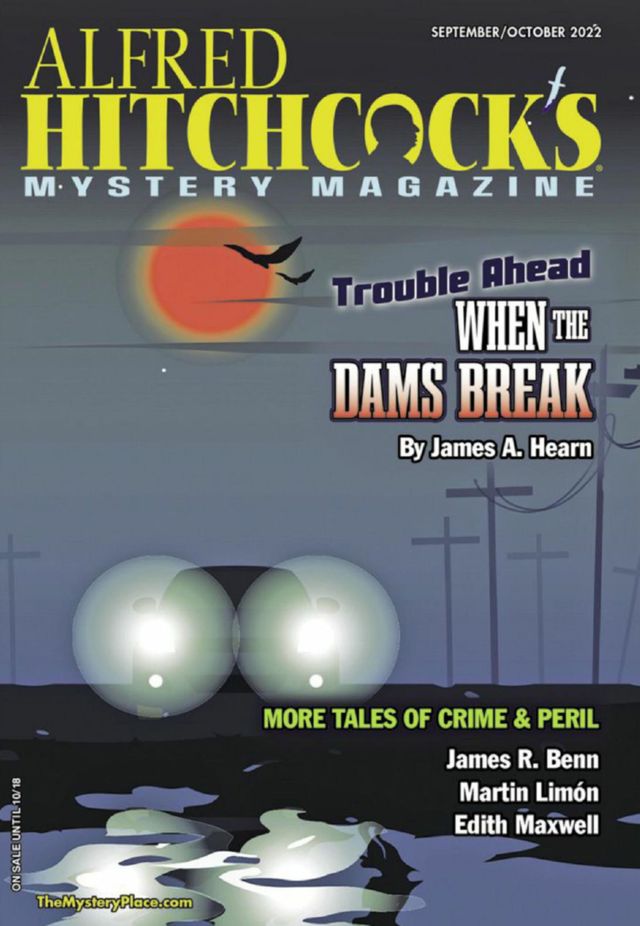
Posted in News | Leave a comment