February is more than hearts and chocolates. We have a big surprise for you this month. We also continue to publish new books/stories for your delight, do talks and readings and even a fun new play at the Ottawa Fringe Festival.
ANNOUNCING THE MESDAMES AND MESSIEURS OF MAYHEM’S SIXTH ANTHOLOGY!
The Mesdames and Messieurs of Mayhem are delighted to announce their 6th anthology, The 13th Letter (Carrick Publishing). “M” is the thirteenth letter of the alphabet. “M” stands for Mesdames, Messieurs, mayhem, malfeasance, mendacity and, of course, murder. Our authors are being inspired by the malice inherent in the letter “M” or by the murderous intent in postal letters.
We invite you, dear Readers, to enjoy our latest collection of crime fiction by established and award-winning Canadian crime writers. Our publication date is September 2024. Do also join us at our launch at our favourite bookstore, Sleuth of Baker Street, in late October or November 2024.
And stand by for our cover reveal later this spring!
CONGRATULATIONS AND PUBLICATIONS
Mme Melissa Yi’s latest in the Hope Sze Seven Deadly Sins Thriller series is available now at your favourite store!
Hope hurries to Montreal’s first Dragon Eats Festival, a combined dragon boat fest and mukbang eating contest that starts out delicious (Pho King Awesome! Tart of Darkness!) and winds up deadly.
“I’ve always known that if someone wants to murder me, the easiest way is through my stomach. I just hadn’t expected anyone to kill me today.” ―Hope Sze
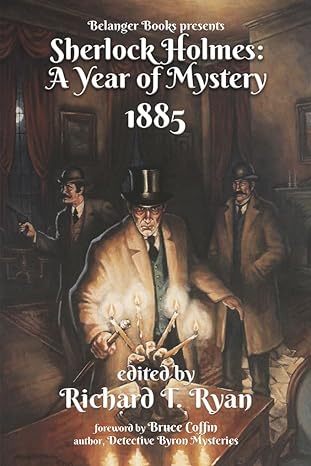
M. Kevin Thornton has TWO stories, both about the CN/CP railways—and Sherlock, of course—in the anthology Sherlock Holmes: A Year of Mystery 1885.
The titles of the stories are: “Tracks Across Canada” and “Tracked Across America”.
Kevin Thornton
UPCOMING EVENTS
Thursday, February 8th at 6:30 p.m. Brews and Clues by Crime Writers of Canada at Stout Irish Pub, 221 Carlton St., Toronto, Mme Lisa de Nikolitis will be reading from her work. Hosted by author Des Ryan.
Mme Lorna Poplak will be at the Beaches Sandbox, 2181 Queen St. E., Toronto on Wednesday, February 28th, 7:00 – 8:15 p.m. presenting her book The Don, The Story of Toronto’s Infamous Jail. Admission is Free.
An in-depth exploration of the Don Jail from its inception through jailbreaks and overcrowding to its eventual shuttering and rebirth, this is the story of the Don’s tumultuous descent from palace to hellhole, its shuttering and lapse into decay, and its astonishing modern-day metamorphosis.
“Canadian history buffs will savour the arcane criminal lore gathered here.” – Publishers Weekly
“An entertaining and engaging history of Toronto’s criminal justice system that any crime-history buff will enjoy.” – Canada’s History magazine
The Don was nominated for the 2022 Crime Writers of Canada Award of Excellence, won The Brass Knuckles Award for Best NonFiction Crime Book and was a finalist for the 2021 Speakers Award.
Chained. Nailed. In a coffin. In Montreal’s St. Lawrence River. Will Elvis survive?
After Dr. Hope Sze restarts the escape artist’s heart, she investigates who might have sabotaged Elvis’s stunt. As Hope plunges into the merry, mysterious, and potentially murderous world of magic and illusion, she must also balance her rotation on palliative care and her attraction to two strong-willed men.
A complex yet funny play inspired by Dr. Melissa Yi’s novel Terminally Ill, which was praised as “utterly likeable” by Ellery Queen’s Mystery Magazine and “entertaining and insightful” by Publishers Weekly.
February 8: 8:30 p.m.
February 9: 7:00 p.m.
February 10: 3:30 p.m.
THIS MONTH’S STORY
Our February story is by M. Blair Keetch from The Mesdames’ fifth anthology In The Spirit of Thirteen. “To Catch a Kumiho”was a finalist for the CWC Award of Excellence for Best Short Story.
Lorna Poplak, our newest Mme, presents the darker side of Toronto’s history on Thursday, January 25th, 7 pm, when she talks about the infamous Don Jail.
This is a ticketed real world event. Tickets are available through Eventbrite here.
Zoom conferences and virtual book launches became a thing of the past as the Mesdames and Messieurs stormed back into the real world in 2023. This was our year of the conference and writers’ festivals.
And 2023 was our year of recognition, too. Many of us were honoured for our published writing both in Canada through the CWC Awards of Excellence and the Aurora Awards and in the USA via the Derringer, Macavity and Claymore Awards!
AWARDS AND RECOGNITION
CONGRATS TO MELISSA!
Melissa Yi
Melissa Yi had another stellar year in 2023. Her short story, “My Two Legs”, published in Alfred Hitchcock Mystery Magazine, September 2022, WON the prestigious Derringer Award for Best Short Story in the “short” category. And it was a finalist for the Macavity Award, sponsored by Mystery Readers International!
Three of us, M. H. Callway, Blair Keetch and Sylvia Warsh received nominations for the CWC Awards of Excellence for Best Short Story: Mme Madfor her dark comedy, “Must Love Dogs – or You’re Gone”, published in the UK anthology, GONE (Red Dog Press); Blair Keetch for his chilling supernatural crossover tale, “To Catch a Kumiho”; and Sylvia Warsh for her equally scary story, “The Natural Order of Things” which appeared in EQMM, May/June 2022.
M. H. Callway‘s novella, Amdur’s Ghost, was a finalist for the CWC Award of Excellence for Best Novella. She is the second CWC member to be nominated in two categories in the same year. The first was acclaimed Canadian mystery writer, the late Peter Robinson!
Blair’s story, “To Catch a Kumiho” and Mme Mad’s novella, Amdur’s Ghost, both appeared in our latest anthology, In the Spirit of 13! (Carrick Publishing, 2022)
GUESTS OF HONOUR!
Melodie Campbell
Melodie Campbell, our own Queen of Comedy, was a featured Canadian author at MOTIVE, the new annual crime fiction festival sponsored by the Toronto International Festival of Authors.
Melodie was interviewed by leading Canadian crime writer, Maureen Jennings, just before she officially launched her new historical crime series, The Merry Widow Murders (Cormorant Press). She was on the panel, Comic Crime Capers, and taught a master class on writing comedy mysteries!
Lisa De Nikolits
Lisa De Nikolits was back as a featured Canadian crime writer for a second year at MOTIVE. She interviewed award-winning crime fiction authors, Dietrich Kalteis and Sam Wiebe, who both live and write in western Canada.
Lisa also curated, led and participated in several literary reading events. And she represented Canadian crime writers at Shetland Noir, the conference founded by Dame Ann Cleeves, author of the popular Shetland series.
ANOTHER GREAT FILM!
Cat Mills
Cat Mills, our tireless documentarian, released another great film this year, Do You Hear What I Hear? Cat’s film examines the ongoing problem of noise pollution in our urban environment.
Do You Hear What I Hear? premiered at the 2023 Hot Docs Festival. View it on CBC Gem.
In 2022, Left Coast Crime, Albuquerque, became one of the first real-world crime writers’ conferences after COVID. More than 200 authors and fans celebrated LLC’s return at the time. Trouble in Tucson was another smashing success: it felt like COVID had never happened.
M. H. Callway was honored to be on the panel, Noir,Can it be too Dark? with distinguished authors, Wayne Johnson and Matt Phillips, moderated by the inimitable, David Boop.
WORD ON THE STREET
Toronto’s annual book festival, Word on the Street, returned on the May 27-28th weekend, to Queen’s Park.
Caro Soles once again shared a booth with The Mesdames of Mayhem and her friend, gothic horror author Nancy Kilpatrick. Booth duties were shared by M. H. Callway, Lisa De Nikolits, Blair Keetch, Lynne Murphy,Rosemary McCrackenand Sylvia Warsh. Lynne sold a book to a very special fan!
Lynne with the future mayor of Toronto, Olivia Chow!
MOTIVE: TORONTO INTERNATIONAL FESTIVAL OF AUTHORS
The Toronto International Festival of Authors once again celebrated leading international crime writers from June 2 to 4th. Melodie Campbell and Lisa de Nikolits were two of the featured Canadian authors!
Crime Writers of Canada hosted a booth for book sales and sponsored readings by several CWC members, including Blair Keetch, Lynne Murphy, Rosemary McCracken and Sylvia Warsh.
SHETLAND NOIR, JUNE 15-18TH
Lisade Nikolits was honored to be part of Shetland Noir, the international crime writers conference founded by Dame Ann Cleeves, creator of the famous Shetland mysteries and the very popular Vera Stanhope police procedurals. Guest authors included internationally renowned authors Val McDermid, Richard Osman and Martin Edwards.
Lisa moderated the panel When You Don’t Know Who to Trust.
WHEN WORDS COLLIDE, CALGARY
The multi-genre conference, When Words Collide, returned to the real world from August 2 to 6, 2023. This was supposed to be the last conference, but happily, founder, Randy McBride, announced that WWC will now be run by the Alexandra Writers’ Centre Society.
Madeleine Harris-Callway
Mmes Mad and Madona Skaff participated on several panels including 50 Shades of Mystery, Short vs. Long Fiction, Plotting, Getting Published, Writing Groups and Keeping a Series Fresh. Madona also was part of the Blue Pencil Cafe to help emerging writers.
Madona Skaff
FAN EXPO, AUGUST 24 TO 27TH
Our Queen of the multiverse, Caro Soles, who writes crime, speculative fiction, literature and erotica, hosted a booth at Fan Expo with her friend, gothic author, Nancy Kilpatrick.
It’s rumored that more than 100,000 fans attended in 2023. Caro and Nancy braved the crushing crowds – and sold a ton of books!!
FAB BOOK LAUNCHES
SNAKE OIL LAUNCHES AT SLEUTH OF BAKER STREET!
Marion Misters
Some of the best news in 2023 was Sleuth of Baker Street’s decision to continue, for the foreseeable future, as a used book store. Marion, JD and of course, Pixie and Prince, have found that the present arrangement works for them. Sleuth’s is the perfect store to find that rare edition you’ve always wanted and they’ll happily order new books for you, too.
Sleuth may also host book launches and other events upon request.
Madeleine Harris-Callway
Donna Carrick
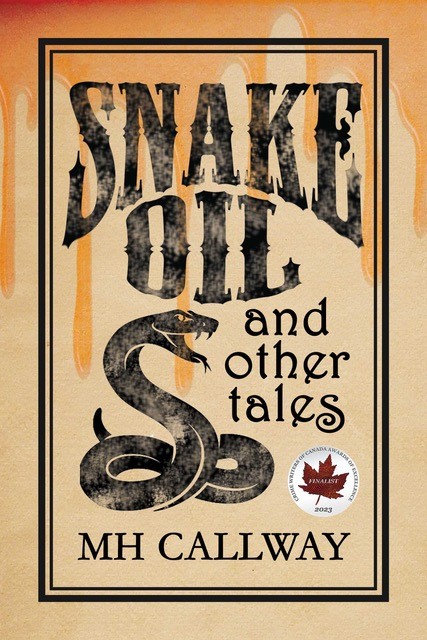
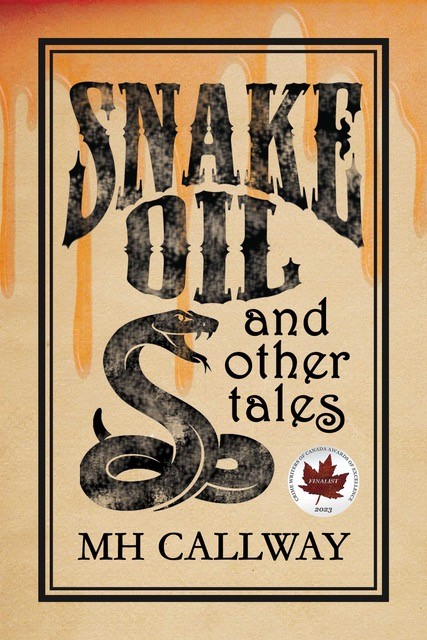
With huge thanks to Donna Carrick of Carrick Publishing, Mme Mad launched her second collection of short crime fiction, Snake Oil and Other Tales (Carrick Publishing) at Sleuth’s on Saturday, November 4th. The bookstore was packed and Mad sold out of copies!
THE MERRY WIDOW MURDERS LAUNCHES AT A DIFFERENT DRUMMER
Melodie Campbell
Together with fellow author, Vicki Delany, Melodie held a launch and book reading event for The Merry Widow Murders on September 9th at Burlington bookstore, A Different Drummer. As promised, there was lots of cake!
MELISSA LAUNCHES HER NEW SERIES
Melissa Yi
Melissa Yi successfully crowdfunded the first book in her new Dr. Hope Sze series, based on the seven deadly sins
The Mesdames participated in numerous book reading events, podcasts and social media events in 2023. Full details in WoW What a Year, Part 2. Following are some highlights.
TORONTO PUBLIC LIBRARY
The Toronto Public Library faced several challenges in 2023, not the least of which was getting hacked by black hats late in the year. They did not pay the ransom and are rebuilding their systems, aiming to have them up and running in early 2024.
TPL is also rebuilding its live workshops and the Mesdames and Messieurs were there to help by sharing their secrets of crime writing at Alderwood, Beaches, Gerrard Street and Parliament Street branches. Big thanks to Lisa De Nikolits, MH Callway, Blair Keetch, Lynne Murphy, Rosemary McCracken and Caro Soles.
TORONTO REFERENCE LIBRARY
Toronto Reference Library invited the Crime Writers of Canada to speak about Canadian crime fiction on December 12th. MH Callway and Rosemary McCracken joined authors Jass Aujla, T. Lawrence Davis and Kris Purdy to talk about Killing It with Style. Rosemary created the questions and moderated.
CRIME WRITING IN A COLD CLIMATE
Lynne Murphy
Lynne Murphy was engaged by Senior Adult Services, Toronto Annex, to teach four weekly classes from June 2 to 23rd about Canadian crime fiction.
Assisted by M. H. Callway, Rosemary McCracken, Melodie Campbell and new Mme Lorna Poplak, Lynne presented the works of Canada’s best-known authors, like Peter Robinson and Louise Penny and explored the gamut of current crime fiction from police procedurals to cozies to historicals – and even true crime.
WRITERS WORKSHOP, ROUGE RIVER COMMUNITY CENTRE
Rosemary McCracken
On November 11th, Rosemary McCracken was a teacher at the one-day workshop, So You Want to Write a Book, sponsored by the Rouge River Community Centre, Markham.
In addition to participating in panels, Rosemary led a break-out session for emerging writers.
READING VENUES…
NEW KID ON THE BLOCK – BREWS AND CLUES
Des Ryan, retired police detective turned crime writer, founded, Brews and Clues, a monthly reading series for CWC members in September 2023. Blair Keetch read at the inaugural meeting at Stout Irish Pub in Toronto followed by M. H. Callway in December. The series will continue into 2024.
FAREWELL TO NOIR AT THE BAR
Rob Brunet and Hope Thompson announced that they are taking a break after many years of running the popular reading series. The last Toronto Noir at the Bar took place at The Duke of Kent on April 27th and M. H. Callway and Rosemary McCracken were honored to be among the readers. Hope continued Queer Noir at the Bar as part of Pride Month in June.
A huge thank you to Rob Brunet and Hope Thompson for their support of Canadian crime writers – and the Mesdames and Messieurs of Mayhem.
AND A BIG HUG AND THANK YOU TO:
Marilyn Kay and Roz Place for keeping our newsletter running!
Marilyn published her first two crime stories in 2017 with “That Damn Cat” in the Mesdames’ 13 Claws and “Journey into the Dark” in the Bouchercon anthology, Passport to Murder. She’s gone on to publish several works of short crime fiction.
Marilyn has had a varied career as a medievalist, business journalist, government communications expertand social media coach.A longstanding member of Sisters in Crime, she and Roz Place are the mainstays keeping readers informed about the doings of the Mesdames and Messieurs of Mayhem. She’s currently completing a police procedural inspired by the characters in “That Damn Cat”.
HER PERFUME
by
MARILYN KAY
Despite the bright August sun, a chill wind swept through the ruined castle’s grounds and ruffled Julie’s chestnut hair. Shivering, she hugged her denim jacket close and moved next to the low stone wall rimming the promontory’s brink. There, she drank in the panorama of the silty brown river snaking its way through the Wye Valley. For a moment, Julie let her imagination soar, spinning a scene of the lord of the manor and his lady sipping wine while looking out over the river from their private balcony.
Before long, though, Julie’s thoughts strayed back to Dima. Today was the six-month anniversary of her husband’s death. For a brief year, she, a diplomat’s daughter, and he, a dashing young attaché, had dazzled London’s social scene. Her heart cried out: Oh my love, we had so little time together. They had not even allowed her to mourn at his grave. Instead, they whisked her away from London to this small Welsh town of Chepstow. They said she had to hide farther afield and quickly, especially after what had happened in Salisbury. Wales would be safer. Even with the tourist lure of a Norman castle, no one would think of searching for her here.
The muffled tapping of rubber-soled shoes on the stairs behind her interrupted her grief. Julie lifted her sunglasses and wiped away a wayward tear trailing down her cheek. A tall, wiry blond man in jeans and navy hoodie came to a halt at the far side of the parapet. She watched him contemplate the sky, the river and the surrounding countryside. After a while, he took his iPhone from his hoodie pouch and proceeded to photograph the view from different angles. Once he’d finished, he turned to her and in an American accent said, “Quite a view, wouldn’t you say?”
She bobbed her head. “Yes.”
He plucked a daisy-like pink flower from the ivy on the wall. Raising his shades to reveal a puckish twinkle in his blue eyes, he sniffed the flower and twirled it between thumb and forefinger before presenting it to her with a bow. “My Lady.”
Charmed, she mimed “For me?” and laughed. Accepting the flower, she pretended to lift a voluminous skirt, placed her right foot behind her left and curtsied. “Thank you, Sir Knight.” She sniffed the flower before tucking the stem into a buttonhole in her jacket.
Smiling coyly, she turned on her heel and descended the stairs to admire the vaulted ceiling of the wine cellar. From there, she could hear his trainers pattering up the steps. Then the sound stopped. He must have wandered onto the grass and over to Marten’s Tower. She went back upstairs to loiter in the kitchen and other service rooms within the remnants of the building known as the earl’s Gloriette, and then meandered into the Middle Bailey area to see if their paths might cross again.
He happened on her while she was snapping a photo of the exterior of the Great Tower. Julie perched her sunglasses atop her head and flicked her hair over her shoulder. “Ah, we meet again, Sir Knight.”
He bowed and gestured forward. “Shall we explore the tower together, My Lady?”
“I don’t even know your name.”
“Gareth. Gareth Evans.” He put his hand on his heart. “I am but a lonely errant knight who has crossed a continent and an ocean on my quest to discover this fair ‘Land of My Fathers’.”
She half smiled at his allusions to knights errant and to the Welsh national anthem “Hen Wlad fy Nhadau.” He was definitely trying. If she were honest with herself, maybe she was, too.
She skipped a beat before answering him. “I’m Julie. And Monmouthshire is quite…Anglo-Welsh.”
“I see. I…didn’t mean to cause you offense.”
“I’m not offended. Come on. I’ll give you a tour of the Great Tower and the rest of the castle. It’ll give me practice for my class’s history field trip next week. How long have you been in Wales?”
“Going on three weeks. I’m doing the castle circuit, with a bit of hiking and other sightseeing thrown in.” He winked, but made no effort to get closer.
Julie soon found Gareth eagerly immersed in the history and architectural and sculptural details of the castle—almost as much as she was. What’s more, he was a fun companion, with no ring on his left finger and California surfer-guy looks as an added bonus.
***
“I should’ve had you for the whole circuit. I’ve learned more from you than from all the guidebooks and apps I’ve tried at the other castles. Thanks, Julie, for giving me so much of your time.” Gareth checked his phone. “It’s nearly six. They’ll be kicking us out soon. What say I buy you an early dinner to give you a proper thank-you? Or would you rather go home and I pick you up later for dinner? There’s got to be a nice place to eat in town.”
Julie considered his offer. She hadn’t had such a lovely afternoon since Dima’s death. “There’s the Riverside Wine Bar. That’s pretty good. Are you staying in a B and B, or at the Two Rivers?”
“I got a deal with the B and B across from the castle. It’s quaint, but only serves breakfast and Sunday roast. You got your car here?”
“No, I walked. I just live on the hill south of the castle off Welsh Street, the road which borders the Castle Dell.” She still hesitated.
“Look, my car is in the lot. Why don’t I run you up to your place and pick you up at around 7:30? That’ll give us both time to change into something other than jeans and a T-shirt. What do you say?” He flipped through his phone. “I can make a reservation at the Riverside Wine Bar. For one or two people?”
She breathed in, exhaled and nodded. “Two, please.”
***
Julie stepped out of the shower, refreshed and tingling. Other than with a few mates she’d met at her gym classes, she hadn’t gone out on a date for six months. She clicked on Rag‘n’Bone Man’s “Perfume” from her Spotify playlist and proceeded to get ready.
Eschewing her usual light citrusy Jo Malone scent, she spritzed Dima’s favorite, Dior’s sexy Pure Poison, on her collarbone, in the crook of her elbows and behind her knees and ears, letting some of the spray fall on her hair.
Rummaging through her clothes, she grabbed a lacy, black knit bodycon dress, pulled it on and admired her silhouette. Nope. Far too forward and too London.
After trying on several other outfits, she opted for a floral skater, one she’d bought at Ted Baker for a silly flower-themed hen party last year.
As she buckled the dress’s skinny belt around her slim waist, a sharp yearning for friends and her old life engulfed her. Did they miss her as she missed them? Did they ever wonder about her? Or were they too lost in London’s rush to care? She hugged herself, trying to squeeze all the pain into a small ball deep inside her.
***
A frisson of delight rippled down her skin when she opened the door. Gareth appeared decked out in a blue-and-white checked shirt, khaki chinos, navy blazer and chocolate-brown leather loafers. His widened eyes and huge grin told her that she’d made an impression on him.
As they drove through the arch of the crenelated tower of the medieval town gate on High Street, Julie counted her breaths in an effort to calm the quickened pulsing of her heart. Excitement like this wasn’t supposed to happen when you’re still in mourning.
When they swung into Middle Street, Julie sensed a certain nervousness about Gareth, too, and wondered if he was also feeling the buzz? Or maybe he was stressed by the haphazard parking of cars on this narrow single-lane street?
“It’s tricky getting to the restaurant all the way by car,” she said. “We’re better off using the Castle Dell car park. Besides, it’s only a short walk down to the Old Wye Bridge.”
Gareth relaxed. “My car seems to spend more time in that lot than on the road. Good thing parking is free there.”
As they sauntered toward the river, Gareth suddenly grasped Julie’s arm and guided her through a gate leading to another restaurant.
She tried to back away. “No. This is the wrong place!”
His grip on her arm tightened; his voice was low. “Be quiet and keep walking.” He swung open the door and pushed her and himself inside.
“What are you doing?” She shook her arm from his grasp.
He held a finger to his lips. “Wait.”
The heady aroma of Italian herbs and garlic wafted around Julie, whetting her appetite and her fear. She hunched in the corner, her heart pounding while cold perspiration dripped down her neck. A young couple came through the open doorway and walked past them. Gareth peered out the window. “Okay, we can go now.”
“What was that all about?”
“Sorry. Some nasty people I met along the way I’d rather not encounter again.”
Julie rubbed her arm.
“I didn’t hurt you, did I? Shit! I did. I’m so sorry.”
“I’ll survive.” He had seemed like such a nice guy. Now she wasn’t so sure. “Who were they?”
“Two English guys who tried to run me off the road in Snowdonia. I encountered them in a pub where they were harassing a young lady. I bought her a beer and told them to piss off. I didn’t think I’d ever see them again, but there they were poking around that building yard. Satisfied?” He glanced at his Apple Watch. “Hey! We’ve got a reservation for quarter to eight. You lead the way.”
Julie strode down the street without glancing back. She was already berating herself for crumpling in fear. Where were those lightning reflexes she had cultivated for the past six months at the mixed martial arts gym? Why had she let him take command of her, when she had worked so hard to empower herself?
He let her take off by herself, only walking beside her when they reached the bridge. They stood together, but not touching, to admire the limestone cliffs and the Regency cast-iron bridge.
Across the river perched the Gloucestershire village of Tutshill, where J. K. Rowling had lived from the age of nine to 18. Tutshill was also the location of the school where Julie would begin her teaching career on Monday.
On the Chepstow side, a tree-lined groomed path ran along the river where several boats were moored.
The wine bar’s willow trees shaded a row of picnic tables, each mounted with an umbrella. Set back from the tables was a white stuccoed, two-storey building housing the restaurant.
Inside was an eclectic mix of red and white walls, curtains and floral wallpaper. Dark wood tables and chairs filled the restaurant seating area, while the bar boasted leather settees and barrel chairs.
“It’s kind of warm and homely, wouldn’t you say?”
Gareth turned to Julie and grinned. “Did you say homely or homey?”
Julie was irritated by Gareth’s attempt to correct her English.
“Okay. It seems, uh, funky. Like a place for real fusion cooking.”
“Well, it’s British meets Spanish. I hope you’ll like it.”
“I can already taste the garlic and chorizo. Of course, I’ll like it.”
Julie noticed Gareth’s raised eyebrow to the waiter as they were escorted to a romantic table for two with a view of the river. “Did you especially arrange for this table?”
He winked and began perusing the wine list. “Hmm, only one California wine and it’s sweet. Would you like to choose the wine? I’m having the steak.”
“I want the prawns. How about we get a bottle of Prosecco?”
“Prosecco? There’s champagne on the list. Why don’t we go all out and order a bottle?”
“You sure?”
“Of course. I think I saw a Bollinger on the list.”
As they leisurely sipped and chewed their way through the feast, conviviality replaced the evening’s earlier tension. Gareth gave up trying to tease Julie into talking more about herself and regaled her with tales of his travels. His story about using his iPhone GPS for hiking and nearly getting lost in a bog outside of Tregaron made her clutch the table to keep from laughing hysterically.
“There was no cell coverage. Just me, the rain and the sheep,” he deadpanned. “I was soaked to the bone, squelching in shoes that were getting sucked downward with every step I took. Eventually, I heard a whistle and madly whistled back. Next thing I knew, a black-and-white collie was herding me and the sheep to greener pastures. The farmer took me to his home.”
Gareth locked eyes with Julie before continuing his saga, “Then, over tea and Welsh cakes, I got the third degree about my family origins. Only after he and his wife were satisfied they’d wrung every bit of family history from me and fed me dinner, did he drive me back to my car….I haven’t shared that episode on Facebook yet.”
They both broke out laughing.
“So what do you do when you’re not tilting at white dragons or getting lost in a bog?” Julie asked.
Gareth raised questioning eyebrows before grinning like a Cheshire cat. “I work at Facebook.”
Her voice tart, she said, “At least you don’t bite the hand that feeds you.”
“That was a low blow.”
“Sorry. I didn’t mean to be—”
“Catty?”
Julie’s face grew hot. She sat up straight, arms crossed in front of her chest and glared.
Gareth licked his lower lip and closed his eyes. When he opened them, they were wide and glistening. “Look, I know Facebook has gotten a bad rap lately. I’m not saying it doesn’t deserve it. But I wasn’t part of the Cambridge Analytica fiasco, fake news or Russian hacking.”
“I work in the user experience area. You know—live videos, emoticons, birthdays, fun backgrounds for posts—things like that.”
Gareth searched her eyes. “You’re not on Facebook, are you?”
She shook her head. “No. As a teacher, I…I…don’t want my students stalking me.”
Gareth tucked his chin into his hand and rocked his body slightly. “I figured as much.” He picked up the second bottle of champagne and gestured toward Julie’s glass. “Shall we finish it?”
Julie dropped her arms and dipped her chin to indicate yes.
He apportioned the remains between the two glasses and lifted his up to her. She took a sip, and he did the same. They each took another sip in silence, his eyes penetrating into the depths of her soul. Then he leaned over and reached out his hand to her. She clasped his.
The waiter interrupted their mute colloquy to offer them dessert. Neither was interested. Neither wanted to break the spell.
Once the waiter had left to tally up the bill, Gareth asked, “Care for a stroll by the river?”
“I think I’d better get back home.”
***
At the door to her semi-detached house in The Mount gated community, Julie surprised herself by asking Gareth in for coffee. They never got to the coffee. Gareth’s kisses softened Julie’s stiffened lips, and his caresses were like warm water lapping over and into every crevice of her body. Like everything he’d done that day, he did with care, sensing when to relinquish to her the lead in their lovemaking. They fell asleep locked in each other’s arms.
Sometime after midnight, she shifted onto her other side. But when her arm stretched back to touch him, her hand landed on an empty duvet. Had it all been a dream? She lay there alone, listening for his movements, too afraid to open her eyes to emptiness, too crushed that he hadn’t wanted to stay the night with her. As she began to doze off, Gareth slid back into bed. He buried his head in her hair and nibbled her ear, cooing, “Your perfume is driving me wild.”
The next morning over a breakfast of poached eggs on toast with tomatoes and mushrooms, Julie asked Gareth, “Where were you last night?”
He sucked in his lips and, with narrowed eyes, considered her and his words. Then, tapping the table, he said, “Sorry. I didn’t want to worry you. I heard strange noises around your house and went to investigate. I didn’t find anything, though. I guess those two guys spooked me last night….You want to go to Tintern with me today?”
Julie considered. Today was Wednesday. Her lesson plans were completed; she’d still have plenty of time to prepare her classroom for Monday. Besides, she couldn’t bear the thought of never seeing him again. “I’ve got a gym class at eleven. Maybe we could go after lunch?”
“There’s that coffee-and-sandwich place, Coffee Something? We could meet there for lunch, say one o’clock?”
***
The sun shone. A few cottony clouds, buoyed by a light breeze, drifted in the azure-blue sky. Julie left her car at the house and walked into town. Her phone pinged as she approached the Town Gate. She stopped to read the text: a message from Sir William Barr, code name B. Dima used to say, “B for bastard.” Dima had warned her never to trust Sir William, who, on more than one occasion, had tried to grope her.
Yet Sir William had just assumed management of her relocation here. Bolo 2 men black ford fiesta hatchback. Be on the lookout for two men. The two men Gareth had seen? Julie glanced around, inhaled and let her breath out slowly, then walked through the arched gate.
Set into the hillside sloping northeast toward the Wye River and the train station, Beaufort Square was the last remnant of the large central town square dating from medieval times. On the higher west side was Bank Street, while the town’s retail High Street ran along its east side. The square featured the Chepstow Cenotaph war memorial, benches and a series of several stone staircases leading down to High Street.
Coffee #1 was situated at the corner of High Street opposite Beaufort Square in an attractive white, two-storey building.
As she waited for the light to turn green, she glimpsed Gareth bounding down the stairs from the square toward her and waved. He arrived at the intersection just as the light turned green for her. Thwarted, he threw up his hands. Julie motioned she would cross over and wait for him at the corner, then blithely stepped into the intersection.
Out of the blue, a black hatchback barreled from the hidden side road at the bottom of the hill and accelerated up Beaufort Square Street. Gareth called out to Julie. Then, darting between moving cars, he sprinted toward her. She was halfway across before she realized the speeding car was aimed straight at her. Gareth leapt and snatched her out of the car’s track, flipping her on top of him onto the asphalt. Meanwhile, the car squealed around the curve and continued away from the square.
“Fuck! What was that?” Gareth extracted himself from under Julie. Still panting from the close call, he hoisted her up.
Several teens sitting at one of the outdoor tables, came over to help. “Are you and the wife okay?”
“Yeah, thanks.”
With his arm around her waist, Gareth guided Julie to one of the outdoor tables and sat her down. He knelt beside her and hugged her until she stopped trembling. One of the teens went into the shop and came out with two glasses of water.
“Thanks.”
“No problem, mate. We’re off now. You need anything else?”
Julie shook her head and mumbled, “No.”
“I think we’re all right, but thanks again, you guys.” Gareth settled on a chair next to her. “Do you want me to take you inside while I run and get the car? I can take you home.”
“No. I’m fine. How are you?”
He shrugged. “Good.”
“Then let’s go to Tintern. We can eat there.” She paused. “Were those the two from last night trying to run you down?”
Gareth blew out a long breath. “Julie, whoever was in that car was gunning for you.”
“But I don’t understand.”
Shaking his head, he said, “Neither do I, Julie. Neither do I.”
***
Their Tintern Abbey outing proved to be nigh perfect.
Set among the pine-covered hills of the Wye Valley and manicured lawns dotted by yellow daisies, the ruins of Tintern Abbey rose in all their magical mystical majesty.
After enjoying soup and sandwiches at the White Monk, they entered the abbey. They spent the rest of the afternoon exploring the remains of the abbey and admiring the full and partial stone walls, monumental pillars, graceful arches and the intricate framework of gothic windows of the abbey church.
Feeling playful, Julie tickled Gareth as he crouched and lay down on the grass, in his attempt to capture every angle in his photos. He countered by insisting she pose against the dramatic backdrops among the ruins. She consented only if he promised not to post any photos of her on Facebook.
Afterward, in spite of her protests, he bought Julie a silk scarf and earrings, and a tapestry and wool blanket for his mother in the abbey gift shop.
When they returned to her place, Julie flung open the door and announced, “We’re having Nigella’s ‘Curry in a Hurry’ and I’m cooking.”
Gareth swept her off her feet and carried her over the threshold, declaring, “I’m crazy about you, Julie.” Her feet grazed an envelope on the entryway stand, knocking it to the floor. Gareth put her down and picked up the letter before she could snatch it away. He read the name on the envelope, “Julie Ball,” then replaced the letter on the stand and shut the door. “Do you want me to chop? Or open a bottle of wine?” He nuzzled her neck and shoulders before heading to the kitchen.
That night in bed, the two sat propped against the pillows. Julie leaned against him, and he wrapped his arm around her shoulders. “I promised my mother I’d visit Raglan Castle. I was thinking I’d go up there tomorrow morning. That will be my last castle before going home.”
Julie tugged his arm closer around her. “When do you leave?”
“Saturday afternoon from Heathrow. I’d planned to drive to London from Raglan and spend the rest of the time there. I’m thinking I’d like to spend it with you instead. But it means my finding another place to stay in Chepstow.”
“Stay with me, Gareth.”
“You sure about that?”
“Yes. Yes,” she said in a breathy voice. “I’ll fix up my classroom while you’re at Raglan. Then we can have the rest of the time together.”
“Julie?”
“Yes?”
“Will you be okay while I’m at Raglan? After what happened yesterday afternoon, I’m worried. I mean, what’s going on with you? You’re so secretive. You wouldn’t even tell me your last name.”
“You know it now. And nothing is up with me. I…I know it’ll all be over with us in a few days. That’s all.”
“Then let’s make the most of our time.” He drew her down under the duvet and buried his head in her hair. “What’s that perfume again?”
“Pure Poison.”
He jerked upright. “You’re kidding?”
She began to chuckle and hauled him down beside her. “No, I’ll show you the bottle in the morning.”
***
Gareth had already left by the time Julie had loaded her car with items for her classroom. She had everything but the heavy-duty knife she needed to trim her foam-core posters. She dashed back into the house and popped the knife into her purse.
Her phone pinged. Sir William had sent a series of three question marks. She had not yet answered yesterday’s text about the black car incident. She couldn’t get it out of her mind that there was something fishy about Sir William’s texting her right before the men had driven their car at her. A chill crept down her spine. What if the sounds Gareth had heard the other night were those men?
Gareth arrived soon after she returned from the school. She threw her arms around him and kissed him as soon as he dropped his bags at the entryway.
He cupped her face in his hands and gazed into the wells of her dark brown eyes before kissing her long and deep. “I feel like I’ve come home.”
She clung to him a moment more and murmured, “You have.” Afterward, she let him settle in the spare room upstairs while she made lunch.
While they finished their coffee at the kitchen table, Julie reassured Gareth once again that she’d neither seen nor heard anything untoward when she had gone to work at the school. “But I need to do some grocery shopping. I thought I’d wait to see what you wanted for dinner tonight first.”
“Good idea. Let’s make a list and get some wine, too. There’s a Norman church by that Tesco Superstore I wanted to take a peek at it. I thought I heard the bells ring yesterday morning.”
Julie’s jaw dropped, and her pulse quickened. She stammered, “S-s-saint Mary’s Priory?”
Gareth smacked his forehead, his face full of contrition. “I’m so sorry. I didn’t mean to suggest we go near Beaufort Square again.”
Julie swallowed before saying, “That’s okay. There’s more selection at Tesco anyway.” To make her point, she grabbed a pad and searched for a pen in her purse. Frustrated at not finding one, she disappeared for a few moments and came back with a pen, the one Dima had stored in the desk she had insisted on moving with her from London.
Eyes wide, Gareth stared at it. “Nice pen. May I see it?”
“It was given to me by a…dear friend. I don’t usually use it.”
He didn’t press any further.
With the list completed, Julie dropped the paper in her purse and headed out of the kitchen. A minute later, she stood at the door and called back to Gareth, “Shall we go now? We can use my car if you like?”
“Let’s take my rental.”
Julie clutched the car seat when Gareth turned down Beaufort and concentrated on navigating him into the Tesco car park. The plan was to leave the car there and make a dash over to see the church.
As they walked back to Tesco, Gareth kept his arm around Julie’s shoulder, his eyes constantly scanning the walk and the parking lot. “Let’s do our shopping and get out of here.”
The corner of her right eye began to twitch. Julie surveyed the car park and moved her body closer to Gareth’s, but neither saw anyone suspicious either outside or inside the store.
Gareth flashed his wallet and insisted that Julie stock up with groceries for the rest of the week and the beginning of the school term. “Frankly, I don’t know why you Brits shop every day.”
“It’s called small fridges and freshness.”
Gareth, laden with three heavy bags, halted. Twisting around toward the store, he said in a low tense voice, “Julie, go back into the store. Once they’re gone, I’ll bring the car around to the entrance and pick you and the bags up there.”
The hair on her arms and the back of her neck prickled. A scruffy, dark-haired, bearded man was getting into a black Ford Fiesta hatchback about 15 feet away from Gareth’s car. She backed away, turned and, with one quick glance back, scrambled on shaky legs to the store entrance.
***
The tension of unspoken words reverberated throughout Julie’s house. After helping her put away the groceries, Gareth retreated into the living room and turned on the television. Julie sat at the kitchen table and fetched her phone from her purse. Sir William had texted her several times that agents had her under surveillance. In the meantime, she was to lie low.
Reality hit. She was putting Gareth’s life in danger. It was time to explain her situation to him. But something else was nagging her. Were the men in the car also tracking him? And why? Was the altercation they’d had in the pub with Gareth a coincidence or part of a larger plot?
Silence. Gareth had switched off the box and loomed in the kitchen doorway. Julie dropped her phone into her purse.
“Okay, Julie Ball, suppose you tell me what’s going on?”
A melancholic sigh slipped from Julie’s mouth, but she remained tongue-tied. Gareth seated himself opposite her. Propping an elbow on the table, he nested his chin in his palm, locked eyes with hers and waited.
“Six months ago, I lost someone very dear to me. I came here to forget.”
Gareth remained silent, willing her to continue with his steady gaze.
Her anger and frustration boiled over. “Why do you care? You’ll be gone soon and we’ll never see each other again.” Julie slapped the table and spluttered, “I feel like I’m stuck in a bloody interrogation room.”
Gareth sucked in his breath and pushed back his chair. “I feel like I’m attached to a walking bomb. You want me to leave?”
Julie reached out. “No! Please stay, Gareth.”
Planting his fingertips on the table, he leaned in to glower at her tear-streaked face. “Just a few seconds ago, you lash out at me. Now you want me to protect you? Surely you have other friends to hold your hand.”
Then his voice softened. “Julie?” He dropped down beside her and sheltered her in his arms. Lifting her up, he carried her up the stairs.
***
Julie woke to the sharp aroma of coffee curling up her nose. She could hear Gareth whistling in the kitchen. By the time she came down the stairs, the smell of fried bacon and eggs mingled with the coffee. He greeted her with a huge grin and a plate of bacon, eggs, sausages, tomatoes and mushrooms. He’d even filled the rack with toast.
After breakfast, Gareth went up to the spare bedroom to make phone calls and pack for tomorrow’s trip. In the meantime, Julie organized an eco-wash cycle for the clothes he’d be wearing home. In a little good-bye ritual of her own, she threw in his underwear and socks. Next, she hugged in succession his jeans, red T-shirt and navy hoodie before placing each into her washer/dryer.
A pall of sadness engulfed Julie and riveted her focus on the sudsy water submerging and agitating away the traces of their time together.
Raised voices outside and the slam of her neighbor’s front door broke the trance. She remembered Gareth had promised to set her phone and computer up on WhatsApp so they could stay in touch, and she needed to make adjustments to next week’s teaching plans. Squaring her shoulders, she headed to her office to boot up her computer.
Somehow her office looked amiss. The top page of the papers she’d neatly stacked on the left side of her computer was out of kilter. She also found the pages were out of order.
Her heart pounding, she punched the combination to unlock the desk drawer where Dima had kept his pen. The contents of the drawer appeared more jumbled than usual. She touched a hidden button and a secret compartment sprang up. The pen was still there. She breathed a sigh of relief and shut the drawer.
Taking big gulps of air and exhaling slowly, she plunked herself down on her desk chair and rotated around to do another scan of the office.
The intercom crackled and a gruff baritone voice with an Estuary English accent announced, “B sent us.” She’d forgotten about Sir William’s agents, and now they were at her door. But how did they get through the gate?
She squinted into the one-way window they had installed in her door. Two dark-haired men, one with a beard, stood there: the men she and Gareth had eluded at the Tesco car park. She gasped, then remembered her mixed martial arts training: stay calm and move fast. She called out, “I’ll be there in a minute,” grabbed her purse and went back into the office.
Retrieving her pen, she dropped it into a pocket in her bag. When she looked up, Gareth, in jeans and a gray hoodie, was standing in the doorway. “What’s up?”
She seized his hand and dragged him toward the kitchen. “We’re going out the back door. I’ll tell you later.” She pointed to the band of hedges and trees surrounding the communal garden. “Are you game to tackle those boxwoods?”
Gareth shrugged. “For you, anything.”
Julie had already started to race toward the hedges. The two clambered over them, and she pointed toward the road. “Let’s head to town.”
At Welsh Street, Julie took the crosswalk over to the Dell Primary School. “They may have parked here.” She scanned the car park and spotted a black Ford Fiesta hatchback. “Gareth, is that the car?”
He compared the license plate to the one he had on his iPhone. “Yes.”
Julie fished the knife she’d tucked away earlier out of her purse and slashed the car’s tires, while Gareth gawked in disbelief. She retracted the blade and returned it to her bag. “That should do it. Shall we cut through the Dell?”
“Anything you say.”
As they strode down the trail to the castle, Julie’s words poured out in a fast staccato. “I should have told you sooner. My husband was an attaché to the Ukrainian ambassador in London, where we met. My father was counsellor for political affairs there before he retired. He and my mother returned home to Kiev. I fell in love and stayed. I don’t know all the details, but the UK secret service believed Dima was murdered and moved me here.”
She paused to collect her thoughts. “This morning, I discovered that my office had been rifled. Then those two guys showed up at my front door.” She halted and fixed Gareth with dark piercing eyes. “What do you know about these men? You said you met them in Harlech?”
He dropped his head, avoiding her gaze, and scuffed his right trainer on the beaten dirt path. A group of noisy kids crowded by on their way to the Dell playground. “Yuliya Baiul, let’s tour the castle for old times’ sake.” He beckoned to her with his outstretched hand.
At the sound of her name, she stopped cold.
“Come on. Your disappearance was public knowledge. Why are you surprised I know your name?”
“I…just hadn’t heard it said for a long time.” Julie placed her hand in his.
Once they were out of earshot, Gareth resumed his narrative. “MI6 was right to be concerned. The GRU thought Dmitry—your Dima— might be a useful idiot; instead he turned mole for MI6.” He squeezed Julie’s hand. “Of course, GRU has its own mole in MI6.”
Julie croaked, “Sir William?”
Ignoring her, Gareth continued, “A mole whose name is all over the last packet of information Dmitry received, and not just about operations in Crimea and Ukraine. There’s money laundering that not only implicates Mr. B, but also several UK financiers and high-ranking government officials. That’s why Mr. B got involved.” He swung around to face her and clasped both her hands. “I’m so sorry, Julie. They botched the job with Dmitry.”
She covered her face. “Those men?”
“Likely the ones who killed your Dima.”
Once inside the Gloriette, Gareth said, “Let’s go to that balcony where we first met. The tide’s in, so we’ll have the vista minus the mudflats. It’ll also be quiet there.”
Gareth’s suggestion spawned a sensation of spiders crawling over Julie’s back, yet she let him lead her up the stairs to the promontory.
Julie stood farther from the balcony’s low semicircular enclosure wall, but each stood in positions similar to those they were in when they had first met and admired the view. But when she turned her head to Gareth, his twinkly blue eyes had morphed into a steely glint. He carefully withdrew a clear plastic zip bag holding a bottle of Pure Poison perfume from his hoodie pouch. “In Raglan, I was given this, courtesy of the GRU, to be your good-bye gift. I won’t open the bag. The poison is real.”
The lump in Julie’s throat choked off any words she struggled to blurt out.
“Yuliya, Julie. I was given until today to get Dmitry’s camera pen from you. I’ve tried to fend off the goons, but if I don’t have that pen now, Mr. B’s agents will force it from you.”
Julie finally managed to swallow. “Is everything about you a lie? Are you even American?”
Gareth blew a long breath through his teeth. “I haven’t lied to you. My mother is American with Welsh roots. My father? You know of him. Konstantin Firtash is a crony of Viktor Yanukovych. Right now, Kostya’s in big trouble for fraud in Russia. A handler from the GRU approached me at Facebook and gave me an ultimatum: get Dmitry’s pen or else. Julie, Kostya is not a good man, but he’s my father. When I was small, he loved me. And I don’t want to see him murdered or frozen in Siberia.
“Look, I never wanted our relationship to end this way. I never wanted it to end at all. I meant it when I said I’m crazy about you. Truth be told, my heart’s desire would be to run away with you to some place in Canada, but even there, they would hunt us down.”
“Like you hunted me?”
“They knew you lived near a castle, but only recently did Mr. B learn which one. For Christ’s sake, just give me the pen. I promise to call off the dogs. You can go free, and I won’t end up like your Dima did.”
Julie plucked the pen from her purse and waved it around. “What if I throw it in the river?”
“Don’t be stupid, Julie. What would that accomplish?”
She knew he was right. The pen needed to be handed over to the Ukrainian ambassador or to a reliable authority in the British intelligence service. But still she prevaricated. “It would go out to sea and all the secrets with it. Surely, Russia doesn’t need a copy of the plans. And there’d be no compromising material for Sir William and the rest of his sort to worry about.”
Heavy footsteps pounded up the stairs, and dark-haired, beardless face popped through the archway.
Her reflexes kicked in. She clutched the pen hard, like a knife. Wedging her thumb tightly against the pen’s top, she tucked her fist into her left armpit and spun to meet the man as he and Darkbeard piled out of the archway.
Beardless moved in to grab her throat, and she lashed out like a cat at his. She moved in closer and grabbed a wad of his shirt at the neckline, while jabbing and raking his face with the pen. She gave him a rapid knee to the groin and stabbed his cheeks again.
Gareth ripped the perfume bottle out of the bag. Darkbeard charged Gareth and was met by jet after jet of Pure Poison sprayed into his eyes and gaping mouth.
Gareth then turned to Julie’s opponent. “Move away, Julie!” he shouted and sprayed the other man’s bleeding face.
Coughing and sputtering from the spray laced with a chemical nerve agent, Darkbeard suddenly realized his fate. With a grunt, he lifted Gareth and flung him against the balcony’s low wall.
“Gareth!” Julie screamed as she rushed toward Darkbeard. She stabbed him in the neck before landing a blow with her elbow into his left kidney.
With a raspy growl, Darkbeard shoved her aside and charged the stunned Gareth, who stumbled backward to the wall. Overshooting his mark, Darkbeard sent both himself and Gareth tumbling off the precipice.
Julie watched transfixed as Gareth plummeted into the murky depths of the Wye. With tears streaming down her face, she whispered, “Dasvidaniya, my darling Gareth.”
Then, a volley of piercing shrieks escaped from the ball of pain buried deep inside her belly.
We are starting the year with a bang! A new anthology is in the works for the fall of 2024. And we’re welcoming a new member, Lorna Poplak. What’s more, there are new books, new Sherlock Holmes short stories, and three major events in January.
WELCOME, LORNA POPLAK!
We are delighted to announce that Lorna Poplak has joined the Mesdames and Messieurs of Mayhem.Lorna is the first true crime writer to join the Mmes and her specialty is the history of crime in Canada. Her book, The Don, which depicts the gruesome history of the Don Jail, was the finalist for several awards, including the CWC Award for Best Non-Fiction.
PUBLICATIONS
Mme Melissa Yi’s new mystery, Sugar and Vice, will be available for sale in February 2024. This is the second book in her fabulous Dr. Hope Sze series based on the seven deadly sins.
Thursday, January 11 at 6:30 p.m. Brews and Clues by Crime Writers of Canada at Stout Irish Pub, 221 Carlton St., Toronto. Mmes Rosemary McCracken and Lynne Murphy will be reading from their work. Hosted by author, Des Ryan.
Rosemary McCracken
Lynne Murphy
Thursday, January 18, 2 to 3 p.m. Wychwood Library, 1431 Bathurst St. The Mmes and Messieurs will be visiting the Tea and Murder Club at the library to talk about crime fiction. Mmes Rosemary McCracken, M. H. Callway, Lynne Murphy and M. Blair Keetch will be there.
Rosemary McCracken
M. H. Callway
Lynne Murphy
M. Blair Keetch
Friday, January 26, 1:30 to 2:20 p.m.Ontario Library Association Superconference, Metro Convention Centre. Mme M. H. Callway will present her new book, Snake Oil and Other Tales at the Crime Writers of Canada Idea Hub.
Madeleine Harris-Callway
FRIENDLY REMINDERS
The submission date to the latest Malice Domestic anthology, Mystery Most Devious, has been extended to January 15, 2024. Submission rules are here Moksha
We’re continuing to showcase our authors by sharing a free story mid-month throughout 2024. On January 15, we feature “Her Perfume”, a haunting mystery by Mme Marilyn Kay, which first appeared in our fourth anthology,In the Key of 13.
It’s winter solstice and the Holidays. What’s more wonderful than snuggling up with terrific new books and stories by the fabulousMesdames and Messieurs of Mayhem?
Whether you love cozy crime, thrillers, whodunnits, noir, Sherlockania, romance or speculative fiction, we have something here for you. Enjoy, have the best holiday ever and wishing the best for 2024!
The New Year will be exciting for the Mesdames and Messieurs. Stand by for terrific news about our upcoming book and story publications and for avery special announcement in our January newsletter.
THE MESDAMES ANTHOLOGIES CELEBRATING CRIME FICTION!
Our very first book!
Our take on Father Time!
Supernatural mystery!
Cathy A’s CWC Award Winner!
Music and Mayhem!
EXCITING NEWS COMING IN 2024!
FABULOUS NEW BOOKS!
Cozy comedy mystery
Collected crime fiction from comedy to noir by M. H. Callway
New Dr. Hope Sze series
TERRIFIC RECENT RELEASES!
Critically acclaimed SF thriller
Collected stories and new thriller novella
Exciting SF mystery
Book 6: Merculiam mysteries
Book 7: Merculian mysteries
Amazing Anthologies!
“Wisteria Cottage” by M. H. Callway
“Eating Rainbows” by Melissa Yi”
Stories by Melodie Campbell, Lisa De Nikolits, Blair Keetch, Sylvia Maultash Warsh, Rosemary McCracken and Lynne Murphy
“Beat the Haunted House” by Melissa Yi
“The Glauc Bitches” by Melissa Yi
Mayhem in Magazines!
“The Fairest” a poem by Melissa Yi
“Brain Candy” by Melissa Yi
Aurora winning poem by Melissa Yi
For Fans of Sherlock Holmes
All with stories by Kevin Thornton. More coming in 2024!
Despite the bustle of this holiday period, our Mesdames are still working to provide our readers with more reading delights, including Mme Madona Skaff’s book signing in Ottawa and a panel at the Toronto Reference Library.
MESDAMES ON THE MOVE
On Tuesday, December 12,6:30 to 8:30 p.m, Mme Rosemary McCracken will be the moderator for Crime Writers of Canada’s panel “Killing it with Style” at the Toronto Reference Library, 789 Yonge St., Toronto. Mme Madeleine Harris-Callway is on the panel along with three debut Canadian crime novelists: Jass Aujla, T. Lawrence Davis and Kris Purdy.
BREWS AND CLUES
CWC authors: Mme M. H. Callway, Gord Jones and Irene Fantopolous will be reading at Brews and Clues at the Stout Irish Pub, 221 Carleton, St. Toronto on Thursday, December 14, 6:30 pm, hosted by Des Ryan.
A WRITER’S UPS AND DOWNS
Mme Lisa de Nikolits shares her high points and this year’s low points in this heartfelt Blog post. Come, take a ride on “The Rollercoaster Year of 2023”.
Lisa de Nikolits
CONGRATULATIONS AND PUBLICATIONS
Mme Madona Skaff will be doing a book signing of her book Shifting Trust, a science fiction thriller, set in Canada and England. She will be at the Coles Bookstore at Billings Bridge, Ottawa, December 2nd from 10:00 am to 12:00 pm, joined by fellow authors, Amy Tector, Vicki Delany and Mike Martin.
Mme Sylvia Warsh is thrilled to announce that her new novel, The Orphan, will be published by Auctus Publishers in the spring of 2024. It is a departure from my other mystery novels in that the protagonist is 15 years old and the setting is Washington DC, 1844. There’s also a speculative element: after being given an experimental drug to save his life, the young man can communicate with animals.
Sylvia Maultash Warsh
ANNOUNCEMENTS
Exciting opportunity: Publisher and author, Judy Penz Sheluk, has just announced her new anthology, Larceny and Last Chances: 20 Stories of Mystery and Suspense, to be published by Superior Shores Press in 2024. Submission window closes once 80 entries have been received. For submission rules, check out the dedicated web page here: LARCENY & LAST CHANCES: 20 Stories of Mystery & Suspense | Judy Penz Sheluk
LOOKING AHEAD
Sisters in CrimeToronto will be hosting a real-world Christmas get-together in December. Time and place to be announced. This event is for active members of Toronto SinC only.
Sisters in Crime Toronto will be hosting a real-world Holiday get-together in December. Time and place to be announced. This event is for active members of Toronto SinC only.
The Mesdames and Messieurs published a lot in 2023. Look for our annual Books for Christmas coming soon this month.
Therese Greenwood is an award-winning author of short stories and non-fiction. Her crime fiction has appeared many times in leading mystery publication, Ellery Queen Magazine. Enjoy her collected work in Kill as You Go (Coffin Hop Press).
In 2019 her memoir, What You Take with You (Wayfarer Press), about her family’s escape from the Fort McMurray wildfire was a finalist for the Alberta Book Publishing Awards.
Therese grew up on Wolfe Island near Kingston, Ontario, an area steeped in history. Her story, “The Iron Princess”, draws on Kingston’s notorious history of rum-running across frozen Lake Ontario to the USA.
THE IRON PRINCESS
BY
THERESE GREENWOOD
Norman tucked his hair under the brim of his hat. Some people thought red hair was a bad mark, but he liked standing out in a crowd except, of course, when he was robbing someone. He tied the blue spotted bandana around his neck, ready to slide over his mouth and nose, and thought how the classic outlaw disguise stood the test of time.
He had practiced it in front of the cracked shaving mirror at the boarding house, until even his mother wouldn’t recognize him. It had been five years since he’d last seen her, so she might not recognize him even if he were standing in broad daylight on her front stoop on Poulett Street. He recalled her standing and crying with the other women on the crowded platform at Union Station, when he boarded the troop train with the rest of the Canadian Expeditionary Force conscripts, headed for the ship that was headed for Flanders.
Now Norman was waiting for a different train. It had been a long trip from his mother’s Cabbagetown home to a Flanders trench to a rumrunner’s whistle-stop halfway between Montreal and Detroit. The old brick train station squatted at the end of a single-lane dirt road, its platform facing Lake Ontario and a wooden dock where coal had once been delivered from the American city across the channel. Now, the main cargo was whiskey from distilleries in Montreal, off-loaded to rumrunners in fast boats for the trip into the States. The station also took delivery of the monthly cash payload from Detroit, which was why Norman and his two partners were driving down the dirt road.
Lester Tremblay was a large man who filled up most of the front seat of Dutch Voss’s six-cylinder MacLaughlin Buick, leaving Norman pressed against the passenger door. They had ambushed the bootlegger’s car and left the two heavies who did the money train pickup in a ditch beside the Third Line Road. Lester, who had served in a mechanized cavalry unit, was crazy about engines and would have killed just to get his hands on the getaway car, a model so favored by bootleggers it was nicknamed a Whiskey Six. In the back seat, Wyoming McMullen, an old man of almost 40, reclined against the leather like Warren G. Harding waiting for a parade to start.
“Now don’t get cute, Norm,” Wyoming said, as Lester pulled the car in beside the station. “Stick to the plan.”
“It’s my plan,” Norman said.
“You stole the plan,” Wyoming said.
“I only steal the best,” Norman said. “You know me.”
“I do,” Wyoming said. “Let’s run it down again.”
“Time check,” Norman said, and the three men raised their wrists to synchronize timepieces stolen from a watchmaker in Napanee.
“It’s zero-seven-thirty,” Norman said. “Train comes in at zero-eight-hundred.”
“Zero-seven-thirty-two, I make sure the car is pointed down the escape route,” Lester said. “I stay behind the wheel, engine running, and watch the road till the train arrives.”
“I walk up the line to switch the signal to green, then return to a position on the railway platform wearing the cypher badge on my right arm,” Wyoming said, wrapping the bandana they had taken from one of the heavies around his upper arm. Luckily, the cloth was red, so the bloodstains didn’t show.
“I enter the railway station and capture the telegraph man,” Norman said, putting his hand on the pistol he had taken at Valenciennes from a German officer who didn’t need it anymore.
It took no time to run down the remainder of a plan so simple it was a work of art. As soon as the train pulled in, Lester would look after the engineer while Wyoming knocked—three long and two short—for the guards to open the mail car. After the guards were dealt with, Wyoming and Lester would unload the cash, while Norman forced the telegrapher to send a coded message that all was well. Then they’d make their getaway in the Whiskey Six. By the time Dutch Voss figured out his money train had been hit, they would be across the border and halfway to Florida.
Norman loved the plan, which had been presented to him by the Penitentiary Branch of His Majesty’s Canadian Department of Justice.
Norman was not much of a reader, more of a doer, but he ended up working in the prison library. The padre had put in a good word for him because of his war service and because he knew Norman’s mother back on Poulett Street.
Norman discovered he liked stories with action, particularly the dime-novel westerns of John Ross Cobb. He was particularly taken with a ripping yarn called The Iron Princess, named for a train carrying a gold rush payload. John Ross Cobb was a clever man, and his train robbery scheme made sense. The outlaws robbing the Iron Princess overlooked just one thing—they forgot to cut the telegraph lines. A wire was sent to the next town and when the gang rode in, they were cut to pieces in a hail of bullets.
Norman wished he had lived in the age of outlaws, with open skies, fast horses, and lawmen few and far between. Hiring on as a gunslinger. Robbing trains and banks. Moving on to the next town with saloons, dance hall girls, cheap liquor, and poker games. What a time to be a man.
He might have felt differently if, after the Armistice, he’d found a clerking job like his mother wanted and settled down with a schoolmarm who canned preserves from her own garden, made him go to church on Sundays, and smelled of lily of the valley. But there were no jobs, especially not for an ex-soldier who had been trained for only one thing since he was 18 years old. He’d barely hung up his uniform before he found himself doing a bit of this and that for men his mother would have called “shady.”
He turned 21 in Kingston Penitentiary, where he made the acquaintance of Wyoming and Lester. After he gave the Iron Princess book to Wyoming, and after Wyoming read it to Lester, they agreed that, with what they’d learned from the army and the prison library, the government was practically begging them to become outlaws. All they needed was a money train.
Norman was first to get his Ticket of Leave. Jobs were even harder to find after you had been a guest in His Majesty’s Canadian prison system, so Dutch Voss was not surprised when Norman showed up looking for work. It wasn’t long before he was riding shotgun on the money train payload.
By the time Wyoming and Lester walked out of the joint, Norman had the lay of the land, all the signals and codes to make the train stop and open the armored mail car. It was like John Ross Cobb was writing them into a book.
“Stick to the plan,” Wyoming said. “No funny business.”
“I’m the only one who can be recognized,” Norman said. He reached into the back seat[EP2] and picked up a coil of rope stolen from the mercantile in Westport. He made a quick loop in one end, lasso-style, then pulled the coil over his head and across his chest, leaving both hands free. “Why would I risk my own skin?”
They got down to it, Norman walking up the four steps to the station platform, Lester turning around the car, and Wyoming heading down the tracks toward the signal switch.
Norman pulled the bandana over his nose and took out his pistol; then he opened the solid oak door and rushed in. He pointed the pistol where he expected to see the telegraph operator, a small man with tidy clothes and a green visor over his eyes as he sat before the telegraph key.
Instead, he saw a girl facing a gleaming telephone switchboard twice her size. Her back was to him, and she held up one finger on her left hand to show she knew someone had come in. She wore an operator’s headset over shiny brown hair cut in a bob that barely covered the back of her neck, and she was speaking French.
“Oui, d’accord,” she said, then swiveled her seat so she faced Norman and the gun. Her mouth formed a lovely O , like Clara Bow when she acted startled.
“Tabernac!” the girl said. She wore a white, short-sleeved shirt with a round collar that showed off a diamond pendant, a gold wristwatch on her left wrist, and no ring. She looked at Norman’s pistol with light brown eyes, a little furrow across her forehead.
“Stand up,” said Norman.
“Pardon?” she said.
Norman tipped up the barrel of the pistol, a gesture German-speaking soldiers had always understood. The girl pulled off her headset with a practiced move and laid it gently on the desk next to a candlestick telephone, so new that the brass shone. She raised both hands to check that her hair was not mussed, smoothing a wisp that stuck out behind her ear, no doubt out of habit but making Norman wonder about the softness of her short, shiny hair.
When she stood, Norman saw she was wearing wide-legged tan trousers and shiny black boots. Norman had never thought about women wearing boots and trousers, but had to admit that there might be something to it.
“Bun-joor, mad-mooz-ell,” Norman said. “Par-lay voo English?”
“Français,” she said, shaking her head.
Norman had learned some French after stealing his captain’s watch and doing 60 days in the stockade while the rest of his unit attacked machine guns at Hill 70. He got two meals a day, homecooked by the jailer’s wife, and a nice, dry cell he shared with a French-Canadian private who had broken a British officer’s nose. Now Norman could order bière or vin. He could ask the way to the train station, harder than he thought because the words for station and war, gare and guerre, sounded alike. Norman thought the station was implied, because in his experience war always found you, but Jean-Pierre told him the French found the mix-up comical. He also taught Norman a phrase to use with girls at French honky-tonks. It came in handy now.
“Vooz et sull?” he asked.
“Oui,” said the girl. “Je suis seule.”
Now he knew she was alone. Norman motioned for her to sit back down and lifted his finger to his lips in the universal sign for shush[EP5] . The girl sat and mimicked the hush sign back to him. Norman liked smart girls.
“If you scream, I have a man out changing the signal lamp and another in the car.” Norman pointed to the end of the platform and then at the west wall. “You don’t want them to come in.”
The girl had not taken her eyes from the gun since he walked in, and Norman supposed she was in shock. He had seen new recruits go quiet before their first battle. Once the whistle blew, the quiet ones either tore out of the trench like avenging angels or folded like a cheap suit. Norman kept his eyes and the pistol on the girl as he walked to the door, opened it to signal all clear to Lester, then shut and locked it.
“My name is John,” Norman said, pointing to his chest.
“Babette,” the girl said. “Je suis Babette.”
“Well, Babette,” Norman said, “this is a very interesting situation.”
The plan called for Norman to tie up the telegraph operator, who was supposed to be a wiry Signals Corps veteran who laid telegraph cable in no-man’s-land[EP6] at the Somme, and who had to stay alive long enough to send the coded message after the train stopped. But no John Ross Cobb outlaw hog-tied a woman, even one in trousers. Norman glanced at his watch. Fourteen minutes till the train arrived. He had to stick to the plan.
“I’m going to tie you up until the train pulls in,” Norman said. “I’ll loosen up your hands so you can telephone all clear[EP7] , then truss you up again before I take off with the boys.” John Ross Cobb could not have come up with a better plot twist.
Babette shifted her gaze from the gun to look directly into his eyes, and Norman hoped she was getting the gist. At least she hadn’t fainted or had hysterics. He pulled the coil of rope over his head with one hand and held it out so she could see the loop in the end. “To tie you up,” he said. He realized he was almost shouting, as if speaking louder made his words clear.
“Put your hands on the desk,” he said, miming the action. She put her hands on either side of the candlestick telephone and, as he walked up beside her, her eyes went back to the gun in his hand.
“Grab the rope,” he said, stretching out his arm so she could reach the dangling loop. He might be an outlaw, but he was no cowboy. John Ross Cobb’s heroes could toss a lasso 20 paces, but it would go a lot easier she draped the loop over herself.
“Pardon?” she said. She kept her hands on the desk, while releasing a burst of French that meant she didn’t understand, or that he was a stinking rat. Or both.
Norman looked at the switchboard panel, a jumble of cables, circuits, jacks, and toggle switches. He would never send the message without her, and they would never make it to the border if the bootlegger got wind something was up. Time was ticking. He stepped beside her, turning the pistol aside as he used his right hand to grasp the dangling end, and that was when the polished black boot kicked up between his legs.
Norman fell over a trousered leg, still clutching the pistol as pain raced through him like an electric current. His hat fell off as he hit the floor, and the girl bashed him on the head with the brass telephone, over and over until he dropped his weapon. When she snatched up the pistol, Norman smelled her perfume, which was not lily of the valley or any flower he knew. It smelled expensive and European. When he managed to sit up, the girl had drawn a bead on him with a surprisingly steady hand.
“Give me that gun, Babette,” he said. “Before you hurt someone.”
“I am going to hurt someone,” she answered in unaccented English, “and this is a good pistol for it. Mauser semiautomatic with eight rounds, which I expect you reloaded after dealing with Bob and Harry, who were supposed to arrive five minutes before you.”
“Eight bullets,” said Norman, “but there are 10 men outside.”
“There are two men outside,” said the girl. “One heading back from the signal switch, and one in the boss’s car. Enough rounds for everyone.”
“You are a girl with hidden depths, Babette,” Norman said. “Where did you learn about German pistols?”
“I was a Hello Girl in the war,” she said.
Norman raised his eyebrows, his pain-soaked brain wondering if that somehow explained the trousers.
“Not that kind of Hello Girl,” she said. “A female telephone operator, trained to operate a battlefield switchboard while speaking two languages. The army trained us as soldiers, but the newspapers called us Hello Girls.”
“There were no women soldiers in France,” Norman said. “I would have noticed that.”
“Not in the Canadian army,” she said. “United States Signal Corps. General Pershing himself taught me to shoot a pistol on the front line at Argonne. I suspect that’s when you got your hands on this Mauser, during the Hundred Days Offensive. Valenciennes, maybe? Judging by your age, I’d say you were conscripted around 1917.”
“Did General Pershing teach you where to kick a man?”
“That was my aunt,” she said. “Before I left for basic training.”
“One comrade in arms to another, let’s think about this,” Norman said. “My partners are hard men and it will be two against one. Let me go, and I’ll tell them you’re dead. Keep the gun, lock the door, and barricade yourself in here until we finish with the train.”
“The train isn’t coming,” she said.
“That can’t be, Babette,” said Norman said. “Everything is going to plan.”
“Except me,” she said. “I left the telephone line open after you came in.”
Norman looked at the switchboard to see a jack plugged into a slot and a cable leading into the operator headset lying on the desk, with the mouthpiece transmitter facing him.
“Say hello to Mr. Voss,” the girl said.
Tinny threats began shrieking from the earpieces, and a cold chill clutched Norman’s heart when he heard his name.
“When I turn around to see a masked man with a gun, I don’t need Jack Pershing to tell me what’s up,” Babette said, the pistol unwavering as she picked up the headset with her left hand. She did not slip it over her shiny hair; instead, she held the transmitter up to her mouth as she kept her eyes on Norman.
“Hello, Dutch. I am now armed and have one prisoner,” she said. “Building is secure. One armed man is heading back from the signal switch. Another is in your motor car on the building’s west side. Roger that. Line remaining open.”
“How does a girl like you end up in a place like this?” Norman said, as she put the headset back on the desk.
“Peacetime offers few prospects for female wire experts trained in bilingual battlefront operations,” she said. “Luckily, Mr. Voss recognizes what the modern woman has to offer.”
“Is your name really Babette?” Norman asked, as he pulled the bandana from his face.
“No,” said the girl. “Babette is a codeword for armed intruder.”
“What happens now?” Norman asked.
“Reinforcements,” the girl said.
Norman heard the roar of a large truck rattling like a tank down the dirt road. Over the clatter, he heard Lester give three short blasts on the horn and Wyoming’s leather soles pounding on the stones along the railroad track. A car door slammed, and tires spun in soft dirt. The first shots rang out as the Whiskey Six sped toward the enemy inbound on the single-lane road.
“A hail of bullets,” Norman said.
“You’re safe with me until the boss arrives,” the girl said.
As the autumn leaves fall and the temperature drops, our Mesdames and Messieurs are in full swing with publications, a major book launch, library panels and a new film.Join us for a crackling good time.
MESDAMES ON THE MOVE
On Wednesday, November 1, from 5 to 7 p.m. the Mesdames will be at the Parliament Street Branch, Toronto Public Library,269 Gerrard Street East, to tell readers about the Life of a Crime Writer. Panel: Lisa De Nikolits, Blair Keetch, Lynne Murphy, Rosemary McCracken, Caro Soles. Moderator: M. H. Callway.
Lisa de Nikolits
Blair Keetch
Lynne Murphy
Rosemary McCracken
Caro Soles
Madeleine Harris-Callway
OnSaturday, Nov. 11, from 10 a.m. to 4 p.m. Mme Rosemary McCracken will be a panelist and a break-out session leader at So…You Want to Write a Book?, a day-long interactive workshop for aspiring fiction and non-fiction writers at the Rouge River Community Centre, 12 Rouge Bank Drive in Markham, Ont. The break-out session she’ll be leading will be on Writing a Series. Those interested in attending can register by clicking on the link below.
Congratulations to Mme M. H. Callway. On Saturday,November 4, from 2 to 4 p.m., she will be hosting the launch of her new book, Snake Oil and Other Tales (Carrick Publishing) at Sleuth of Baker Street Bookstore, 907 Millwood Road.
There will be cake! Also, lots of time to browse Sleuth’s fabulous collection of mystery books. More great news:
Sleuth’s will be continuing indefinitely as a used bookstore. Marian and JD will be happy to order books for you, as well.
Madeleine Harris-Callway
Congratulations to Mme Melissa Yi. Her Derringer-winning short story, “My Two Legs”, was a finalist for this year’s Macavity Award for BestMystery Short Story.
Her fantasy story, “Rapunzel in the Desert” will appear in the Year’s Best Canadian Fantasy and Science Fiction, edited by Stephen Kotowych. It will be available to book lovers everywhere December 5, 2023.
Year’s Best Canadian Fantasy and Science Fiction
Melissa Yi
Mme Cat Mills’ latest film, Do You Hear What I Hear? premiered at Hot Docs this year as part of the Citizen Minutes cohort, celebrating average people trying to change their community for the good. Cat’s film focuses on noise pollution in Toronto and follows activist, Ingrid Buday as she fights to change Toronto’s outdated noise bylaws.
Join Cat Mills on November 8 at 6:30 p.m. at Innis Town Hall,2 Sussex Ave. for a FREE screening of the film followed by a panel discussion with health experts, city councillors and citizen advocates as they cut through the noise before the bylaw review this fall.
NEWS AND EVENTS
Mme Lisa De Nikolits’s, literary review zine, the Minerva Reader, features a review of M. H. Callway’s Snake Oil and Other Tales and Melissa Yi’s new book, Sugar and Vice.
Crime Writers of Canada’s Brews and Clues takes place on Thursday, November 9th at 6:30 pm at Stout Irish Pub, 221 Carlton Street.
This month, Des Ryan will be in conversation with author Robert Rotenberg.
THIS MONTH’S STORY
Our story for November is by Mme Therese Greenwood. Her historical thriller, “The Iron Princess”, appeared in the Mesdames‘ fifth anthology, In the Spirit of 13.
Cheryl Freedman is a professional editor of non-fiction and scholarly works and of crime fiction. She also writes crime, fantasy and speculative fiction. In 2004, she was awarded the Crime Writers of Canada Derrick Murdoch Awardfor service to the Canadian crime writing community. She was one of the mainstays of Canada’s long-running crime writers’ conference, Bloody Wordsand the Bony Blithe awardfor light-hearted crime fiction.
Cheryl’s sense of humor shines in her story, “Possessed”, about a dybbuk. In Jewish mythology, a dybbuk is the often malicious, lost soul of a dead person who can only be released after atoning for sins committed in life. “Possessed” first appeared in the Mesdames anthology, In the Spirit of 13.
POSSESSED
by
Cheryl Freedman
Sara Levine was not happy. In fact, she was irritated, exasperated, and ready to toss her computer out the window of her third-floor flat.
Only a moment ago, she had been ecstatic. Not only had she finally overcome a truly megalithic days-long writer’s block, but the horrible headache that had been plaguing her for the past couple of hours had disappeared, a weird headache that felt as if someone was inside her head, scratching and clawing at her brain.
She looked at the time on her computer screen. Almost 7:15 on a Friday night in late November, which meant that her Monday morning deadline for submitting her essay to a comparative mythology anthology was looming. Now she’d have to spend the whole weekend writing.
On the other hand, Jewish demons have a particular cultural bias that is unique among other demons. They…
Suddenly, the computer screen blanked out. She only had time to think, What the hell? when the cursor reappeared, followed by vostutzichoyvaiizmir.
For a moment she gaped at the screen. She hit the Delete key. Nothing happened. The gobbledygook just sat there, sneering at her. She smashed Delete again, and again nothing.
Sara had long been convinced that machines, particularly electronic equipment, were out to get her. Her VCR, for instance, would frequently record the wrong program, especially when she had set it for a show she really wanted to see. Or she would carefully program the Nespresso to go on at 8:00 in the morning, only to find cold water sitting in the reservoir when she stumbled into the kitchen at 8:15.
But her computer had been remarkably cooperative…until now.
Unplugging and replugging in the computer was often the answer, and to Sara’s relief, that worked. Relieved, she had just started to type when ichzolazoyvissenfuntsoresahzespunim appeared on the screen.
She felt her frustration rising and her motivation for writing ebbing. If she did not get down to work again soon, God only knew whether she’d be able to get back to it.
She spent the next eternity trying to make the computer cooperate. Reboot again…gibberish…blinking cursor…reboot… It wasn’t a virus; at least, that’s what her anti-virus app told her.
“I’m cursed,” she moaned.
She began pleading with the computer, “If you let me finish this paper, I’ll never procrastinate again. I won’t mock my ferret when he’s being an idiot. I’ll stick to my diet. I’ll date Jewish guys. I’ll go to shul on the High Holidays. I won’t even get mad at my mother when she phones for the fifth time in an hour.”
But she had the nagging feeling that there was something about the gibberish on the screen that she should understand. It was almost as if she should know what to do…almost…
Trouble, her ferret, nipped at her heels. “Yowp!” she yelped. Reaching down, she grabbed the little animal and brought him up to her face—nose to nose, eyeball to eyeball—as she frequently did to have a talk with him. Trouble was a notoriously poor conversationalist…until now, when he opened his mouth and squeaked, “A nechtiker tog. Got vet shtrofen! Me hot alain ungekocht, traifener bain!”
Sara dropped the little animal. Trouble tumbled bonelessly to the floor, then stood up and continued to chatter. As he squeaked on, she finally realized what had been bothering her about the whole weird sequence of events. The strange writing on the screen, the even stranger speech coming from Trouble’s mouth—holy shit, the language was Yiddish.
“Oh my God! My ferret’s speaking in tongues, my computer’s possessed…and I’m not even on drugs.” And she actually did feel quite calm, a feeling she recognized from the time she had been in a car accident and had been in shock.
Now Sara knew she wasn’t the world’s most observant Jew. The High Holy Days were frequently something that just happened in the fall; Passover was a time to chow down at her parents’ even though she never bothered getting rid of the bread in her own flat; Saturday was a day to go shopping. But if she wasn’t a religious Jew, she was a cultural one and reasonably well-read in Jewish history and folklore.
Books started to teeter precariously on either side of her as she searched the bookshelves for her Yiddish-English dictionary.
Grabbing Trouble again and holding him up to face her, she demanded, “Who are you?”
“Ich bin Shlomo Finkel,” the ferret said.
Leafing frantically through her Yiddish phrasebook, Sara found the words she needed. “Ich vais nit Yiddish. Can you speak English?”
“Yes, why should I not be able to speak English?”
“Because you’ve been speaking, well, actually until now you’ve been typing, in Yiddish,” Sara pointed out. She felt quite proud of herself: It wasn’t everyone who could deal with a possessed computer and a possessed ferret and an interrupted soon-to-be overdue essay with such equanimity.
“I prefer Yiddish because it is my mama loschen—sorry, my mother tongue,” squeaked the ferret. “But I live here in Toronto since my family moved here in 1923—to this very flat, to be precise.”
“Mr. Finkel, you should pardon my, uh, nosiness, but just out of curiosity, would you be a…uh…?”
“Dybbuk,” the ferret finished the sentence for her. “Yes, I am. I died on November 29, 1937, and have been denied any rest since that time.”
But before Sara could ask Shlomo Finkel’s spirit what he meant, Trouble started squirming and panting in her arms. She knew from previous experience what would come next. “Get out of my ferret right now,” she demanded of the dybbuk. “He’s about to have a seizure.”
“But you must help me,” pleaded the trembling ferret/dybbuk.
“Back in the computer, then,” Sara ordered.
“But you can’t type. It’s Shabbos!”
“My phone. Get into my phone. Then we can talk.” Sara turned on her Samsung.
“How do I get into the phone?”
“How should I know? How did you get into my computer? Just do the same thing with the damn phone.”
Trouble relaxed, then squirmed to be let down; obviously Shlomo had departed. After a minute or so, the phone screen lit up and an accented voice said, “I’m in.”
Sara wondered whether having a dybbuk in her phone would prevent the phone from making and receiving calls but didn’t think this was something she could ask tech support. Her immediate objective was to find out what Shlomo wanted and then to send him on his ghostly way ASAP because the deadline for getting her essay to the anthology editor wasn’t going to suddenly disappear.
“So, Shlomo, how about telling me why you’re here.”
“You need to help me, Sara.”
“With what? And why me?”
“I have to find my wife’s body and free her soul that’s trapped there.”
“Whoa! Freeing trapped souls is definitely not my area of expertise. Besides, why is her soul trapped in her body and why is it up to you to free it?”
“Because I murdered her and buried her body without the proper rituals.”
Holy shit, Sara thought. I have a frickin’ murderer in my phone! She felt a stress headache coming on, which reminded her…
“Did you try to possess me about an hour ago?”
“My apologies, but yes. I couldn’t get in, but your computer seemed to be an extension of you, so I could enter it.”
“But why me? And why did you murder your wife? And why weren’t you caught? And why has it taken so long for you to decide you had to free your wife’s soul? And why ha—”
“STOP!” the dybbuk interrupted. “Too many questions. Give me a chance to explain, I beg you.
“Our families were friends back in Lithuania. We came to Canada from our small village in 1923 to escape the pogroms. The name of the village is not important because it no longer exists. Both my wife, Malka, and I were young children at the time, and in Toronto, we lived very close to each other in The Ward among all the other Jewish refugees from the old country.
“Malka and I married in 1923 and we moved to Kensington Market, to this very flat you live in now. She got a job as a baker.” His matter-of-fact voice changed. “Oy, and what a baker she was! The most beautifully braided challah, the most delicious bialys, perfectly shaped rugalach—”
“Shlomo,” Sara said, “please, we don’t have all day.” She had the impression that if he had been corporeal and standing before her, he would be shaking his head to get rid of the memories.
“My apologies again, Sara. Malka was my gentle, beautiful queen. I adored her and she said she adored me. We certainly weren’t wealthy because I couldn’t seem to hold a job, but we were happy…or so I thought.
“Eventually, I found a job in a warehouse, but it meant working mostly at night, and Malka worked during the day, so the only time we really had together was on Shabbos. But it’s hard to hold a marriage together when you see each other for only a day and a half, and Malka found another man…”
The dybbuk’s voice died away and Sara thought she heard a sob coming from the phone.
“Well, I found out and didn’t go to work one night. I got drunk and came home and heard my wife and this other man talking. I waited till he left, then confronted Malka who admitted she no longer loved me. So, God forgive me, I stabbed her. It was very late at night, and I managed to get her away from the houses and buried her in some park, I think. I still can’t remember where it was, but somehow I got back home and….”
Yes, those were definitely sobs Sara heard coming from the phone. This was an ages-old story that the dybbuk was telling, but that didn’t make it any less painful to listen to. What was more painful, however, was that time was passing, her deadline was not, and she wasn’t writing.
After a few minutes, she said gently to the phone, “Shlomo, I’m sorry you have to dredge up painful memories, but if we want to find Malka’s body, we have to move on. Did you try to find where you had buried her? Did you somehow let her family know what had happened?”
“Malka’s family was dead, died of the flu in 1919. God forgive me, but I couldn’t bring myself to look for her body, to at least take her to the chevra kadisha to be washed and prepared for a proper burial. I went back to work but never remarried, and when I died in 1937, my soul was condemned to wander the earth until I found my Malka’s body and freed her blameless soul from her earthly remains. You see, you might think my sin was murder, but my greater sin was that I treated her body like a dog’s and didn’t grant her any of the burial rites to let her soul depart.
“Now, Sara, you are my last hope. I’ve entered other bodies since my death, but they were either no help or managed to have me exorcised. But you…I think you can help.”
Sara wasn’t so sure about that.
“Shlomo, I don’t want to offend you by giving you the details, but I have to do something tomorrow, so why don’t you, I don’t know, sleep – do you sleep? – till tomorrow night and then we’ll work out a plan. I have a friend with the Toronto police, so I’ll ask him about cold cases and we can see if anyone found Malka’s body.”
The Samsung gave one last sob followed by “Until tomorrow night” from the dybbuk and then silence.
#
Saturday morning arrived, and Sara was on a roll with her writing, even though every time she stopped typing, she thought about Shlomo Finkel’s dilemma and how she could help his and Malka’s souls ascend to Heaven.
By six o’clock Saturday evening, she had finished her third and final draft of the essay and was ready with a potential plan of action.
“Schlomo,” she said into her phone, “you there?”
The dybbuk must have been waiting for her because he responded immediately and with the anticipated accusation. “You were working today, weren’t you? I tell you, Sara, your soul is in danger if you work on Shabbos.” He gave a bitter laugh. “I apologize. You must have been working because of me, so I willingly take your sin upon myself.”
“Thanks, Shlomo, but not to worry. Tell me about Malka: How tall was she? Was she a large or small woman? What colour was her hair? What was she wearing that night? Did she have any scars or birthmarks?” Sara continued questioning the dybbuk until she was satisfied that she had what she needed to go to her cop friend, Ryan.
“Just one more thing. Do you remember the date when you, uh, did it?” She had a hard time saying bluntly: ‘When did you kill your wife?’ It sounded so crass. “Now let’s come up with a story about why I’m interested in a woman who was murdered in 1932.”
#
“Ryan, you busy at the moment?” Sara asked when her cop friend answered his phone. It was Sunday afternoon, but the Toronto November weather was at its usual gloomy worst, so she hoped to find her friend at home.
“Not particularly. What’s up, Sara?”
“Got a cop question for you. Cold cases: How long do you guys keep them on the books?”
“Till they’re solved. Why’re you asking? You kill someone years ago and are wracked with guilt now?” He chuckled but Sara sensed a touch of suspicion behind the laugh.
“Ha, ha, very funny. Killing people isn’t my thing. But seriously, Ry, what about a stabbing that happened in, say, 1932? And the murderer was never caught. Would this murder still be considered a cold case?”
“Are you asking hypothetically, or do you know something about this murder? If you know something, stop right there because what you’re saying now becomes evidence and not something to be discussed between friends on a Sunday afternoon.” The joking tone was gone, replaced now by full-out suspicion.
“Hypothetically,” she said, but she had paused long enough before speaking that Ryan pounced on her hesitation.
“You’re lying, Sara. What the hell have you gotten yourself involved in?”
Think fast, Sara thought. Do I tell him about the dybbuk or… Or what?
“You’re correct, Ry, my case is real. The murderer is definitely dead. But we need—”
“We?”
Sara had never heard her friend sounding so suspicious. Must be an occupational hazard, she thought.
“All right. Are you sitting because there’s an interesting story behind my question? But you have to promise not to tell anyone, not your friends, not your colleagues, no one!”
“You know I can’t make that promise if what’s behind all this mystery is something illegal.”
“Look, someone told me about a man who murdered his wife in 1932. She was cheating on him, he found out, he got drunk, and he killed her. Yes, I know, same old, same old. He managed to get her out of their flat and he buried her somewhere in the Kensington Market area. Probably not the Market itself but likely in a park nearby. He was so bombed that he could never remember where.”
“Okay. Go on. Why are you interested in this case?”
“Hey, I’m being a good citizen. I’m offering to help you clear up a cold case.”
“You’re full of it, Sara.”
“Probably. Will you help me? At least, will you tell me where to go and whom to speak with?”
“Against my better judgement, okay.”
“I owe you big time for this, Ry. Thanks.”
He told her where the truly ancient cold case records were kept, mentioning that there was also a Website where people could look up cold cases, and added that she’d need a detailed description of the victim.
“Been there, done that,” Sara said, listing what she knew about Malka, ending with “and she had an egg-shaped reddish-brown birthmark on the right side of her tush, and a four-inch long burn mark from a bakery accident on the inside of her left forearm.”
#
The Toronto Police Services cold case Website was, as Sara suspected, less than useful because it went back only to 1959. However, the officer she spoke with at police HQ bought her story that she was doing research for a mystery she was writing about a Jane Doe murder case in the early 1930s. After going through a number of cold cases from the thirties, they came to one Sara thought fit Shlomo’s confession.
The officer told her that because the killer had covered the victim’s body with only a thin layer of dirt and leaves, it had been found the day after the murder by some kids playing in the park. They’d notified the police, who picked up the body and tried for months to learn her identity. Eventually, she was declared a Jane Doe and buried in a public cemetery north of Steeles and west of Dufferin.
Wandering through a cemetery looking for an unmarked grave on a cold, overcast day in November wasn’t Sara’s idea of a good time. Nor was she sure she and Shlomo could even locate Malka’s remains because the bodies, as befit their John or Jane Doe status, were buried without markers. The cemetery itself was uncared for, with no discernable paths, long grass, and tree branches lying willy-nilly on the ground. Each step Sara took, phone in hand, made her even more depressed and uncertain.
“We can find her, Sara,” the dybbuk assured her. “We loved each other once, and our souls will reach out to each other. Just watch.”
And damned if Shlomo wasn’t right, although considering that soul and spirit stuff was his bailiwick that made complete sense, because after an hour or so, the dybbuk shouted, “Stop! We’re here!”
Sara pulled out the pages of Psalms and prayers for the dead she had found online, and she and the dybbuk started reciting, she in English, he in Yiddish: “The Lord is my shepherd, I shall not want…” As they prayed, she felt a change in the air, a calmness overlaid with anticipation that something right and holy was about to take place.
They were reciting the last words of the Mourners’ Kaddish: “He who creates peace in His celestial heights, may He create peace for us and for all Israel; and say, Amen,” when Sara sensed something – Malka’s soul? – rising from the ground.
“Malka! Malka, my love!” cried the dybbuk. “Thank you, Sara.”