With less than a month away from our new anthology, other new short fiction from Lisa, Melissa and Rosalind, novels from Sylvia, Melissa and Melodie and other library activities from Rosemary and Donna this October, we have lots to be thankful for, including you, Dear Readers.
The Mesdames and Messieurs of Mayhem’s newest anthology, The 13th Letter (Carrick Publishing), is now available for presale!! See the links below:
Watch for Mme Lisa de Nikolits’ story “Time to Fly” to be published next year in the anthology Devouring Tomorrow.
Lisa’s story is about how centrifuge equipment can induce the sensory experience of reliving the food of one’s youth (once the larders of the world are depleted) and nature ceases to be able to support human life. But don’t worry – the story has a happy ending!
Mme Sylvia Warsh’s new novel, The Orphan will soon be available through The Toronto Public Library!
Sylvia Maultash Warsh
MmeMelissa Yi is Kickstarting Killing Me Sloth-LY, the Hope Sze thriller on sloth, Book 3 of Hope’s Seven Deadly Sins, with illustrations by artist, Ben Baldwin together with Cthulhu’s Cheerleader, a collection of art by Sara Leger with poems by Melissa. The crowd funder is for both works under Cthulhu’s Duo: A Lovecraftian Thriller and Weird Art.Cthulhu’s Duo: A Lovecraftian Thriller + Weird Art by Melissa Yi — Kickstarter. It was just chosen as a Project We Love.
Melissa has also sold her story “The Longest Night” to Ellery Queen’s Mystery Magazine.
Dastardly Damsels is full of rich, humorous, heartbreaking and subversive stories that show women at their best… and at their worst. Utterly delicious. – Mercedes M. Yardley, Bram Stoker Award-winning author.
Mme Rosalind Place’s story “Too Close to the Edge” will appear in Dastardly Damsels, a horror anthology from Crystal Lake Publishing. The publication date is October 11th. Dastardly Damsels will be available in both print and e-book and the e-book can be pre-ordered now from Amazon. .https://getbook.at/DastardlyDamsels
Rosalind Place
MESDAMES ON THE MOVE
Mme Rosemary McCracken will be discussing crime writing with 4 other Crime Writers of Canada authors at the Tottenham Community Centre, 139 Queen Street North, Tottenham, Ontario. Saturday, Oct. 19, at 2 p.m.
Donna Carrick
Mme Donna Carrick will be at Wasaga Beach Public Library at 7 p.m. on Saturday, October 26th, for Georgian Bay Reads. Donna is representing Springwater Township Public Library and defending the bestselling thriller, The Maid by Nita Prose. Georgian Bay Reads – 5 books, 5 defenders, 1 winner!
CWC’s Brews and Clues hosted by crime writer, Des Ryan, takes place on Thursday, October 10th, at 6:30 p.m. at Stout Irish Pub, 221 Carlton Street. The Mesdames and Messieurs will be guests in November to read from their new anthology, The 13th Letter.
This month’s story is “Soul Behind the Face” by Mme Madona Skaff. It’s the first Lennie adventure, which appeared in In the Key of 13.(Carrick Publishing, 2019). Lennie is the crook who turned PI once he discovered his power to talk to ghosts.
Word on the Street happens at Queen’s Park this weekend, September 28th from 11 am to 6 pm and September 29th from 10 am to 5 pm. The Mesdames and Messieurs of Mayhem are sharing a booth with friends from Toronto SinC and Romance Writers: Alice Fitzpatrick, Kris Purdy and Maaja Wentz.
Big thank you to Mme Sylvia Warsh for organizing! Come meet Sylvia and M. H. Callway, Blair Keetch, Rosemary McCracken, Lynne Murphy and Lorna Poplak.
Mme Melodie Campbell will signing her fabulous 1920s mystery, The Merry Widow Murders and meeting fans at the Cormorant Press booth on Sunday, September 29th at 1:45pm.
We’re delighted to introduce, Lorna Poplak, the first true crime author to join the Mesdames and Messieurs of Mayhem.Lorna studied law and French before a diverse career in IT and writing. Her first true crime book, DropDead: A Horrible History of Hanging in Canada, was published by Dundern Press in 2017. Her second book, The Don: The Story of Toronto’s Infamous Jail (Dundern, 2021) was shortlisted for several leading awards, including the CWC Brass Knuckles Award and the Heritage Toronto Book Award. Her next book about famous prison escapes will be published in 2025.
John Wilson Murray’s Memoirs of a great detective: Incidents in the life of John Wilson Murray was first published in 1904. (Internet Archive)
On February 21, 1890, Detective John Wilson Murray of the Ontario Department of Criminal Investigation received word that two woodsmen had made a grisly discovery in Blenheim (now Benwell) Swamp, near Princeton: amid a tangle of briars, fallen logs, and dense brush, the body of a man with two bullet holes in the back of his head.
As he tells us in his 1904 Memoirs of a Great Detective, Murray, also known by the moniker “Old Never-let-go,” immediately launched an investigation. The body was that of “a young man, smooth shaven, of refined appearance, and clearly a gentleman.” From the style and cut of his garments, even though all labels had been carefully removed, he was also, clearly, an Englishman. Photographs sent out Canada-wide failed to reveal his identity.
A breakthrough came five days later, when a man and his wife arrived in Princeton asking to see the body, claiming that the victim had possibly been a shipboard acquaintance. Through Murray’s brilliant investigative efforts, the case was soon unravelled.
The “suave, handsome” visitor was identified as a conman named John Reginald Birchall of London, England; his victim was Frederick Cornwallis Benwell of Cheltenham, who had shown interest in investing in Birchall’s purported horse farm in Ontario.
Benwell and another potential investor, Douglas Raymond Pelly, had sailed across the Atlantic with Birchall to view the farm. Instead, Benwell was lured to the desolate swamp and killed. More by luck than skill, Pelly managed to avoid suffering a similar fate.
Birchall was arrested in Niagara Falls on March 2 and tried in Woodstock for murder.
There was no “smoking gun” in the case — in fact, no gun ever seems to have been unearthed — but a cascade of circumstantial evidence coalesced to doom the accused.
After an eight-day trial, Birchall was found guilty and sentenced to hang, which was the mandatory penalty for murder at the time. He went to the gallows in Woodstock on November 14, 1890.
What became known as the Blenheim Swamp Murder was an international sensation at the time. The reason, as noted by J.V. McAree in a 1940 Globe and Mail article entitled “Birchall’s shot was heard round the world,” resided not in the details of the case — a sordid story of theft and premeditated murder with an easily identifiable perpetrator. No, the trial was of importance because “the characters involved … were what is known in England as gentlemen … who do not murder each other except in fiction.” And, at a time when Canada was actively courting immigrants with means, “were there many like Birchall to swindle and eventually murder them?” Fortunately, there were not.
The case remained without question Murray’s most famous investigation.
Decades later, on the release of his memoirs, Murray was quizzed about his fateful first meeting with Birchall and Florence, his hapless wife. At the launch, Murray’s “collaborator” (possibly ghostwriter?) was revealed as Victor Speer, “a well-known newspaper and magazine writer.”
The memoirs offer fascinating glimpses into Ontario society in the last quarter of the 19th century, when poverty was rife in rural areas, marauding gangs terrorized farming communities, and murders could be committed for very little gain: 80 cents, in one case. The book stretches to a whopping 450 pages; each of its 82 chapters is devoted to different episodes gleaned from Murray’s colourful past.
In the Dictionary of Canadian Biography, Jim Phillips and Joel Fortune cast a skeptical eye on some of Murray’s anecdotes about his early life; as his memoirs “contain many misrepresentations about later events,” they write, “little reliance should be placed on them other than for details of birth and family.” What does seem to be without doubt is that he was born in June 1840 in Edinburgh, Scotland, and that his family emigrated to the United States when he was a young boy. After an education both in the States and in Scotland, he enlisted in the U.S. Navy in 1857.
Even with possible fabrications regarding his early life — such as his claims that he thwarted a Confederate attack against the ship on which he served during the Civil War and investigated counterfeiting for the Treasury Department after his discharge from the navy — and possible exaggerations regarding his professional life after moving to Canada and joining the Canada Southern Railway as a detective in 1873, Murray’s achievements may still be regarded as nothing less than extraordinary.
Murray received a formal tender of appointment from Attorney General Sir Oliver Mowat in 1875 to become the first (and, for nine years, the only) provincial detective of Ontario, with an annual salary of $1,500.
At that time, the justice system was in transition. Underpinning the older model were largely untrained local constables and justices of the peace who were remunerated on a fee-for-service basis. County Crown attorneys relied for their prosecutions on information provided by the police. Detectives did not play a significant role, but, increasingly, a perception emerged that the poorly paid rural constables could be relied upon for the investigation of minor crimes only.
Mowat stressed to his executive council that, given the growing sophistication and organization of criminals, a skilled man was required, one with “qualifications superior” to those of the ad-hoc detectives usually employed by the provincial government.
Murray, who described himself as having “brought to his work a rich experience and rare training” and who had “schooled himself in the details of information of every class of crime,” was clearly the man for the job: to investigate, either in person or in a supervisory role, crimes throughout the province of Ontario — “its total area was 101,733 square miles, and its division was into eighty-four counties” — and also “to follow criminals to any place and run them down.” Wrongdoers, warned Old Never-let-go, “were to hear the tread of footsteps in pursuit, that never ceased until the pursued was dead or behind prison bars.” They would “realise that the old order of things had passed away.”
The value of this new order was demonstrated in Murray’s very first case as government detective: the murder of Ralph Findlay, a farmer in Lambton County. Summoned to the case by the county attorney, Murray discovered that the “countryside” believed that Findlay had been murdered by horse thieves after he had surprised them in his barn. Murray looked for a motive and, based on eyewitness information, found it in the amorous relationship between Mrs. Findlay and William Smith, a hired farmhand. Murray bullied the woman into confessing that she had egged on her lover to murder her husband.
Murray had very definite views about crime and criminals. “Crime is a disease. It is hereditary, just as consumption is hereditary. It may skip a generation or even two or three generations. But it is an inherent, inherited weakness.” And forget about reforming criminals: “Once dishonest, always dishonest. That is the general rule. Reformation is the exception.” In 1880, by dint of dogged investigations that took him to multiple cities in the U.S. and Canada, he ran to ground the Johnson gang, a notorious multigenerational family of counterfeiters (father, sons, and daughters), who were said to have put over a million dollars in fake notes into circulation. Murray kept the plates, worth around $40,000, as souvenirs.
He was also a strong believer in the value of circumstantial evidence. “I have found it surer than direct evidence in many cases … There are those who say that circumstances may combine in a false conclusion. This is far less apt to occur than the falsity of direct evidence given by a witness who lies point blank.”
Although most of Murray’s efforts in bringing villains to justice consisted of interrogations, intercepted letters, pursuits over land and water, and the like, he was open to the adoption of newer techniques, such as the examination of footprints (in one case, he notes that he “marked the tracks carefully and arranged to have plaster casts made of them”), photography, autopsies, and forensic investigations. As early as 1876, analyses conducted at the School of Practical Science in Toronto had revealed that traces of blood and small bones were from a human being, not an animal, which helped to convict a wife murderer.
Murray’s easy manner endeared him to police and newshounds alike. He was even generally liked by the desperadoes who crossed paths — or swords — with him.
And his sense of humour was legendary. He once told a Globe reporter of a time in court when a “little lad” had been charged with stealing several sticks of dynamite. On being asked by the judge what he had done with them, the boy, crying, took a couple of stick-like objects from his pocket and started to toss them onto the clerk’s desk. “I was near the judge’s bench when he threw the first one,” recalled Murray, “but I think I was half way down the street when the other one fell on the desk.” Fortunately for all, the dynamite failed to explode.
In 1906, after having served the people of Ontario for 31 years, now Chief Inspector Murray died of “a stroke of paralysis” in bed at his Toronto home. In an obituary in the Toronto Daily Star, he was praised for the “skill, logic, trained memory, and delicate intuition” that he had brought to the business of detection.
But perhaps we should leave the last word to the man himself. The concluding sentence of his memoirs reads: “Well, Murray, you’ve done pretty well, after all.”
Sources:
Globe editions of March 14, 1890, March 22, 1890, September 23, 1890, September 25, 1890, April 21, 1894, October 29, 1904, June 13, 1906, June 23, 1906
Globe and Mail editions of March 8, 1940, November 19, 1977
Murray, John Wilson. Memoirs of a Great Detective: Incidents in the Life of John Wilson Murray. Toronto: William Heinemann, 1904.
Phillips, Jim and Joel Fortune. “Murray, John Wilson.” In Dictionary of Canadian Biography, vol. 13, 1994.
Quebec Saturday Budget edition of November 15, 1890
Asthe weather begins to cool and leaves fall, Dear Readers, September heats up the activitiesfor our Mesdames and Messieurs with more events and book festivities.
ANNOUNCEMENTS
The 13th Letter, the Mesdames’ sixth anthology will be available for pre-order soon! Date TBD. Watch our website for the announcement.
Mme Melissa Yi will be part of the Eastern Ontario Writers’ Festival on Saturday, September 7th to be held at the Cornwall Public Library, 35 Second St. East, Cornwall, Ontario. Workshops start at 9:30 a.m. and the book festival lasts from 2 to 4:30p.m. Eastern Ontario Writers’ Festival
Word on the Street, Toronto
The Mesdames of Mayhem are excited to announce that we will have a booth at Word on the Street, Queen’s Park, Toronto, on Saturday, September 28th and Sunday, September 29th. Big thanks to Mme Sylvia Warsh for organizing it.
The Mesdames and friends selling their books and generally having a blast include Madeleine Harris- Callway, Blair Keech, Rosemary McCracken, Lynne Murphy, Caro Soles, Sylvia Warsh, plus Kris Purdy and three Toronto Sisters in Crime to be determined.
We will be selling books by our authors, plus copies of our five anthologies.
Toronto International Festival of Authors – September 19 – 29
The 2024 Toronto International Festival of Authors, is on September 19–29, at 235 Queens Quay West, Toronto. On top of signature author conversations with acclaimed writers from around the world, they’re pleased to offer a phenomenal lineup of masterclasses for wordsmiths of all levels, TIFA Kids events for fun family story time and free events for all to enjoy.
Visit their website to filter for events that appeal to your interests. Savour delicious stories at a Bite the Book event, celebrate storytelling in all its genres with POP Fiction, debate contemporary issues at a Critical Conversation or catch a Hitchcock film with some free popcorn.
Tickets and passes are required to attend most staged, indoor events, but are not required to attend events in The Bays, TIFA Kids events, exhibits and installations, or visits to the Indigo Bookstore.
Brews and Clues, hosted by Des Ryan on behalf of Crime Writers of Canada, starts again on Thursday, September12th at 6:30 p.m., at Stout Irish Pub, 221 Carlton St., Toronto.
MESDAMES ON THE MOVE
Lynne Murphy
Thursday, September 19th,Mme Lynne Murphy will be one of the guest readers at the monthly meeting of Sisters in Crime, Toronto Chapter. Four Sisters, Sharon A. Crawford, Alice Fitzpatrick, Caroline Topdjian and Lynne, will be reading from their writing and talking about work in progress. The business meeting starts at 7:00 with the program to follow. International SinC members have been invited.
Sylvia Maultash Warsh
Mme Sylvia Warsh will give a lecture about her new novel, The Orphan, for Lifelong Learning at the Bernard Betel Centre, 1003 Steeles Avenue West, on Tuesday, September 24th, at 10:30 a.m.
When 15-year-old Samuel nearly dies, he is saved by an experimental drug that gives him the ability to communicate with animals. The Orphan is set in pre-Civil War Washington DC against the backdrop of slavery.
AUTHOR SHOWCASE September’s author showcase will be an article on true crime by our non-fiction Mme author, Lorna Poplak, Old Never-Let-Go: the Mostly True Story of Ontario’s First Detective.
Roz, together with Marilyn Kay, keeps readers up to date on the doings of the Mesdames and Messieurs of Mayhem. She has been writing since childhood: her first work was a 5-page book carefully printed on colored paper in grade school. After growing up, she first became a poet and went on to publish several literary storiesin magazines and anthologies.
Her first foray into the mystery genre was the story, “Dana’s Cat”, chosen to be published in our third anthology, 13 Claws.She has now ventured into the horror genre with a tale accepted for publication. She recently completed her first novel.
“Bad Vibrations”, her fantasy cross-over tale, sends a warning to egotistical musicians everywhere. It is part of our 4th anthology, In the Key of 13.
BAD VIBRATIONS
by
ROSALIND PLACE
“I don’t know, Chris. Can’t the board do something? I’m thinking of packing it in.”
Amy ran her fingers through her hair as she sat down, flattening half of her carefully managed curls. It gave her the appearance of a crested bird, an image reinforced by her black sweater, black jeans and high-heeled black boots, now tapping anxiously against the auditorium stage floor. She felt nauseous and angry, as she often did after one of Neil’s so-called motivational meetings.
Chris didn’t seem to be paying attention to her. “Do you ever get the feeling, when you come back from a break or something, that things aren’t quite as you left them?” Hands on his hips, he stood staring at his bass, which was resting on its side propped against his chair. In his sweatpants, T-shirt and running shoes, he looked like he belonged on the track, not in the string section of a community orchestra. Tonight, his normally serene expression had been replaced by a frown. He crouched and leaned forward, pushing his instrument ever so slightly backward.
“No, I don’t,” Amy answered, growing impatient. “Didn’t you hear me? I’m going to pack it in.”
“You’re always threatening to quit, Ames.” Chris straightened, his frown replaced with a smile. “We’re a community orchestra, and we’ve got no say. If he wants to put us in the band shell again, he can. If he wants us to play the 1812 Overture again, he can. True, he can’t keep time, despite his friggin’ ivory baton with the silver handle crafted by I forget who. The board doesn’t care. They just want someone on the podium.” He looked around. “Christ, why is it still so cold in here?” He pulled a tatty gray sweater from the back of his chair and threw it on.
The other orchestra members began to file in. Their clothes reflected their reasons for being there. Although it was only a rehearsal, some, like Amy, were serious musicians who had dressed carefully. Many were still students who hoped to move on to professional careers. Others, like Chris, were just as serious about the music, but had to juggle the rehearsal schedule with day jobs, family or other demands.
As all the players found their seats, they looked more alike than different—all silent, all downcast, focused on their instruments and on warming up. No one made eye contact.
Neil, a tall, angular man who did nothing slowly, strode across the stage carrying his baton. As always, he was dressed in a tailored black suit, white shirt and startlingly bright red tie. His thick, black hair was perfectly styled, shiny and immovable.
“I hope our little meeting inspired everyone to do their best from now on.” He raised his baton. “From the top.” The musicians lifted their instruments. Taking longer than necessary, he waited, and then, with a flourish, began.
“That was the most humiliating experience of my life!” First Flute complained. “When did the 1812 Festival Overture become the 1812 Funeral Overture? How did he ever get hired and why don’t they do something about it?”
The instruments were alone again, the players having been summoned to another room for another inspirational talk.
“Well?” First Flute demanded. She was so upset that the music stand she lay on started to quiver. Wasn’t she a world-class instrument? Wasn’t her owner, Amy, a talented if rather tense player, on her way up?
“They’re not going to, are they?” Oboe responded. Unlike Flute, her owner was on his way out. “They either play or walk away, and none of them have anywhere to walk to. There’s no ‘I’m going to the Philharmonic’ talk here anymore, is there?”
“So you just want to stay in this wretched auditorium forever, playing the same old repertoire over and over again, with whatever moron they decide to throw onto the podium?” Flute asked. “Don’t you want more? Don’t we all want more? You’ve heard the new music; don’t you want to play that? Where’s your ambition?”
Flute went on, “Wasn’t it you, Oboe, who, all last year, went on ad nauseam about the Littlewood Symphony, the orchestra that started on a shoestring with a few good players and ended up in Carnegie Hall?”
Flute knew this was a very sensitive subject. Oboe’s previous owner had been a talented, ambitious young musician. She had recently graduated to a semiprofessional orchestra and promptly purchased a better instrument. Oboe had been sold to Jamie, the new but definitely unambitious oboist.
“That was last year,” Oboe said. “That was when Maria was here and we were all delusional. We’re just a small-town orchestra, Flute. We’re lucky to have a conductor at all. Amy’s been making you listen to those stupid podcasts again.”
“Well, maybe Jamie should spend a little time listening, too,” Flute responded. “If today’s rehearsal is anything to go by.”
“There’s no need to resort to personal insults.”
“Will everyone please stop arguing!” It was First Violin, who had been happily contemplating his imminent return to the string quartet he loved so much. The audition last week had gone well, despite the fact that Evan, who suffered from performance anxiety, had been high at the time. Yes, he could see the light at the end of this particular tunnel quite clearly if everyone else would just shut up.
“Let’s just get through the rehearsal,” First Violin continued. “We’re at the band shell next week. The 1812 is a good choice for the band shell. And we don’t really mind playing there again, do we?”
Trombone jumped in. “Don’t mind?! Are you kidding?!” The entire brass section was humming angrily.
“Let’s just all calm down.” First Violin realized, too late, that he had been careless. “I know we all remember what happened the last time we played the band shell. However, Neil is now our conductor. We work with what we have. Flute, laughter is not helpful at this point. Bass, you’re unusually quiet.”
“Yeah, Bass. Nothing to say, eh?” Flute’s music stand was still quivering. “The biggest of all of us, in one piece and heavy enough to actually accomplish something. Look at me. I’m lucky if I’m not in three pieces, trapped in a case and even if I’m all put together I’m either in the air, on a music stand or on a chair. If I roll off and break a key, where would that get us?”
“Out of the 1812, at least.”
First Violin attempted to gain control again as the percussion section began to vibrate. “Whoever made that comment, I am disappointed in you. It was not helpful.”
Bass was barely paying attention. Chris had just started a new weekend gig with a jazz ensemble, and it had been a revelation. That was where he belonged, not here, in this orchestra full of unhappy instruments and unhappy players. Since Maria left, well, he didn’t even like classical music anymore.
“Well, Bass?” Flute ignored everyone else. “You know what I’m talking about. And you won’t even consider it? The so-called accident last year wasn’t your fault. Everyone knows it but you.”
“I think that is a topic best left…” It took a moment for First Violin to regain enough composure to intervene. Just the mention of the accident was enough to send the entire orchestra off the deep end. Bass was already vibrating loudly behind him, clearly very upset and who could blame him? He had been so fond of Maria.
It had been Maria, on that fateful last performance in the band shell, who had tried to save Bass when his stand gave way. As a result, Maria lost her footing, and fell from the stage. She was carried off on a stretcher and never returned.
“Yes, I know, First Violin,” Flute cut in. “God forbid anyone mentions the accident. It goes to show, though, doesn’t it, Mister First Bass, who won’t do anything to help the rest of us? Easy for you, who looks down on everyone. But then, you don’t have to worry so much, do you? Basses don’t play in marching bands, do they?”
The woodwinds were vibrating now; in fact, the entire orchestra was starting to quiver in distress.
“You didn’t know?” Flute addressed them all. “He’s going to do it. Next spring. A marching band!”
“Flute! Quiet, everyone! Please!” First Violin ordered. “They’re coming back. Trombone, is that how she left you? Cello, were you not facing to the left?”
The rehearsal ended earlier than usual despite the extra break. Neil slumped dramatically over his music stand, hand over eyes. then straightened up, tucked his baton under his arm and, with a flick of his wrist, told the orchestra to go home.
Chris and Amy were the last to leave.
“You know how it is when you walk into a room and everyone’s been talking and they suddenly stop?” Chris said. “That’s just how it feels.”
He waited as Amy carefully put her flute away and slipped sheet music into her briefcase, then straightened her chair and the one next to it. She had been known to straighten all the chairs in the orchestra before leaving—a pointless exercise, since the school janitor would pile them all up the next morning to clear the stage for the school assembly.
“We don’t have another rehearsal before Saturday,” Amy said. She turned to Chris. “It’s going to be a disaster. What kind of a conductor thinks tuning an orchestra is an unnecessary evil and when he does deign to do it, tunes to an oboe who regularly plays half a tone flat?” She glanced back at the chair she had just straightened.
“It happens every time we come back from a break, Ames. As if there were people here, whispering to each other and…moving things.”
“Moving things?” Amy asked.
“It’s just a feeling,” he said. “I didn’t say it made sense.”
Chris watched Amy move toward the next set of chairs. “It’s okay, Ames. Let’s just get out of here.” He touched her lightly on the arm, and she turned back to him with a small smile. “I was just saying that something feels wrong, that’s all,” he said.
“Something’s wrong all right. We have a conductor who cannot conduct, an oboist who cannot play and a bass player who’s losing it.”
A school bus had been booked to take the players and their instruments to the fairgrounds. The musicians had been told to arrive half an hour early, leave their instruments in the bus and meet inside the school.
Everyone in the orchestra was required to wear a black jacket. The order created hard feelings among the players as they searched for the proper apparel at local secondhand stores. No one had money to burn.
When everyone had been gathered and seated in the auditorium, Neil, baton in hand, appeared on stage. He was followed by a very young woman, dressed in a long sweater and leggings, who looked tense and uncomfortable.
The conductor said, “I felt it my duty, given the importance of today’s concert, to do my upmost to prepare everyone. Leanna is here today…”
He paused, raised his baton and pointed it at her. The woman took a few steps back and bumped into a row of music stands not yet put away by the janitor. The stands clattered onto the stage floor.
Neil waited, baton still raised, as one of the players jumped up to help the woman. “As I said, I felt it was my duty to ensure you are prepared, and to this end I have asked Leanna here today to teach everyone some simple techniques of meditation.” He promptly left the stage.
Leanna, red-faced and still recovering from her brush with the music stands, hesitantly stepped forward.
Bass was regretting, and not for the first time, the way Chris always chose to sit with Amy. He was now trapped at the back of the bus right next to Flute, who was getting everyone upset.
Flute’s constant carping about Neil was getting on Bass’s nerves more and more, and making all the instruments anxious and irritable. Bass would be perfectly content working weekend gigs at the bar if Chris would just give up this lost cause.
Flute, whose speechifying had been going on for some time now, was getting louder and impossible to ignore.
“Just what are you suggesting, Flute?” asked First Violin, who sounded distinctly nervous.
“There is a rumor—it’s surprising what one can learn when forgotten in a conservatory hallway—that Maria has recovered and may wish to return. Neil is about to make us all a laughing stock. If we don’t want that to happen, well, something has to be done. Isn’t that right, Bass?”
Several instruments chimed in at the same time. “What?” “What something?” There was a definite vibration running through parts of the orchestra, and Bass could feel the tension rising up around him. He wasn’t happy that Flute had addressed him directly.
“All right. I’ll say it, then.” Flute waited, ratcheting the tension up another notch. “Neil has to go and he has to go soon. He’ll never resign, not unless he gets a better offer. But who would have him? No, he has to go and the only way I can see it happening is if he were… well…unable to continue.”
“Yes!” cried Trombone, who almost slid off the seat across which she had been carefully laid.
The vibration was now a hum, moving down the rows, instrument to instrument. Oboe, uncertain and unwilling to give in to Flute on anything, would have refused to join in, but for the impossible-to-ignore thought that this could be a way to get back to where she had once been.
Only one instrument did not react. Bass remained silent and perfectly still.
The bus was almost halfway to the fairgrounds when the rain started. The driver had warned Neil back at the high school that the forecast had changed. Neil ignored her, so she repeated it, more loudly, as the players trailed onto the bus. The meditation lesson had left them more irritated than calmed, but all knew better than to raise a protest. They stoically watched as the sky darkened, the wind picked up and the first drops of rain splashed against the bus windows.
By the time they arrived at the fairgrounds, a full-blown thunderstorm was sending fairgoers running for cover. The chairs lined up on the band shell stage were sliding away in the wind. The temporary steps at the front of the stage that Neil had demanded—as the conductor, he couldn’t possibly enter the stage from the wings like everyone else—had been pushed sideways.
The musicians waited, listening to the pelting rain and the crashing thunder, feeling the wind pushing against the bus with alarming strength. When the sandwich board announcing the orchestra’s performance fell facedown into the mud, even Neil had to admit there would be no performance.
As the bus turned around, Neil stood at the front, shouting to make himself heard above the storm, and reviewed the schedule of performances for the next three months. Unfortunately, the fall season finale would be in the same band shell during the Festival of Lights.
“Really? Outside at the end of November?” complained Jamie, the oboist. “We’ll freeze our asses off.” Tall and extremely thin, he pulled his ill-fitting black jacket around him and shivered as if he could already feel those chill winter winds.
The bus had arrived back at the high school just as the sun came out, and the players were returning to their cars.
“And what was it he said about a marching band?” Jamie continued.
“A marching band?” asked Jeanie, the petite trombone player. “Who said anything about a marching band?” She hefted her instrument case onto the backseat of her truck. Nightmarish memories of high school football games ran through her mind, making her a little dizzy. “You can’t have heard him right.”
“Oh, I heard him all right,” Jamie said. “You should’ve seen the look on Amy’s face! He’ll be firing us left, right and center if he gets his way. Speaking of which, did you hear the latest?”
The small group of players who had gathered around him all shook their heads.
“Well, Maria wants to come back and got turned down,” Jamie said. “The word is that there’s going to be an investigation of her accident. Word is, it wasn’t one.”
Chris came up beside the group. “What’s up?”
Jamie had a nasty habit of gossiping about other players that Chris wanted to quash. Amy had already stalked off to her car.
“Nothing,” Jamie replied. He didn’t make eye contact. Chris was impossible when it came to any kind of gossip. “We were just talking about the marching band, that’s all. Nothing you have to worry about.”
“Hmm.” Chris nodded and turned away. He asked himself when everything had started to feel so wrong. A vision of the auditorium stage, chairs empty but for the instruments, appeared before him, and he felt a chill creep from the top of his head to the base of his spine.
“Get a grip,” he muttered as he got into his car. “All that BS about phantoms moving instruments around. Amy’s right. You are losing it.”
It took about six weeks of playing outdoors in their black jackets in the summer heat, six weeks of alternating sycophantic praise and bullying from Neil, and six weeks of band shells and distant town halls before some of the orchestra members decided they’d had enough.
By the time October—with its promise of extra rehearsals for the endless Christmas concerts Neil had signed them up for—rolled around, there were mutterings about going to the board. This was something of a pipe dream, as none of the players knew who the board members were, where they met or if they would be the least bit interested in what any of them had to say.
Leanna, the meditation teacher, had been replaced by Bjorn, the life coach, who had just been replaced by Ariana. No one was sure exactly what Ariana’s specialty was.
So the players and their instruments found themselves in the gloomy auditorium again, on a busy weekday evening, rehearsing the 1812 Festival Overture again. The Festival of Lights was fast approaching, the temperature was dropping daily and it appeared to everyone that Neil was intent on making the final concert of the outdoor season one to remember.
“Open minds, everyone. Open minds!” Neil stepped down from the podium and walked slowly around the stage. This was extremely disconcerting to any female player he paused behind, as he stood just a little too close and placed his hands on the back of her chair, making it impossible to move forward.
Neil’s hands had a tendency to wander, as did his thoughts, evidenced by sudden and abrupt speechifying that left many a woman trying to ignore the moist warmth of his breath against her skin.
Tonight, however, he walked off into the wings and beckoned the players to follow. Ariana was waiting, and, as long as their minds were open, she would lead them all on a spiritual journey that would bring their playing to new heights.
“We’ve been over this. How many times have we been over this?”
Flute had started to address the instruments as soon as the last player had followed Neil off the stage. Then she turned her attention to Bass. “It’s perfectly simple. Those steps were dangerous last year, and they haven’t done anything to fix them. That’s a sign. We are meant to do this.”
“There is no ‘meant to’ only ‘must do,’ remember?” Trombone, quoting Bjorn, interjected. “And is that the royal ‘we’ you’re using, there, Flute? I don’t see that you actually have to do anything at all. It’s Bass who has to ‘move,’ a euphemism if ever there was one.”
Flute was annoyed by the interruption and offended by the sarcasm. “Well, I’m obviously not in a position…” But she stopped herself from saying something she’d regret later. Stay on point.
She turned to the full orchestra again. “All he has to do is fall over. That is all he has to do. He’s in the perfect position to do it, now that Neil has moved everyone around. Bass falls over, Neil loses his balance, and, with any luck, given the condition of those steps…well… there’s a good chance he’ll be laid up for a while. It gives us some breathing room, some time to…to…”
“Find a way to get rid of him?”
“Yes, thank you, Oboe,” First Violin cut in. “We can always rely on you to be on the mark.” He waited for the hum of nervous instruments to subside.
It had been a difficult summer for First Violin. His longed-for move to the concert world had not come to pass, despite all signals to the contrary. He had received the news on the very day that Flute had come to him. She had presented her plan in such cool, well-thought-out terms that he found himself unable to say no.
“As you all know, as Concertmaster, I cannot condone this kind of action. However—”
Flute cut him off. “I was going to say, some time to consider our options.” She paused, seeming to come to some certainty, then continued. “But Oboe is right. That is what we all want in the end.”
When had things started to go so wrong, Bass wondered, as the arguments continued around him. They had been replaying them all summer and fall, and Flute had been haranguing him every chance she got. He had been able to stand up to her, but she was winning over the string section.
And when had Flute become so powerful anyway, powerful enough to make them all think that he would do something like this on purpose? Last year had been an accident, and they had all lost Maria as a result.
Bass could still remember the sickening feeling he had as the instrument stand snapped and he started to slide, then Maria stepping forward to try to catch him and then stepping backward into space. How could they expect this of him?
Bass had been sold after that accident, his player telling everyone he couldn’t face playing him anymore. It was sheer luck that Chris, the best player he had ever had, had been the one to buy him.
“I think we can all agree that what happened last year was not Bass’s fault,” Flute said. “I think we are all familiar with the rumors. When Neil was in the orchestra, the last chair in the violin section if I remember correctly, it was clear that he had ambitions. Well, he fulfilled those ambitions, didn’t he? Not through talent—we all know he has none of that—but by a nasty little bit of sabotage.”
“What?” Bass could feel the vibrations building to an angry hum around him. “What do you mean, a nasty little bit of sabotage?”
“Just what I said.” Flute turned to Bass, but she was addressing the entire orchestra. “Neil wanted to conduct; he made sure he got the chance. If wanting to get rid of the worst conductor we have ever had isn’t enough reason for you, then think of it this way—it’s time for a little payback. Come now, Bass, wouldn’t you agree?”
Receiving no response, Flute continued, “It appears all concerns have been dealt with. Is that not so, First Violin?”
“Yes, Flute, yes…ah…yes, certainly…ah, I believe some of the players are returning.”
Chris stood in front of the band shell, arms crossed, surveying the stage. Chairs were askew, and some instruments lay across them. Others, like his bass, stood neatly in their stands. The scene was no different from that of any other performance. Yet there was that feeling again. It wasn’t exactly whispering … he just couldn’t put his finger on what it was.
Preconcert jitters, Amy had told him. Something he wasn’t usually prone to, but then again, it was their final concert at the band shell and the forecast was for snow flurries. Neil seemed to be blissfully unaware of what the cold would do to the instruments and their players.
With all the resentment that had been building since spring, Chris didn’t want to be here.
“What did you say?” Amy came up behind him. “You’re talking to yourself again.”
“No, I wasn’t. I just…did you hear anything?”
“I know. You don’t have to tell me. It’s your ghosts again. Maybe the band shell is haunted, too. Probably by all the players who came before us and cannot believe what they are now hearing. That I would believe.”
“You know, I’m a regular kind of guy,” Chris said. “I go to work, I go home, I practice, I come here. This, though, is creeping me out. Look at your flute, Amy. Your flute wasn’t like that when we left.”
The other players began filing back onto the stage, and Chris turned away to go back to his own place. He looked back at Amy, who hadn’t moved and was looking back at him. “It’s just bad vibrations, Chris. That’s all it is.”
It was during the break between the first and second performances that it happened.
The players had all rushed into the hall behind the band shell to warm up. The first performance had not gone well, which was no surprise given that the temperature was hovering close to zero.
Neil had said nothing to any of them, striding off alone toward the bleachers. He arrived back well before the second performance, though, and stood at the entrance to the hall. He stared at each of them in turn, a look of disgust on his face. With a flick of his baton, he beckoned them to follow him back to the bandstand.
But no one paid much attention. The musicians were past fearing the flick of Neil’s silver-handled, ivory baton. No one wanted to leave the warmth of the hall, and they still had 10 minutes of their break left.
Which was why Neil was alone when he walked, fast, toward the stage. He took the first two steps in a leap, jumped again onto the third and landed heavily on the final, crucial step. No one was there to hear it give way, nor to witness him, one foot on the stage and one on the collapsing step, turn and, still holding his baton and arms flailing, fall face-first onto the ground below. There was a scream, and then nothing.
The players ran to the band shell, as did some of the audience members. They were all too late. They milled around in confusion and horror as Neil’s body was lifted onto a stretcher and carried away.
No one noticed the bass. It lay where it had fallen, across the cracked steps, pointing at the bloodied, snow-covered grass where Neil had landed.
It was a long time before the orchestra was able to assemble again.
Two terrible incidents, one fatal, occurring within the space of a year had resulted in investigations by the police, the Department of Health and Safety, and the previously invisible orchestra board of directors. All had come to the same conclusion—that these were two very nasty, undoubtedly coincidental, accidents.
So it was months later, on an unseasonably warm March day, that the players came together again. Depositing their instruments in the still chilly auditorium, they went back outside to await Maria’s arrival.
Chris, standing with Amy, couldn’t help but feel that things were on the upswing at last. Those strange forebodings of last year, those bad vibrations, were gone. The cloud of guilt that had surrounded him ever since the accident had lifted with the end of the last investigation.
And Amy had finally auditioned for the jazz ensemble; she was a shoo-in.
“It feels good to be back!” Amy said, slipping her arm into his. “It’s going to be a good year; I can feel it!”
In the auditorium, no one was thinking about Maria or looking forward to the new season. The instruments were on edge, watching a familiar, unnerving scene play out in front of them, with no one to keep things under control.
First Violin had left the week before. on to better things, or so he said, though all suspected he had simply lost his nerve.
“It was murder, pure and simple,” Bass declared, comfortable enough in his new stand to let himself vibrate and be heard. He was determined to get Flute to admit the truth. Then he would let it go. He had done what he had done and would have to live with it, but he was damned if Flute was going to get away with pretending it hadn’t happened at all.
“It certainly was not!” Flute shot back, vibrating loudly. “How long are we going to have to discuss this?” She was sick and tired of Bass going on and on, trying to make her feel guilty. She felt no guilt and never would. The plan had been more successful than she could have imagined.
“They investigated not once, not twice, but three times,” Flute said. “All three were ridiculous, and I still can’t imagine how they got away with any of them.”
“I can imagine,” Oboe cut in. She had had quite enough of Flute, and was stressed out by problems of her own, namely Jamie. “It was because it was the second time. They probably thought Bass was some conductor-killing serial murderer.”
“Oboe, don’t be absurd,” Flute replied. “It was an unreliable instrument stand. Which was perfect. Bass, you fell perfectly. If Neil hadn’t held onto that ridiculous baton, he wouldn’t have fallen on it, and it wouldn’t have—well, you all know what happened.”
A shudder went through the instruments as they remembered the grisly scene.
“It was murder,” Bass said. “It was what you wanted. And you got me to do it”
“Excuse me! It was what everyone wanted.”
Flute had had enough. She had been angry and upset all week. She still couldn’t believe that Amy had auditioned for the jazz ensemble. Flute was as open-minded as any other instrument about music but jazz! No, Neil had only got what he deserved. Flute had saved them all. And she would do it again.
“As I have said many times, Bass, it’s not like someone took his baton and stabbed him to death. In fact—” Flute turned to the orchestra again “—if you really think about it, it was the stairs giving way that did it. It really had nothing to do with any of us, at all.”
Bass could feel the mood changing around him now. She was winning them over, and there was nothing he could do about it. He thought of Chris, the ensemble, Maria. He would just go forward and never listen to Flute again.
“We all need to think about this differently,” Flute said. “Maria is back and we need to think about what we can accomplish under her.” Flute felt excited, sure of herself, sure of her power. “We want to get out of this wretched high school auditorium, don’t we? We want something better, don’t we? Isn’t that what this has all really been about?”
She had them now. “In light of what we have learned from this…” She paused. Bass had said nothing more, was silent; in fact, the entire orchestra was silent. Yes, they were waiting for her, waiting for her to show them the way forward.
It was time. It was her time. She would not be turned back, not by Bass, or anyone.
“In light of what we have learned from this,” she repeated, certain and calm now, “I, for one, see nothing wrong with a little more weeding out. Oboe, has Jamie been practicing?”
Justwhen summer seemed sleepy and we prepared to relax, enjoy a cool drink and read a book or two or three, our Mesdamesand Messieurs popped up with more good newsto share.
PUBLICATIONS
Mme Melissa Yi‘s YA thriller, The Red Rock Killer, which she crowd-funded is available for pre-order and will be released on November 1, 2024.
***Winner of the ITW BIPOC Scholarship judged by R.L. Stine***
***Killer Nashville Claymore Award Finalist for Best Juvenile/YA Manuscript***
Mme Melodie Campbell released the cover of her second book in her historical Merry Widow mysteries. The title is The Silent Film Star Murders! The publication date is coming soon.
Erik D’Souza’s interviews for Crime Writers of Canada with Melissa Yi (May 24, 2024) and M. H. Callway (May 21, 2024) were the most downloaded of all the CWC podcasts, with hundreds of downloads each!!
Our August story is by Mme Rosalind Place. “Bad Vibrations”, her tale of a community orchestra gone very wrong, was published in the Mesdames and Messieurs’ musical anthology, In the Key of 13 (Carrick Publishing).
AND NOW FOR SOMETHING COMPLETELY DIFFERENT
Mme Lisa de Nikolits is a champ! She represented Canada at the International Karate Daigaku (IKD) World Cup in Georgetown, Guyana. Her team, Kata, Female 50+ won the GOLD medal, BEST IN THE WORLD!! And Lisa herself won a bronze medal for Canada in Individual Kata, 50+!!
Lisa de Nikolits and her new friend for life, Hubert Salamandre Doux Kabasha
Ed Piwowarczyk is a veteran journalist who worked for the National Post, Toronto Sun and Sault Star. He is professional editor who, among his credits, edited Harlequin novels on a freelance basis.
Ed is a film buff and a long term supporter of the Toronto International Film Festival. He’s also a Toronto pub trivia league master. After being a lifelong fan of noir crime fiction, he turned to writing it! His stories have been published in World Enough and Crime, The Whole She-Bang 3 and the Mesdames anthologies. “The Haunting of the Mississippi Belle” first appeared in In the Spirit of 13.
THE HAUNTING OF MISSISSIPPI BELLE
by
Ed Piwowarczyk
Circus owner P.T. Barnum is supposed to have said, “There’s no such thing as bad publicity,” but the Hollywood moguls of the 1930s didn’t agree. That’s why they had people like me, Curtis Lynch, on their payrolls.
My title was general manager of Galaxy Pictures, a middle-tier studio—not one of the majors, like MGM and Warner Brothers, but not a Poverty Row denizen, subsisting on low-budget productions with casts of minor stars or unknowns.
More importantly, I was a “fixer.” I concealed bad behavior by actors, directors and producers from the press and authorities, covering up anything—car wrecks, affairs, pregnancies, abortions, drinking, drug addiction, homosexuality—that could tarnish Galaxy’s image with the public. Bribes, blackmail or intimidation solved most problems.
However, Mississippi Belle, was different. A cloud of bad luck hung over the studio’s latest and largest production, and whispers began to circulate among the film crew that the movie was cursed.
Superstitious nonsense, I assured Dorothy Pearson, who ruled over Hollywood gossip in her syndicated newspaper column and radio show.
But I didn’t believe it. The movie was haunted by the woman who should have been its star—Mae Webster.
#
Galaxy Pictures was struggling with its finances, and studio boss Isaac “Ike” Hoffman was desperate for a hit. When producer David O. Selznick snagged the rights to Gone With The Wind, Hoffman had studio writers crank out Mississippi Belle—another Civil War-era romance featuring a headstrong Southern woman. With Selznick in the midst of a massive search to cast Scarlett O’Hara, Hoffman wanted to have Mississippi Belle in production and on theater screens first.
The plum role in Mississippi Belle was that of Annabelle Adams, a plantation owner’s daughter, who spurns her family and her longtime beau, Jubal Ferrell, to pursue Ambrose Warren, a wealthy New Englander who owns a munitions factory.
Everyone assumed the part would go to Galaxy’s most popular star, Mae Webster, a five-foot-six blonde with wavy, shoulder-length hair, green eyes, shapely legs and a slim figure rounded in all the right places. She was temperamental but talented, a tough-as-nails negotiator when it came to landing roles she wanted.
And she wanted the role of Annabelle. “The role of a lifetime,” she told Dorothy Pearson on her syndicated radio show, Inside Scoop. “Once Mississippi Belle is released, people will realize no one could have played Annabelle Adams but me.”
“We’re still waiting for an official announcement,” Pearson said. “I hear there’s someone else pushing for the part.”
“Dorothy, I’m telling you and your listeners that someone else will play Annabelle Adams over my dead body.”
#
A few days later, Hoffman had studio publicists draw up a press release with a bombshell announcement: Virginia Burke—“a bright new star in the Galaxy firmament”—would play Annabelle Adams in Mississippi Belle.
Known around the studio as Ginny, she was a five-foot-four brunette with a pixie cut and spit curls, large brown eyes, full cherry-red lips, and a curvy figure. The studio had been assigning her small roles—secretary, wife, girlfriend, and the like—but she’d set her sights on stardom.
She had been thrilled to be cast in No Cure for Heartbreak, playing a nurse to Mae’s dying socialite deserted by a cheating fiancé. She’d hoped to get friendly with the star, but Mae haughtily dismissed her as “that Betty Boop creature.”
When Hoffman announced the Mississippi Belle project, Ginny, stung by Mae’s rejection of her advances of friendship, saw an opportunity to boost her career and get even.
After hours, Ginny visited Hoffman in his office to convince him that she’d be the perfect Annabelle Adams. She was very persuasive, Hoffman later told me. Her casting couch audition had been a smashing success.
#
“Get your paws off me, you…you…big ape!” Mae spat out as she squirmed in my grasp.
The minute I’d heard the Mississippi Belle news, I moved to intercept what I knew would be a livid Mae. I grabbed her just before she arrived at Hoffman’s office.
“Settle down, Mae.” I turned her around and started to march her back to her dressing room.
“Let go of me!” She tried to wriggle free, but I squeezed her arm harder. “Ow!”
We arrived at her dressing room door, and I turned her around to face me. “No trouble now, okay?” I said. “Calm down.”
“No! He can’t do this to me!” Mae tried to beat my chest with her fists, but I’m a burly guy and I kept her at bay without any problem.
Suddenly she stopped squirming. I loosened my grip, she threw her arms around me, and I patted her back to console her.
#
Mae and I once had a thing going. I had saved her career from being derailed just as it was getting on track.
Before coming to Galaxy six years ago, Mae, desperate for cash, had appeared in a stag film, Her Naughty Ways. The “producers” contacted Galaxy, wanting the studio to cough up big bucks for the original negative, or Mae’s nude frolicking would headline screenings at brothels and “smokers”—private all-male parties featuring erotic entertainment. As Galaxy’s fixer, I had to make this problem go away.
I brought along an underworld associate—Gino “Jersey Gino” Rossi, now on the studio payroll—to prevail upon the “filmmakers” to part with their negative gratis and tell us where to find the prints. We did some not-so-gentle arm-twisting, and the negative and prints were ours. Back at the studio, they were burned.
“How can I ever thank you for saving me from public shame?” Mae gushed as the celluloid melted. Keeping a copy of Her Naughty Ways for myself, I had screened the film before our little bonfire, so I knew how naughty she could be. I bent down and whispered in her ear. She was wide-eyed at my suggestion, but, biting her lip, nodded in agreement. That night, and for a brief period after, she bestowed her favors on me.
“We’re even now, right?” she asked as she dressed after our last night.
“Yeah, we’re even.” I hadn’t told her about my copy of Her Naughty Ways, so I could call on her again if I wanted to. But I didn’t, because I had the company of other troubled stars to enjoy.
So Mae and I went our separate ways until Mississippi Belle came along.
#
I leaned against the door of Mae’s dressing room as she paced, listening to her fume about the injustice of the Annabelle Adams role going to Virginia Burke.
“What was Hoffman thinking? Why did you stop me from seeing him?” Mae demanded.
“You needed to cool off,” I replied. “I had to keep you from saying something you’d regret, or doing anything to hurt your standing with the studio.”
“Standing? I’m the studio’s biggest moneymaker, and they don’t give the part to me? The best part in years, and it goes to a talentless unknown. Ginny Burke, of all people! Where’s the respect for what I’ve done?”
Before I turned to go, I stared into the green fire of her angry eyes. “Listen, Mae. Let me talk to Hoffman. Maybe we can sort something out.”
I was stalling; the only thing that would mollify her was getting the Annabelle Adams role.
“Promise me you’ll stay put,” I said. “I’ll be a while, so don’t do anything foolish.”
“Foolish? Moi?” She batted her eyelids in mock innocence. “Okay, Curtis.” Then her voice hardened. “Just make sure that Hoffman understands that nobody plays Annabelle but me. Nobody! And that without me, there’s no Mississippi Belle.”
#
“Ike, we have a problem.”
Hoffman puffed on a cigar, fiddled with a letter opener, put it down, then folded his hands on his desk.
“So? Fix it. That’s what we pay you for.”
I leaned forward in my chair across the desk from him. “Any suggestions? You must have known Mae would be livid over your announcement.”
Hoffman looked down at his hands, but said nothing.
“What were you thinking?” I couldn’t help echoing Mae. “Virginia Burke over Mae Webster?”
“Ginny has very special…talents.” Hoffman looked up at me. “Understand?”
“What I understand is that you’re jeopardizing this production and the studio’s future for a piece of tail.” I paused. “Mae won’t back down on this. She’s money in the bank for us and for our exhibitors. Give her the part.”
Hoffman glared at me. “I won’t have anyone, least of all Mae Webster, hold Galaxy Pictures hostage and dictate what I do.”
I sighed in exasperation. “Don’t you get it? Mae has Dorothy Pearson’s ear, and there’s no telling what harm she could do us.”
Hoffman leaned back in his chair. “I’d be the laughingstock of the industry if I gave in to Mae. Ginny’s going to play Annabelle, and that’s the end of it.”
I stood to go. “So what do you want me to tell Mae?”
“You’ll think of something,” Hoffman answered. “Just make sure you do anything—and I mean anything—to get her out of my hair.”
There was a knock on the door. Chuck, a security guard, stuck his head in. “Mr. Hoffman, Mr. Lynch, you better come quick. Something terrible’s happened. It’s Miss Webster and Miss Burke.”
#
Mae Webster’s dressing room was in a shambles. A couple of chairs and a bench had been knocked over, a lamp was broken, makeup was strewn over the floor.
Lying in the center of it all was Mae, lying facedown. I crouched and turned her over. Her flickering eyelids were the only sign that she was alive. Blood blossomed beneath her breasts, a dark stain spreading on the cream-colored antebellum gown she would have worn in Mississippi Belle.
I stood, and looked over at Ginny, who was leaning against Mae’s dressing table. Mae had gotten her licks in. Ginny’s left cheek bore two deep red scratches, her hair was disheveled, the bodice of her green gown—another Mississippi Belle costume—had been ripped.
Ginny was breathing heavily—and clutching a pair of bloodied scissors. When I held out my hand for the scissors, she surrendered them wordlessly. I pocketed them.
“What happened?” I asked.
Hoffman interjected, “Surely you don’t think Ginny—”
“Shut up!” I snapped, keeping my eyes on Ginny. “Let her tell it.”
“I was in Wardrobe, trying this dress on, and I asked to see the cream-colored gown.” Ginny touched her scratched cheek, looked down at the blood on her fingers, and winced. “They told me Mae had taken it. That wasn’t right!” Her voice grew strident. “That dress was mine! To play Annabelle.”
“You were upset, you ran over here to have it out with her, and then…?”
“She went after me like some kind of…of…crazy woman. Look at what she did to me!I saw the scissors on the dressing table, grabbed them, and…and…” Ginny looked at Hoffman. “You understand, right, honey? I had to. She might have killed me!”
I shoved Ginny toward Hoffman. “Get her out of here, and clean her up! Leave the rest to me.”
Once they’d left, I knelt down to check Mae’s pulse. Faint, but still there. She wouldn’t last long without a doctor.
Mae groaned. Chuck, who’d been waiting in the background, said, “I guess I better fetch Doc Evans, huh?”
“Yeah—no, wait!” I realized here was a solution to the Mae-Ginny problem. “Get Gino over here—pronto. The doc can wait.” I paused. “And Chuck, not a word of this to anyone.”
Chuck nodded and hurried away.
Mae moaned. “C-Curtis?” she whispered. “H-help me. Get a d-doctor.”
“Sorry, Mae, but you and Ginny, all this fuss about Mississippi Belle, it couldn’t go on.” I slipped the scissors out of my jacket packet. “It was you or her, and Hoffman picked her.”
“B-bastards! All of you!” She gasped and struggled to continue. “You’ll…you’ll regret this. You’ll—”
I thrust the scissors into her. The bloodstain spread, and she stopped breathing.
#
Once night fell, Gino and I drove to Mae’s home in Brentwood. I took Mae’s body in her car; Gino followed in mine. We parked a few doors down from the house and waited for all the lights on the street to go out before pulling far into the driveway.
Gino jimmied open the back door, then we carried Mae into the living room. I laid her out on the carpet, while Gino hurried back to my car for a can of gasoline. After we’d soaked the couch, the armchair and the front drapes with fuel, we tossed lit matches at them.
Smoke started to fill the room, and we watched flames lick up the drapes and the furniture. Gino quickly splashed gas around other parts of the house.
As we were about to leave, we heard a voice croak “H-help! Help!” I turned, and there was Mae, struggling to get up.
“Impossible!” I cried. “I would’ve sworn she wasn’t breathing.”
“I’ll finish the job.” Gino reached for the gun in his shoulder holster.
“Wait!” I pulled his arm down. “You put a bullet in her head, and nobody will believe this was an accident.”
Mae started to crawl toward us, but collapsed after a few moments.
“The fire will finish her off,” I said to Gino, who grunted in agreement. “Let’s get out of here.”
Mae screamed and vowed vengeance. “I’m coming for you!” she cried.
Gino and I watched outside, as the house was engulfed in flames,
#
Galaxy Pictures shut down production for a week to mark Mae’s death. Newspapers declared her death “mysterious and tragic,” and the airwaves were rife with tributes, peppered with clichés such as, “We’ll never see her like again.”
And, of course, a few comments were hypocritical and self-serving. The most galling was Virginia Burke declaring to Dorothy Pearson that she’d miss having Mae as her “guiding star” at Galaxy Pictures. Typical Tinseltown blarney.
While I greased a few palms to make sure there was no autopsy, Hoffman took charge of the funeral arrangements. He chose to have Mae laid to rest in Evergreen Cemetery, the oldest burial ground in Los Angeles, but without the cachet of Hollywood Memorial Park or Forest Lawn Memorial Park.
Hundreds of Mae’s fans turned out to see her casket lowered into the ground, but not the thousands Hoffman had hoped for. But what had he expected? Mae had been a star at Galaxy Pictures, not MGM.
With Mae Webster gone, Hoffman and I thought the studio could get back to shooting Mississippi Belle without any further complications.
But the haunting of Mississippi Belle was about to begin.
#
Light bulbs that weren’t turned on exploded. Scaffolding for a set collapsed, sending four stagehands to hospital. A storage building for props caught fire, and many of the items were destroyed before the blaze could be put out. All accidents, but none of them could be explained.
Most unnerving for the cast and crew of Mississippi Belle, however, were the gusts of cold air that blew through the set whenever shooting was about to begin. That had them shivering, both from cold and from fright.
“What do you make of it?” Dorothy Pearson asked me one day. Hoffman had invited her to the set to get her early stamp of approval, so that her readers and listeners would be sure to see Mississippi Belle. But Hoffman had left me to field her questions, figuring I’d come up with a satisfactory explanation for the mishaps.
I gave her an admiring once-over before answering. I pegged Dorothy to be in her mid-50s, but it was hard to tell. A brunette with a trim figure, she’d maintained her good looks. Fascinators and furs were standards in her wardrobe.
“The accidents? Just a bit of bad luck,” I said. “C’mon, Dorothy. That could happen on any set.”
“Some of the crew think otherwise,” she said. “They say all this started after Mae Webster died, and that the movie is cursed.”
“Movie and theater folk are notoriously superstitious,” I countered.
“Don’t be so dismissive,” she said.
A chill continued to hang over the Mississippi Belle set, and Dorothy shivered inside her mink jacket. “How do you explain why it’s so cold around here? Not the rest of the lot, just here.”
“To be honest, I can’t,” I confessed. “Something weird must be going on with the weather.”
“When the temperature in a room suddenly drops, do you know what people say it is?” Dorothy replied. “The presence of a ghost.”
I laughed off her suggestion. “Wrong studio. Don’t you think a ghost would be more at home at Universal, with Frankenstein and Dracula?”
“If I believed in ghosts, I could think of one who’d belong here,” she said. “Mae Webster.”
A shiver ran through me at the mention of Mae’s name.
“Something wrong, Curtis?” Dorothy asked.
“No, just the cold air.” I coughed, then said, “Why would Mae’s ghost—if there was such a thing—be here? People here loved her. Her death was tragic, but—”
“The show must go on,” Dorothy concluded.
“Speaking of which,” I said, escorting her to a set of director’s chairs at the edge of the set, “maybe watching a bit of the shoot will convince you there’s nothing cursed, jinxed, whatever you want to call it, about Mississippi Belle.”
After Hoffman joined us and we’d exchanged pleasantries, Dorothy settled into her chair. “So what are we watching?” she asked.
“The duel scene between Jubal Ferrell, Annabelle’s longtime suitor, and Ambrose Warren, the New Englander she’s fallen for,” Hoffman said.
“They’re using flintlock pistols,” he continued. “They’re replicas, so there’ll be a bit of smoke, right, Curt?”
“Right,” I said. “No live ammo.”
The props manager had created replicas of vintage dueling pistols, but rigged them so no lead balls were loaded. I oversaw him testing them to make sure only white smoke came out of the muzzles of the 10-inch barrels.
The actors playing the duelists—both dressed in white shirts and dark trousers—stood with their backs against each other, holding their pistols with the barrels pointed up. One actor wore a gray vest, the other’s vest was deep blue.
“I know Ted Cooper, of course,” Dorothy said, indicating the sandy-haired man to her left. “Gray vest, so I assume he’s Jubal. Who’s the dark-haired one?”
“That’s Roy Walker,” Hoffman replied. “With those chiseled good looks, we figure he may be the next Clark Gable.”
“Quiet, everyone!” director Viktor Franz cried. “Action!”
Walker and Cooper each counted off 10 paces, turned to face each other and fired. That’s as far as it went, according to the script. But instead of just Cooper’s Jubal crumpling, Walker’s Ambrose was also writhing on the ground. Both men clutched their guts, and blood trickled through their fingers.
“Cut!” the director yelled. “Cut!”
Dorothy gasped and put her hand to her mouth. Hoffman gaped in disbelief.
Screams, calls to find Doc Evans, and pleas for an ambulance were all part of the ensuing pandemonium. I scooped up the pistols and hurried over to the props man. “What happened?”
He was speechless at first, then shook his head and shrugged. “You were right there when I loaded those guns. Where could the live ammo have come from?”
I hurried after Dorothy Pearson and caught up with her at the studio gate. I grabbed her arm, but she yanked it from my grasp.
“Please don’t print anything about this,” I begged. “We’ll make it worth your while to keep this quiet.”
“Are you kidding? I’ve got an exclusive.” She got into her car, revved the engine and stuck her head out the open window. “Don’t dismiss talk of a ghost.” She pointed at something behind me. “What’s that over there?”
I glanced over my shoulder, saw something dark hovering behind me. I turned around, but it was gone.
“You must’ve seen a shadow,” I shouted. “There’s nothing there.”
“I saw something, Curtis” she said, putting her car into gear. “You did, too, but you don’t want to admit it,” she added, and pulled away.
#
I rolled two lead balls, roughly the size of marbles, in my hand.
“This is what they dug out of Cooper and Walker at the hospital?” I asked Doc Evans, who was sitting across from me in my office.
“Yup. Not what they usually pull out of people’s insides.” The studio doctor shifted in his chair. “What are those for, anyway?”
“Ammo for flintlock pistols, for a duel scene in Mississippi Belle,” I answered. “Except they weren’t supposed to be in the guns. How they got there…”
“Well, for phantom ammo, they sure caused enough bleeding,” Doc Evans said. “It’s a good thing your actors are bad shots. Another inch or two, they would have hit something vital. They’re lucky they’re not dead.”
“I’ll hang on to these,” I said, placing the lead balls in my pocket. “How long will our boys be out?”
“I’ll check with the hospital.” Doc Evans stood to leave. “Anything else?”
“Yeah,” I said. “Dorothy Pearson was on set when it happened, and she’s not going to play ball with us to keep things quiet. So you may get some calls from the press or the boys in blue. Just send them my way. I’ll take care of it.”
After Doc Evans left, I put the lead balls in a small safe in the back wall of my office. Then I realized there was something else I needed to lock up.
Returning to my desk to retrieve the scissors used to stab Mae, I stared into an empty drawer. The scissors were gone.
#
Shooting without the two male leads continued over the next week, but mishaps continued to plague Mississippi Belle. Doors opened and shut, seemingly on their own, and that meant a number of retakes. Crew members suffered minor electrocutions. Power went out without explanation partway through scenes. Virginia Burke tripped down a plantation staircase; fortunately, she only sprained an ankle.
All this meant delays, which meant going over budget, which meant losses for the studio, which meant Hoffman might not have a studio if things continued as they were.
So his evening phone call came as no surprise. I assumed he was going crazy with frustration and looking for a sounding board. “Meet me in the projection room,” was all he said. What struck me was his tone of voice. He didn’t sound angry or upset. He sounded…scared.
“What’s up?” I settled into the seat next to him in the projection room, where we screened “dailies”—raw, unedited movie footage. “You’ll see,” he said. Then he called up to the projectionist, “Pete, dim the lights and roll the film.”
The Adams plantation house in Mississippi Belle flashed up on the screen. As the camera moved in, we saw a figure in a black dress and a long black veil standing in front of Annabelle’s home.
The camera stopped, then the figure started advancing. The veil was lifted to reveal a face with charred skin, horrible to look at but recognizable—Mae! The skin started to peel away, revealing the skull, with a death’s-head grin, beneath.
The screen went blank for a few seconds, then Mae’s image returned, looking like the beauty she once had been. She was smiling, but it was a wicked grin. She raised an arm and pointed at the camera…at us.
Then we stared at a title card, like the ones they used for dialogue in silent movies: I’m coming for you!
The lights came up, and the screen went dark.
“Where did this come from?” I demanded.
“Pete swears he doesn’t know who delivered this cannister to the booth,” Hoffman replied. “It was labeled Mississippi Belle, so he assumed I’d arranged for it to be sent over. I called you when I saw the footage.” He paused. “What can we do?”
“More security on the set. Personal guards for you and Ginny. Restricted access to the studio. Short of that, I don’t know.”
“That’s all well and good, but what if we’re dealing with something—” Hoffman dropped his voice “—supernatural?” He paused. “Do you believe her ghost could be behind all this?”
“I didn’t before, but after seeing that film…”
“How do we make her—it—go away?”
“We can’t,” I said. “Think of what you just saw on the screen. Mae won’t stop until she’s had her revenge.”
#
The next day, Chuck dashed into my office, waving a copy of the Los Angeles Times and pointing to the front-page headline: MOBSTER KILLED IN CAR BLAST. “Boss, I thought you should see this. Mr. Gino, I can’t believe it. He always treated me real good.”
I took the newspaper from the security guard. “Chuck, don’t talk about Gino to anyone, especially to cops or reporters. Just send them to me. I’ll deal with them.”
The article said Gino “Jersey Gino” Rossi had been rumored to be on the payroll of the Luca Marino mob, and speculated that he had been killed after a falling-out with his bosses back east.
According to the report, around sunset the day before, residents of the San Bernadino apartment building where Gino lived heard an explosion. Some saw Gino’s car, parked outside the complex, burst into flames. A few claimed to have heard muffled screams and said they saw someone inside the vehicle desperately pounding on the windshield and windows trying to escape.
Not unlike Mae trapped in her Brentwood home.No simple coincidence.
Mae’s words echoed in my mind. I’m coming for you!
But she got to Jersey Gino first.
#
With all the misfortune surrounding Mississippi Belle, the cast and crew were increasingly hesitant to show up on the set. Hoffman pooh-poohed their fears and coaxed them into carrying on. The most hesitant were convinced by his threats to terminate their contracts.
A few days after Gino’s murder, I accompanied Hoffman to Ginny’s dressing room.
“Burning down Annabelle’s mansion…I don’t want any part of that,” Ginny whined. “That sounds dangerous.”
“Nonsense! It’ll be perfectly safe,” Hoffman said.
“Like it was ‘perfectly safe’ for Ted and Roy in the duel scene?” she asked.
Hoffman threw his hands up in exasperation. “Explain it to her, Curtis.”
In the script, Annabelle has decided to marry Ambrose and live in the North. But once war breaks out, she realizes her heart is in the South. She undertakes a perilous journey back to the plantation, arriving to find her home in flames and Union troops marching off in the distance.
I told Ginny the set designer had created a miniature replica of the Adams mansion—a dollhouse version of the plantation homestead. It would be set ablaze and shot in close-up, giving the illusion of the mansion going up in flames.
“That won’t involve you or any other member of the cast,” I told her. “You won’t be hurt in this scene.”
I also described how the crew had created a partial façade of the mansion—its front steps and doors, flanking pillars and part of the porch—to be used in shots in which she appeared. That would also be set on fire, but she would be well-distanced from the flames.
“Satisfied, Ginny? You won’t be near any flames. There’s nothing to worry about.”
She eyed me warily. “Will you be there? I’d feel better about it if you were.”
“You want him there, he’ll be there,” Hoffman announced. “Now, can we please get this scene done? Let’s get to work.”
#
I made a safety check on the façade, while Hoffman, the director and Ginny huddled over copies of the script.
“You’re staring into the fire, your back to the camera, then you slowly turn around,” Viktor Franz said to Ginny. “You face the camera, and a tear runs down your cheek. You’re tired, hungry, bewildered. You don’t know what’s happened to your family. Your childhood home, with so many memories, is going up in smoke.”
The director placed his hands on her shoulders. “But you are strong. You hold your head high as you walk toward the camera, in slow measured steps, sad but defiant. Understand?”
Ginny nodded, then looked warily over her shoulder at the façade that would soon be set ablaze.
“Don’t worry,” Hoffman assured her. “Everything all right there, Curtis?”
“From what I see, everything’s good,” I told them.
The façade had been doused with kerosene, and the cans taken away. Six stagehands with brass extinguishers stood by, out of the camera’s eye, to ensure that the fire would be contained once the scene had been shot. If the blaze got out of control, we’d call the L.A. Fire Department.
“All right.” Franz signaled the stagehands to light the fire. “Now, Ginny, when I call for action, you step 12 paces toward the fire. Then stop, count to 10, and turn around slowly. Face the camera and walk toward it. Remember, don’t rush. Slow and steady.”
“You don’t have to tell me again,” Ginny snapped. She glanced at the flames. “Let’s get this over with.”
“C’mon, baby,” Hoffman urged. “Go get ’em.”
Franz yelled, “And…action!”
Ginny took a few tentative steps, stopped, then continued gingerly toward the fire. “That’s it…just like that…perfect!” Franz said.
As Ginny turned around and took a few steps toward the camera, she suddenly stumbled backward. She fell, screamed, tried to get up, but something seemed to be pushing her to the ground.
I sprang forward to help her, then…bang! I hit something hard that sent me sprawling backward. It felt as if I’d run into a wall, but there was nothing there.
Crying for help, Ginny staggered to her feet, only to stumble again and clutch her abdomen. Blood seeped through the fabric of her gray dress.
A dark mist swirled around us, then hovered in front of Ginny. The black mist then transformed into a woman in a black dress and a dark veil, clutching a pair of scissors. Mae!
Lifting her veil, she turned her charred face toward Hoffman, Franz and me. The skull’s eyes glowed green, and its death’s-head grin widened. The creature lunged at Ginny, pushing her closer to the flames.
The stagehands frantically pumped their extinguishers, but nothing came out of them.
The creature shoved a screaming Ginny into the burning façade. The fake wooden front crashed down on top of her. Within moments, she lay still, flames dancing around her body.
A dark cloud formed over the fire, then dissipated as smoke rose from the blaze. No longer held back by the invisible barrier, I rushed forward. A few feet short of the fire, I threw up my hands to shield myself from the intense heat. I couldn’t save Ginny.
Hoffman stared stonily at the inferno. Ginny was dead, and so was Mississippi Belle. With no one to play Annabelle Adams, there was no movie. What actress would want the part now?
#
I’m coming for you!
Her Naughty Ways flickers on a screen in my office as I sit in the dark, waiting for Mae to arrive. I have no doubt she will; her vengeance won’t be complete if it doesn’t include me.
With a .38 revolver beside me, I watch Mae cavorting in a lake, then drying herself off on the beach. She’s naked. Her back is to the camera as she drops part of her towel to reveal her shapely derrière. She pivots slowly, clutching the towel to her chest, then lets it slide to the ground.
Suddenly Mae disappears, and I see bubbling and a white spot. A burn hole on the film. I turn off the projector, but it continues to throw light up on the screen. In seconds, the lake is back in view, but not Mae.
“Hello, Curtis.”
Where is she? I grab my gun, stand, and fire wildly, first at the screen, then around the office.
“You know that won’t stop me.”
“Show yourself!” I keep pulling the trigger until the revolver is empty. I collapse back into my chair, the gun dangling from my hand.
“Come out!” I yell. “Let me see you!” I drop the gun on the floor.
Mae steps out of the shadows, water glistening on her bare skin. She holds scissors in her right hand.
“W-where did you c-come from?” I stammer.
She points over her shoulder with the scissors. “Back there. The lake.”
I’m transfixed, unable to move, as she advances. Dread envelops me as I think of what happened to Ginny and Gino.
I’m coming for you!
“You knew how it would end, didn’t you, Curtis?” Mae leans into me and thrusts the scissors into my gut—once, twice, three times. She twists the scissors into the wound with her last stab and leaves them there.
It takes all the energy I can muster to pluck the scissors out of the wound, and send them clattering to the floor. I lean back in my chair, exhausted, blood seeping from my gut.
The projector catches fire. Tentacles of flame reach into every corner of my office and will soon wrap themselves around me.
“Goodbye, Curtis,” Mae says, and turns toward the screen. “It’s over.”
I watch her naked backside disappear into the flames.
Dear Readers, this is the summer of a revived Bony Blithe Mini-Con and much more!
With thanks to Susan Daly and her miniatures
After the gloom of COVID, the Bony Blithe Mini-Con revived this June 15 offering six author panels, books sold and signed by terrific authors, some free books and yummy eats. Best of all, there was a wonderful spirit of camaraderie.
Thank you, Mme Cheryl Freedman, sister Elaine Freedman, Susan Daly for your miniatures and wisdom on the Short Story panel, and all the panelists and attendees who made this a memorable event.
CONGRATULATIONSAND PUBLICATIONS
Mme Sylvia Warsh’s new novel, The Orphan, just received a wonderful review in Kings River Life Magazine.The Orphan, in Kings River Life Magazine, starting with the line:
“The Orphan, by Sylvia Maultash Warsh, is an immersive historical mystery, unlike anything I have read before.”
Kate Zhao, the corporate lawyer, faces down her best friend and first lover who dumped her when they were both 17. Now that he’s all grown up, he wants to make it up to her. Hailey St. Laurent falls in love with her baby girl and belly dancing, only to pull away from her husband. Gavriella Schumacher, the sassy Jewish engineer, picks up a guy who turns down the fornication but sends her clues through songs. Is he crazy, or a kindred spirit? Friendship. Love. And a whole lot of chaos.
MESDAMES ON THE MOVE
Mme Rosemary McCracken will have a book table where she’ll sell and sign her books at Bookapalooza in Minden, Ontario, on Saturday, July 13, from noon to 5 p.m. In the Minden Community Centre, 55 Parkside Street. Admission to Bookapalooza is free.
Drop by if you’re in the lovely Haliburton Highlands!
Mme Madona Skaff will attend the multi-genre conference, When Words Collide, held at the Delta Calgary South Hotel, 135 Southland Drive SE, Calgary, from August 16 to 18.
Madona is on two panels, both on Saturday, August 17. “Mastering the Macabre: Techniques in Crime, Mystery and Thriller Writing” and “We are the Heroes not the Sidekicks: Building Worlds and Stories in SFF that centre disabled protagonists.”
Mme Caro Soles will host an exhibitor’s table with fellow gothic/horror author, Nancy Kilpatrick, at Fan Expo, Toronto Metro Convention Centre, from August 22 to 25. Mme M. H. Callway will be attending as a fan!
Our new anthology, The 13th Letter, is on schedule and will feature stories by 23 leading crime fiction authors. And it’s official: our real-world launch will be on Saturday, November 2 at 2 p.m. at Sleuth of Baker Street Bookstore,907 Millwood Rd., Toronto.
JULY AND AUGUST SHORT STORIES
Our July story is by M. Ed Piwowarczyk. Ed’s supernatural thriller, “The Haunting of Mississippi Belle”, was first published in the Mesdames and Messieurs’ fifth anthology, In the Spirit of 13(Carrick Publishing).
Our August story is by Mme Rosalind Place. “Bad Vibrations”, her tale of a community orchestra gone very wrong, was published in the Mesdames and Messieurs’ musical anthology, In the Key of 13 (Carrick Publishing).
Mary Patterson worked as a potter and garden columnist for community newspapers. After retirement, she planted several community garden projects with her husband before turning to a life of crime…writing.
Despite being a life-long dog fan and never having owned a cat, she created Malachi, a wonderful cat detective for her first-ever crime story, “Night Vision”. She submitted it to the Mesdames’ 2017 contest for emerging crime fiction writers for our 13 Claws anthology. And she won!
In this cozy and funny mystery, Malachi, proves he is far smarter and far more observant than his human PI owner.
NIGHT VISION
Malachi rolled himself over into the patch of sunlight by the front window. He was feeling rather hungry, and there had been no sign of the keeper of the can opener arriving home. This was a misfortune, he felt, as his tummy rumbled gently with emptiness. Then he heard the familiar slam of the door of the old blue car, and he knew that help was on the way.
Purring, he made the usual feline obeisance by rubbing himself against the trouser cuffs, receiving an affectionate stroke down his back. “Hungry old guy?”
Of course he was hungry! Didn’t this man know that cats should be served meals on a regular basis? He realized he’d have to give basic obedience lessons to this new owner. It was such a shame that his old owner had disappeared so suddenly, just when he’d had her well disciplined! That was the trouble with these tall creatures, who inhabited the cat world. No consideration!
So here Malachi was, starting basic training once more. This one, however, might be more of a problem, as he seemed to disappear and reappear at odd times. Yesterday, for example, he’d hung around all day and then suddenly went out when it was very dark, and hadn’t reappeared until nearly noon.
The whir of the can opener brought Malachi to the kitchen, and he wove his way around the trousers until he heard the welcome plop of food hitting his bowl. Sniffing, Malachi hoped for the delicious scent of chicken, not that smelly fishy stuff that sometimes was placed in front of him. That was another job he would have to work on: no fish, and not too much liver, it really gave him heartburn. But today was one of the good ones, and he wrapped himself around his bowl of Kitty Delight Chicken, fervently lapping it up in tiny bites until the bowl was glisteningly empty.
“You must have been hungry” came the ridiculous remark from over his head, and he went into the prescribed routine of purring and rubbing once again.
No, not hungry, half-starved, he thought and padded over to the litter box, where he turned his back pointedly, and then was delighted to see that this early lesson on how to request fresh bathroom products had finally sunk in. The soiled product had been rapidly removed from near his fastidious nose and replaced with a clean refill. Perhaps this new one wouldn’t be too hard to train after all, he thought, if only he would start keeping more regular hours.
The jangling ring of the telephone interrupted his thoughts, and he was aware the tall one was speaking rapidly to someone, firing off questions and talking to himself as he wrote down what must have been instructions.
“Okay,” he was saying, “You’re leaving this evening? Ten thirty? Yep. I’ll be there. Let’s see if we can catch the two of them together this time. Last evening was a total washout. Just your wife and a couple of girlfriends at another woman’s house, I found. A “girls night out” I guess. They had pizza delivered and they brought in beer and never left the house until 10 this morning. Maybe we’ll have better luck tonight. How long are you gone for? And she knows that? Great. I’ll try to get a few pictures if I can. Do you know what this guy drives? Yeah, yeah, I got that. A red convertible? You’re sure? Yeah. That’ll make the job easier. I hope to have some evidence for you when you get back. Luckily it’s supposed to be warmer tonight. Makes watching from a car much more comfortable. Okay. Wish me luck!”
“Got to get some sleep,” he told Malachi after he’d hung up the phone. “I’m back on duty again tonight. Want to come with me? I could sure use some company out there.”
Malachi purred his assent, though he was fairly sure his message wasn’t understood. “Sure I’ll come along, if you’ll guarantee some refreshments,” he meowed.
And that evening, as the coat was being donned once again, Malachi planted himself firmly at the front door, ready for an evenings outing. That was one of the drawbacks of this new owner. He was never let out for the night, his favorite time to be out on his own.
“Hey! That’s right! You can be my partner tonight. Two sets of eyes are better than one, they say, and for a private eye, that goes double! I’ll just bring along your harness if you need an outing. A litter box in a car isn’t my idea of fresh air.” And the legs hurried back down the hall to the kitchen.
And don’t forget the refreshments, thought Malachi, who was relieved to see a box of cat snack treats arrive along with the leash. He allowed the pink collar to be fastened around his neck. (What had the man been thinking! Pink?) And then he obediently strolled out to the old car and leapt gracefully in, amongst the accumulated debris that seemed to fill much of the space , redolent of old cups of coffee, half drunk and then forgotten, and paper bags with the grease stains of quickly eaten hamburgers. And this guy was bothered by his litter box odors? Malachi sniffed disdainfully and then investigated one of the bags where a few forgotten French fries still lurked.
He curled up on an old car rug as the car started up, and the man’s voice rumbled on, telling him (or was he talking to himself? Malachi wondered) about their duties for the evening. “She’s been running around with this young guy from the local car dealership. Her husband wants a divorce real quick, before she knows that he’s onto her, so she won’t be prepared with some clever lawyer demanding a lot of alimony. Besides, it doesn’t look good for a bank manager to be involved in a sordid divorce.”
Malachi wasn’t sure of the word divorce. His first owner, this guy’s old aunt, hadn’t “run around” with anybody. She just went to work. Malachi thought she was teacher or something. She always smelled of chalk and carried many papers with her, and — and this was a big “and” — she never stayed out all night like this one did! But this man had come quickly when they took her away in a noisy white truck he had heard someone call an ambulance, and she hadn’t returned. He’d taken Malachi home with him, along with his belongings, a bowl, a cushion and a blanket, and leash, but not a collar, as Malachi had hidden it out in the back garden one day. (He was sorry he’d done that when he saw the new substitute pink thing he was supposed to go out in! Talk about embarrassing!)
The evening started off quietly, as they drove for a half hour into a much busier area of town. His owner parked the car away from a streetlamp, which pleased Malachi, as bright lights always spoiled his great night vision.
Are we getting out here? Malachi wondered, sitting up at attention, but soon realized they weren’t, as his driver settled down, head turned toward the window. He seemed to be watching the front driveway of a wide stone house. In the driveway was parked an extremely shiny silver car, large and luxurious looking. While Malachi watched, the front door opened, and a rotund man, with silvery grey hair emerged, carrying a small suitcase. He glanced around, and spotting their old blue car, waved briefly at his owner who returned the gesture. A red-haired woman appeared, framed for a minute in the doorway, kissed the man perfunctorily, before disappearing back inside.
The man opened the car door and swung the suitcase into the back seat, then drove off. The street returned to silence for some minutes, and Malachi and his owner settled themselves more comfortably, until a low red convertible swung into the driveway with its radio blaring loud music.
The car driver emerged, a tall, dark-haired young man who gave a furtive glance around before loping up to the door of the house and knocking. When it swung open, the red-haired woman made another brief appearance, and then the two of them disappeared within. After a short while, the lights downstairs were turned off, and the upstairs windows lit up. They only stayed on for a few minutes.
Malachi saw that his owner was busying himself adjusting a camera, obviously displeased, as he muttered aloud something about poor lighting, and then he sank back down in his seat and eventually started snoring gently. Malachi settled himself into the old blanket more comfortably and also started to take a brief nap.
He was jolted awake some time later by the sound as the large silver car reappeared down the street and screeched to a stop in front of the stone house. The driver threw the door open and hurried to the door, where he started a noisy pounding. Malachi, thinking this might be important to their job, jumped into the front seat on sharp claws, which he used to good advantage to wake up his sleeping partner, just in time to see the door flung open and the young man emerge, pulling a shirt on as he sprinted back to the red car, and vaulted into the driver’s seat. A moment later the motor sprang back to life with a loud roar.
The older man moved quickly to station himself in the way of the red car’s hasty departure. The car driver spun the wheel rapidly to swerve around him, then started up the street, with the older man running after it for a moment. He pulled something from his pocket as he ran, obviously a gun, that caused a loud bang and a flash. He shot at the car three times. The red car abruptly jumped the curb, and slammed into a lamp pole, and all fell silent again. Up and down the street, lights came on in houses, and people emerged in little clusters, wearing assorted dressing gowns and pyjamas.
Malachi’s partner, now wide awake, jumped out of their car and ran to the red convertible, looking inside at the figure slumped down over the wheel. Then he shouted at the older man, “Put the gun down! He’s dead! You’ve killed him!”
The older man in return was shouting, “You saw me.! He tried to run me down and kill me! You’re my witness!”
“No, you deliberately got in the way. He was avoiding you!”
“No, no!” the older man cried. “He tried to kill me! It was self-defence. You saw it! You’re a witness!”
“No, no, no! It was murder!” shouted Malachi’s owner in return. “Give me the gun.” And he strode over and attempted to wrest it out of the man’s hand.
A wailing sound reached Malachi’s ears, as a white police car swung into the street, stopped briefly at the crashed convertible, before drawing up beside the two figures who were struggling, the small man still demanding that he be let go, that he hadn’t done anything. He kept shouting that the car driver had tried to kill him by driving at him. The two officers who had erupted from the squad car pulled the two men apart.
Malachi’s owner was still repeating “No! You got in his way deliberately! He didn’t try to run you down at all…”
Malachi kept shouting at him too, “He’s right, he’s right! You did it!“ But nobody seemed to hear his voice.
“Listen to me! Listen! Why can nobody hear me? That’s another thing I’ll have to work on,” complained the cat before jumping back into the car to find the bag of cat treats that had been spilled in all the excitement.
His owner eventually resumed his seat and turned to Malachi. “Thanks, old man. If you hadn’t waken me up in time, I might have believed that sleazebag’s story. Imagine him trying to set me up like that as his alibi. I owe you one! Say, how’d you like to come on most of my jobs, like a partner, eh? With your night vision, we’d make a great team. Let’s see. We could run the business as Four Eyes Investigations. How’s that sound you to, buddy?”
Oh, night work! Malachi thought. He’d like that and purred his acceptance. But, he thought, I’d better work on those communication skills if I don’t want to just be the silent partner in this business.


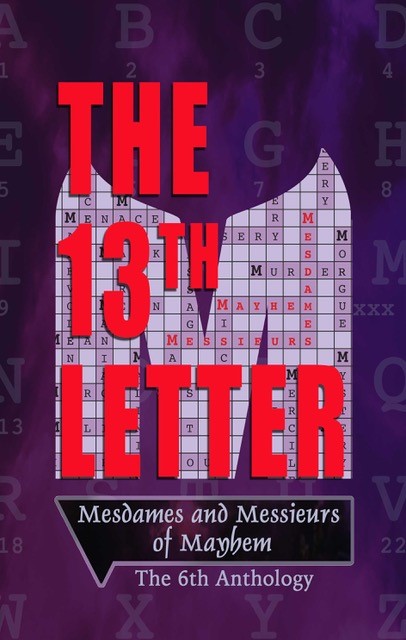

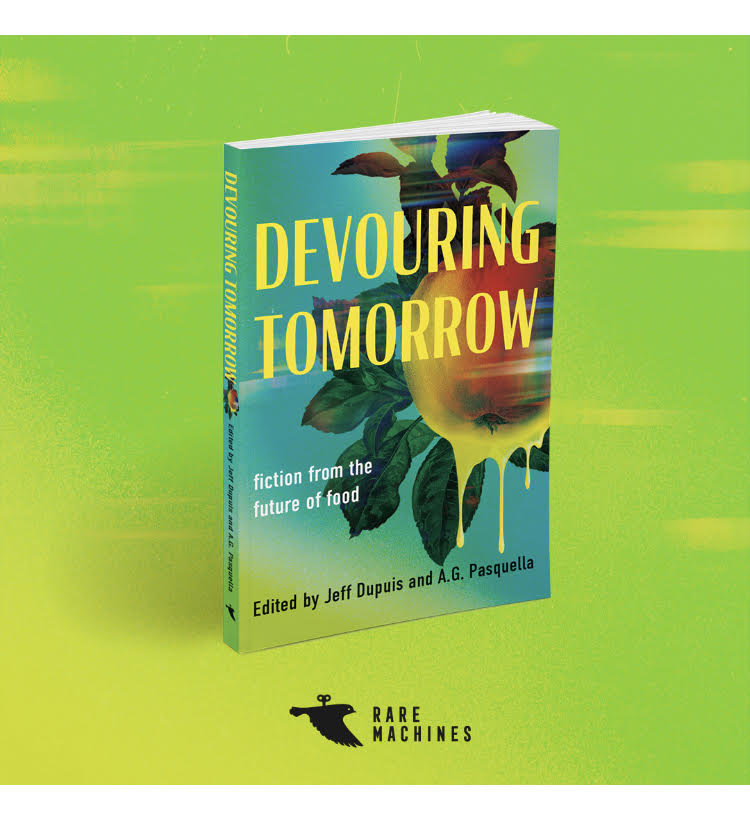


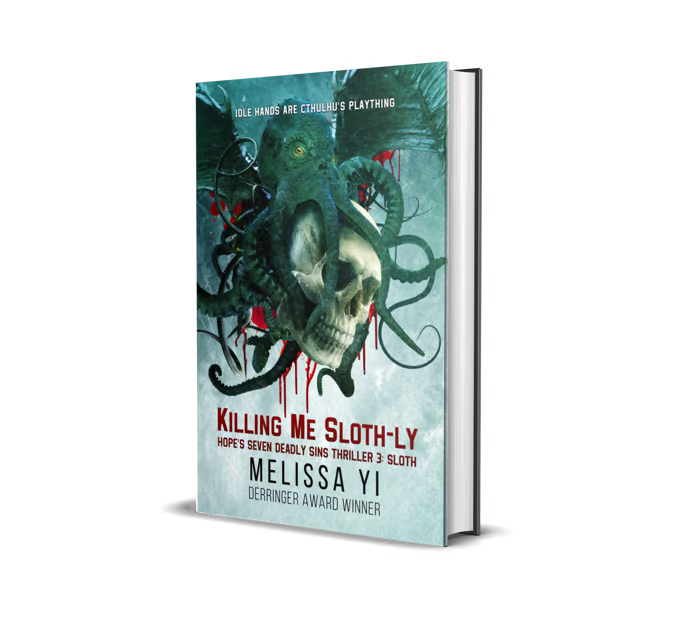



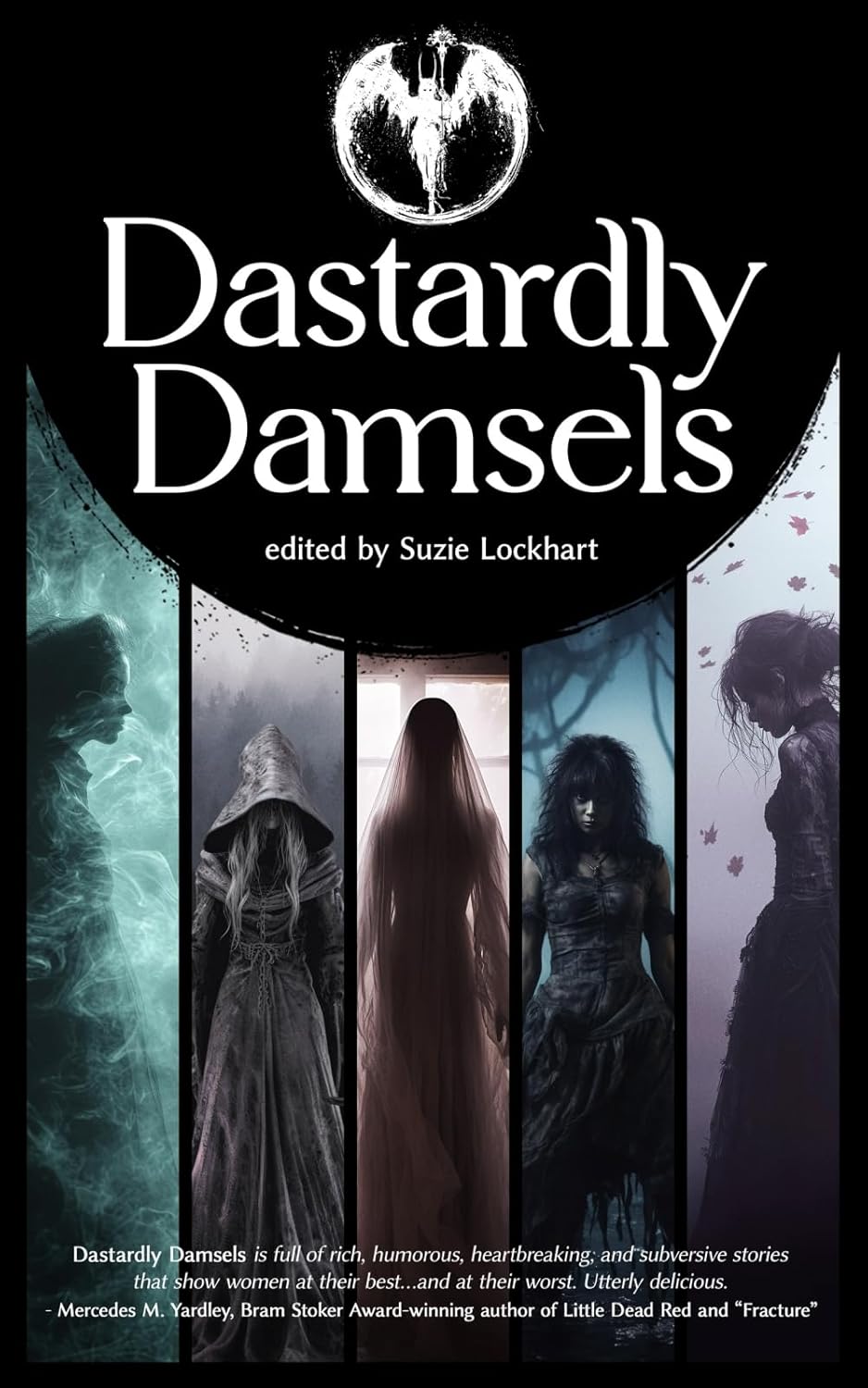


















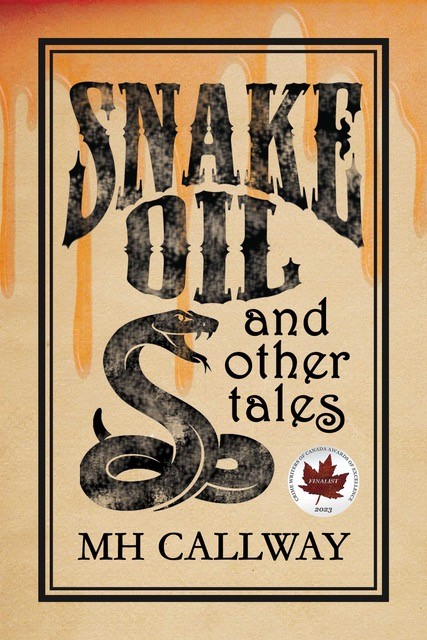


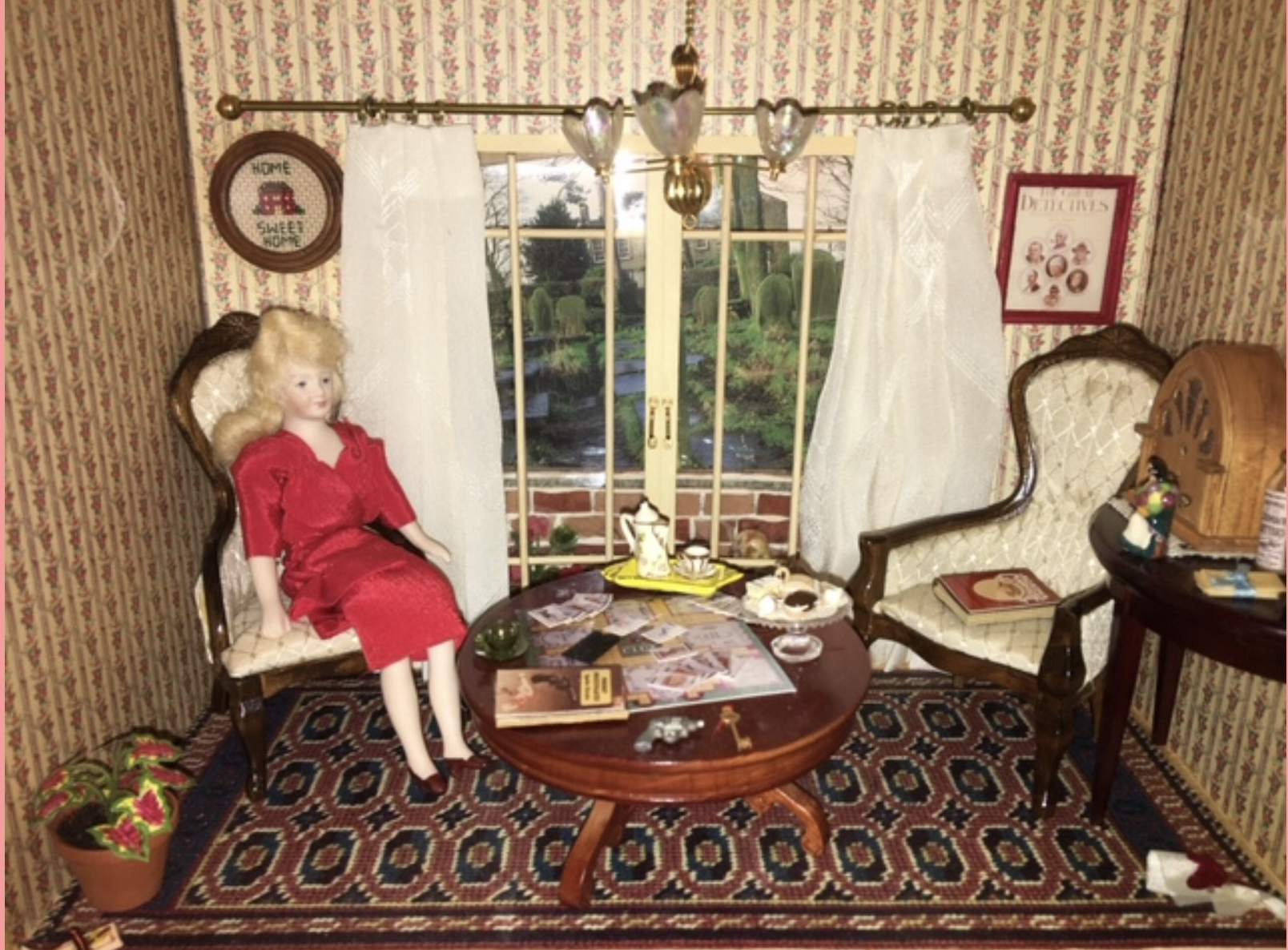





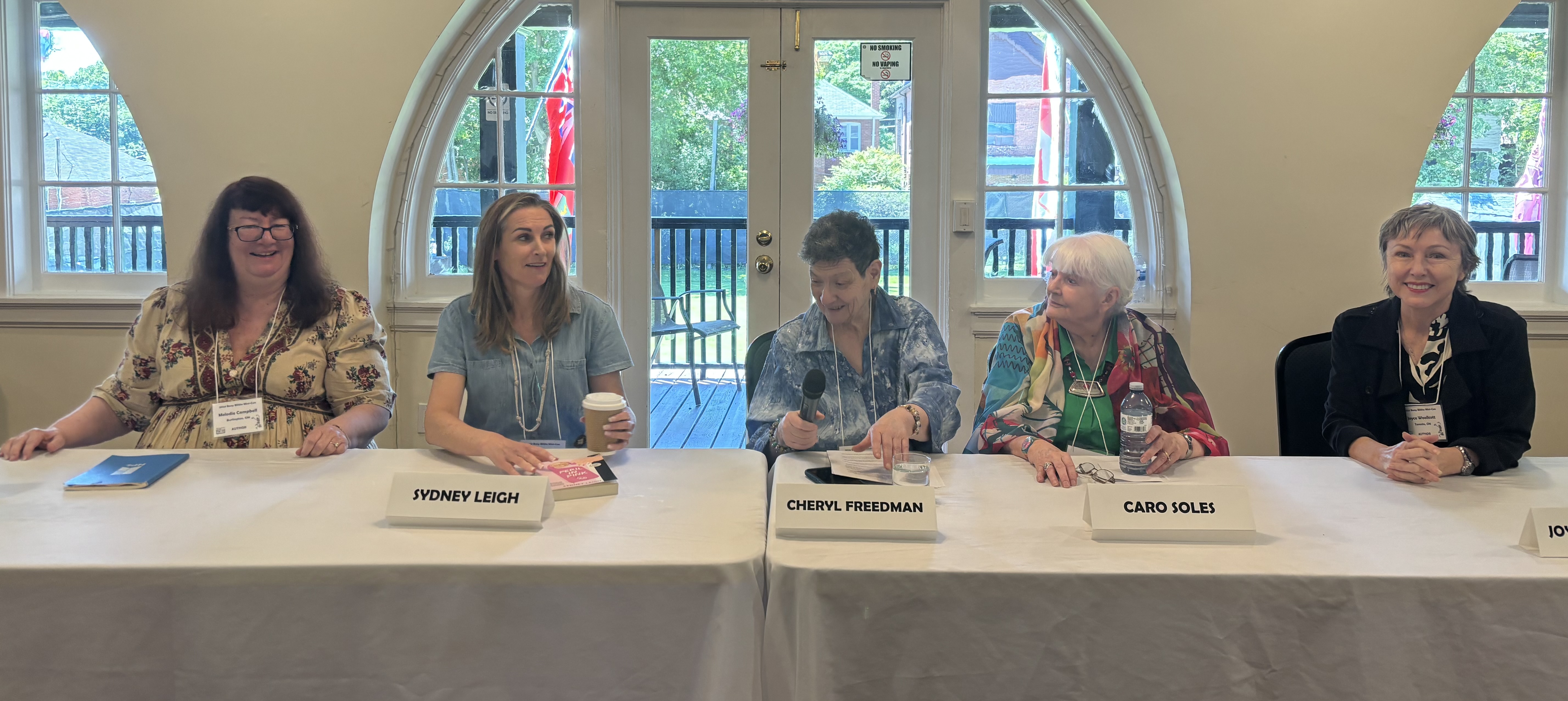


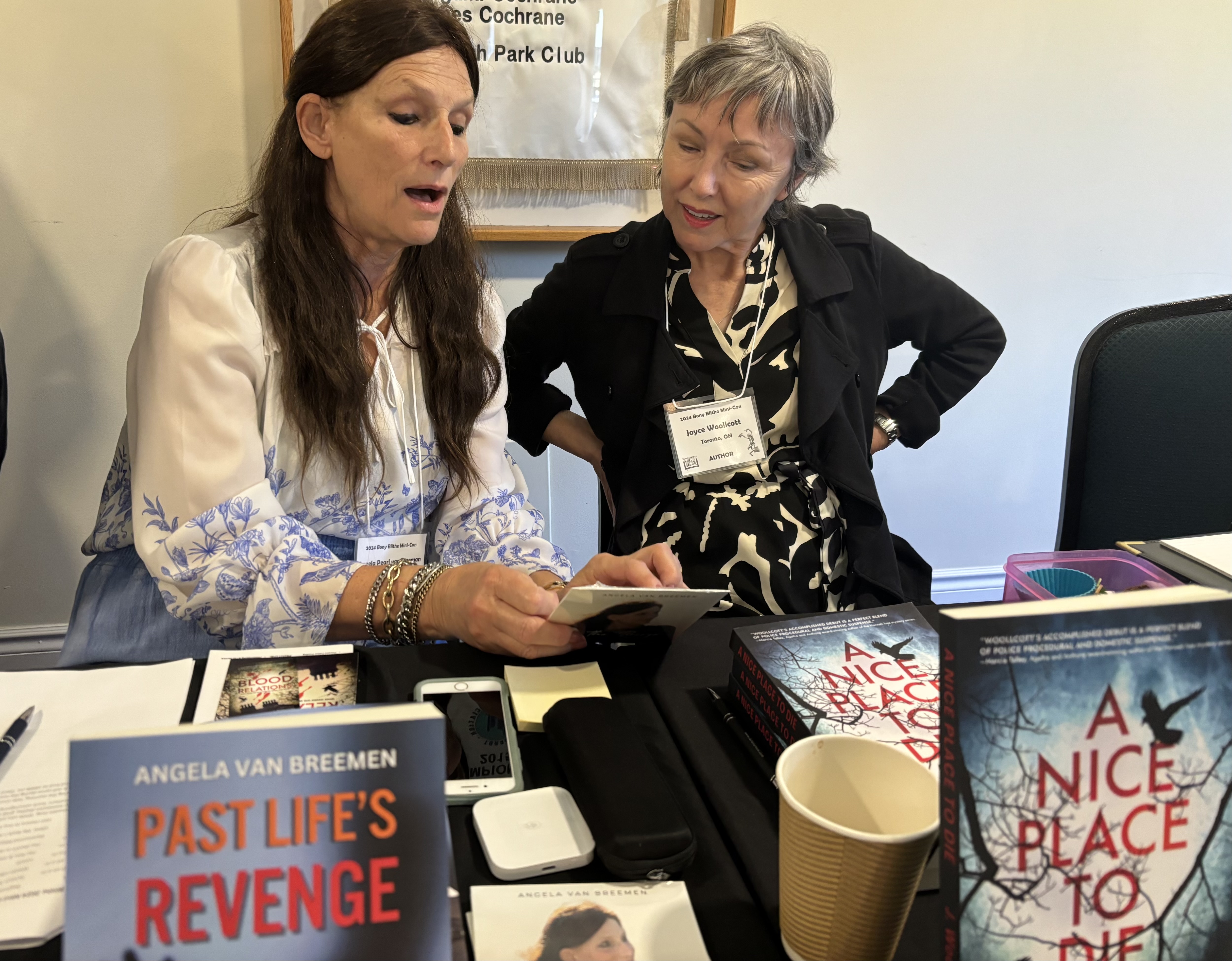
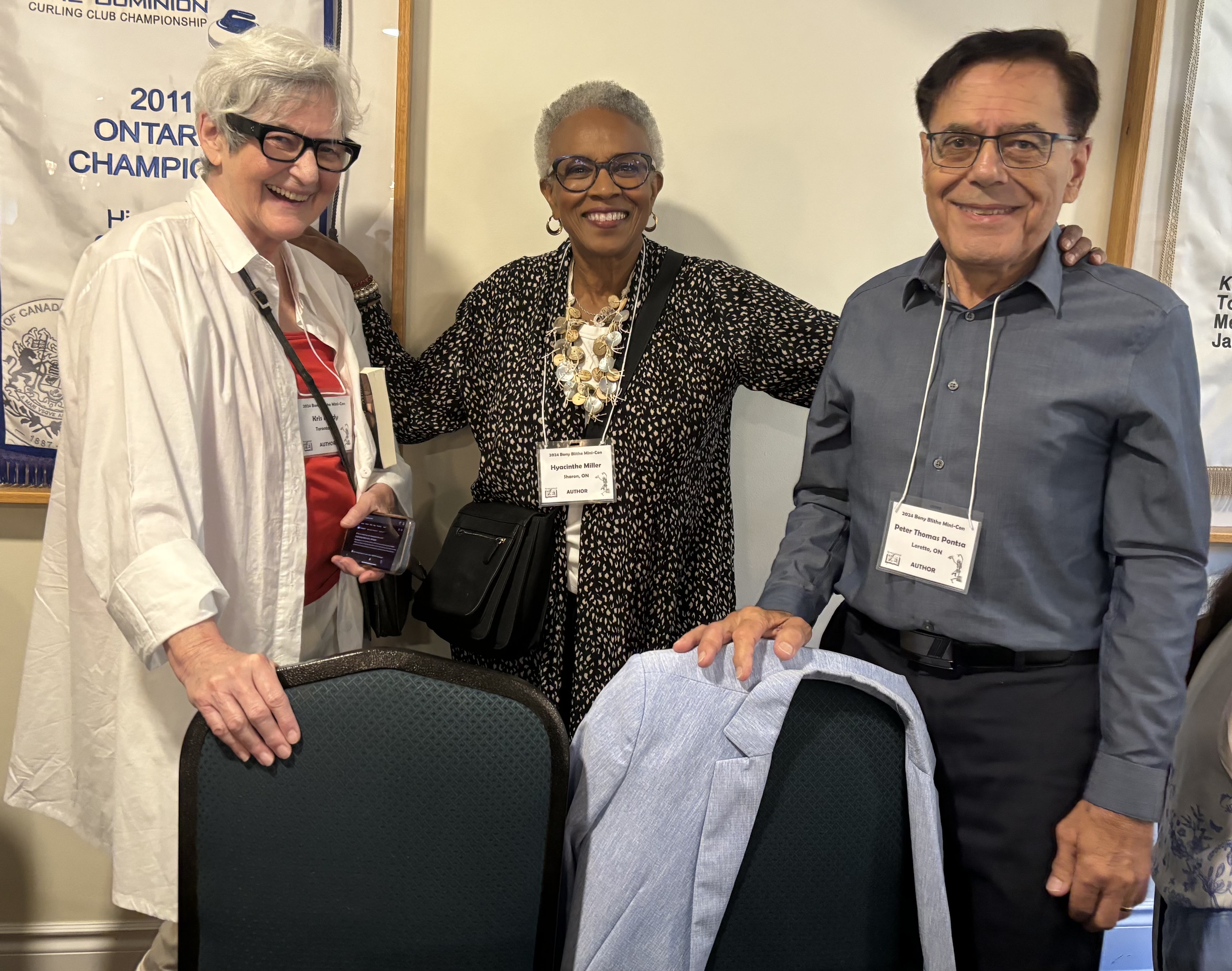
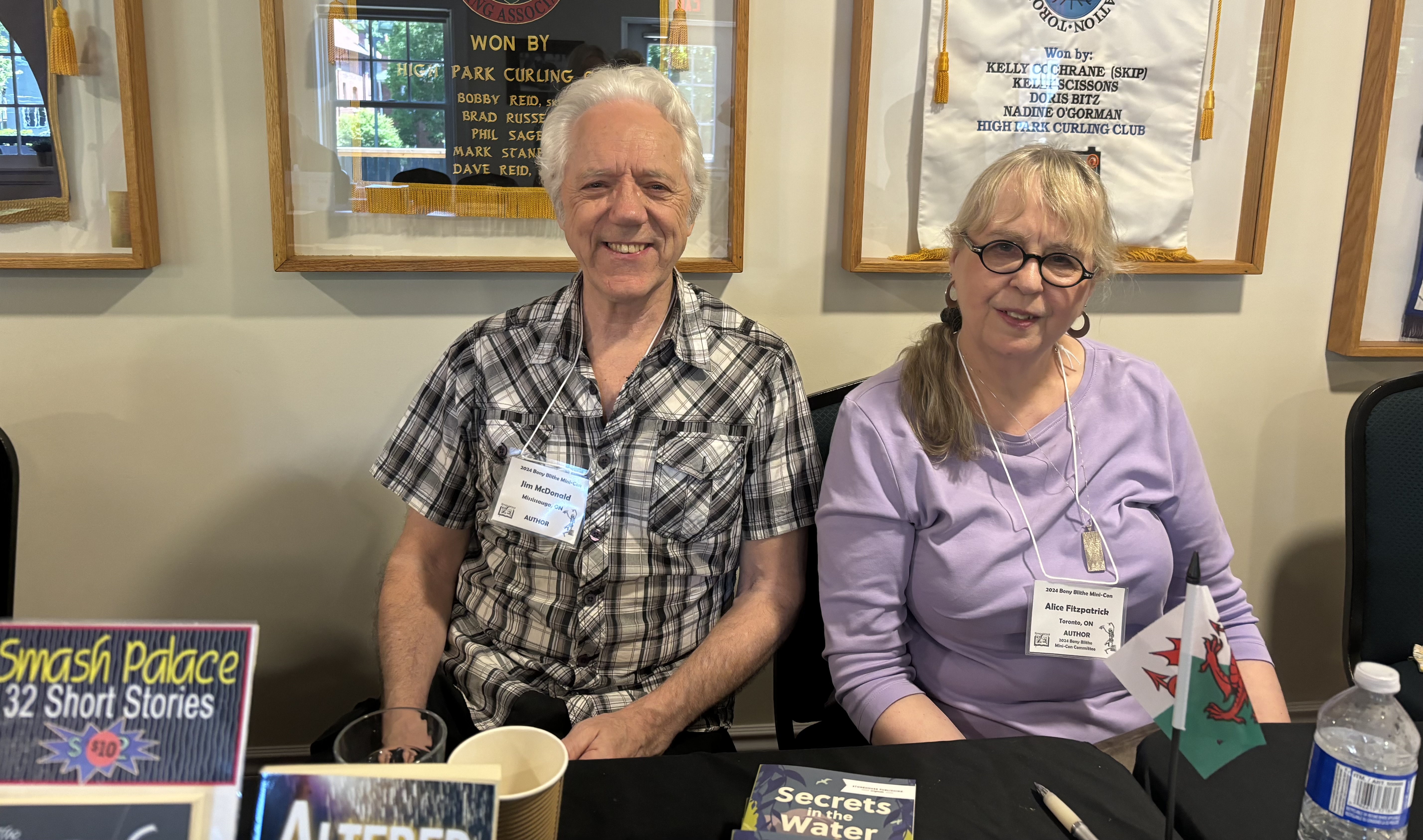


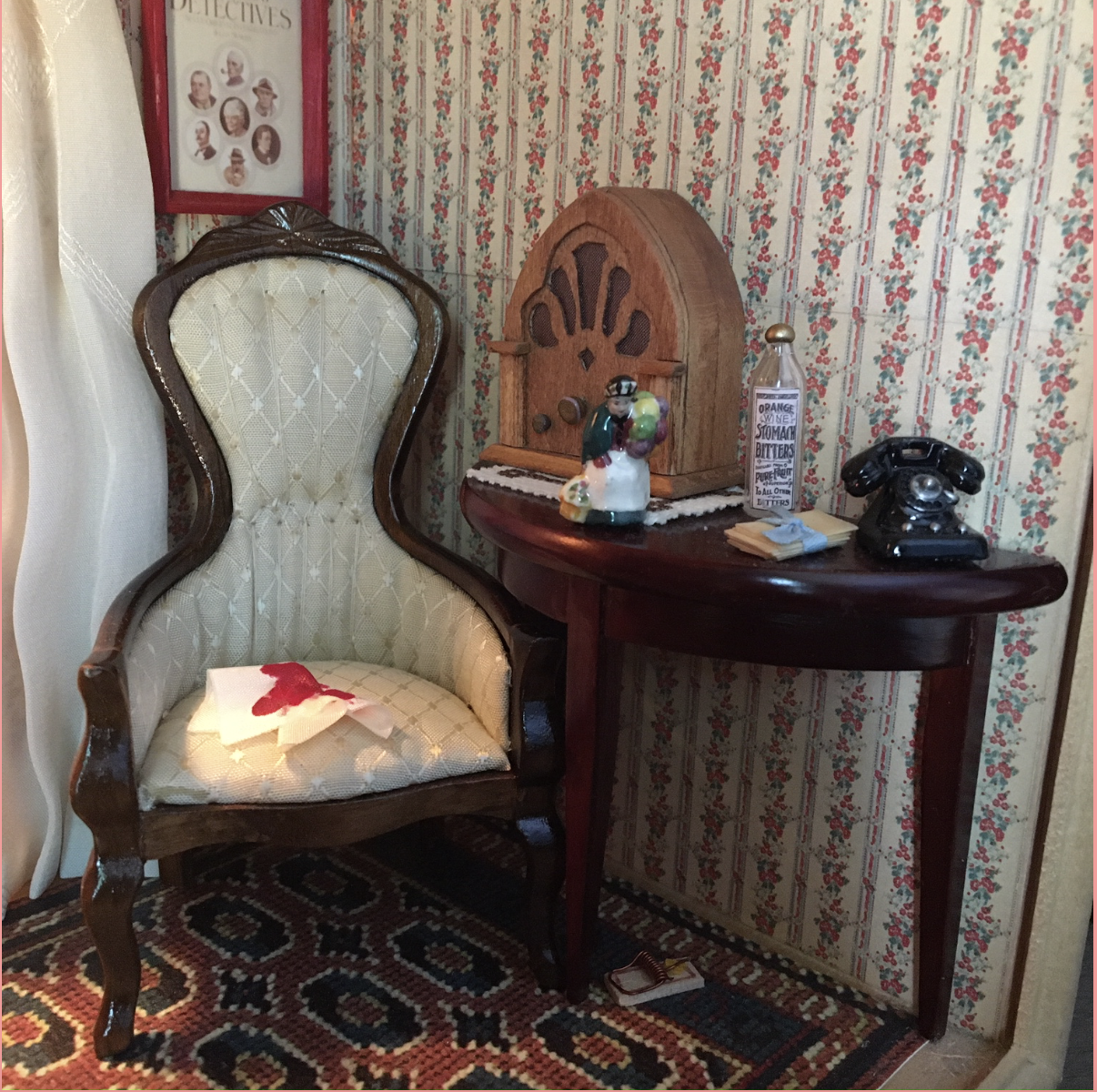













 Mesdames of Mayhem