Selling the Book ~ Joan O’Callaghan

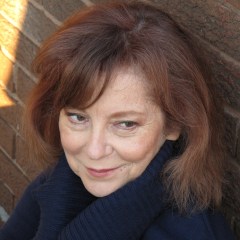
Joan O'CallaghanWhen my first books, Amazing Days and Places to See, People to See, Things to Do, All Across Canada, were published in the 90s, marketing them was easy -I didn’t have to do a thing! My publisher, Scholastic Canada, did it all – sent out review copies, saved reviews for me etc. My job consisted of filing my reviews, cashing the royalty cheques, being interviewed by my local weekly, and answering “fan mail” from two youthful readers in Labrador who felt I had given that part of the country short shrift.

Ah! The changes wrought by the passage of time! Authors no longer have to search for agents and publishers willing to take them on. The computer has put paid to all that, creating a book bonanza on the internet for readers. This has resulted in a seismic shift in traditional publishing, as these companies struggle to cope with fundamental changes to their industry. Among the changes is the way promotion and marketing is now handled.

Regardless of whether an author has signed on with a big press, a small press, or has decided to go it alone, there is a new onus on him/her to promote as well as write. Traditional publishers are now embedding marketing requirements into their contracts and watching closely to ensure that their authors are adhering to their agreements.

One needs to have a purpose for marketing. In the case of the Mesdames, it is exposure. And so by forming a collective, we hoped to pool our resources, skills and audiences to increase our reach. So what do we do?

Social media is the first and most obvious place to start. A Facebook page, Mesdames of Mayhem, Twitter account @MesdamesMayhem, and a website and blog are de rigeuer, along with tweet teams and blog tours to help spread the word.

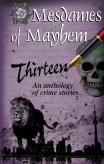
Being alert to opportunities can also result in some exciting and non-traditional venues. This has been the case with the Mesdames’ anthology, Thirteen. With help from Friend of the Mesdames, Jane Coryell, we entered into two promotional opportunities with theatre groups who were staging mystery productions. In return for using our website, Facebook page and Twitter account to promote their production, we were given permission to have a table at the theatres in question, sell our books, and be given a boost in the printed programs.

While at the theatre one evening, Madame Madeleine and I noticed a bookstore at the corner. We walked in, introduced ourselves, and handed the owner a bookmark and a book. He immediately told us he would take some on consignment and invited us to do a signing at the store. The local newspaper was on hand to photograph and interview us at the signing.

We contacted several Ontario wineries and invited them to contribute wine to our launch. Most didn’t express an interest, but one sent us a lovely letter wishing us well and enclosing a gift certificate for 10 people to tour the vineyard and enjoy a tasting – this contact has resulted in a reading at one of the winery’s evening events, likely next fall.

The Mesdames have bookings with several libraries in Ontario, to read and discuss the process behind creating and selling Thirteen. We have been invited to participate in some book clubs as well.

There are other irons for the Mesdames in the proverbial fire, but these will keep for another day. In the meantime, we continue to look for opportunities to showcase our wonderful book and our very talented collective of writers.

Several Mesdames joined hostess Cynthia Carpenter of Pickwick Books for a signing in Waterdown on February 1. Pictured here: M.H. Callway, Rosemary McCracken, Melodie Campbell, Cynthia Carpenter and our own Marketing guru, Joan O’Callaghen!
Posted in Uncategorized | Tagged , , , , , , , , , , , , , , , , , | Leave a comment

Sex in Fiction – Part II: the powerful intimacy of words… ~ Donna Carrick

Donna CarrickThe notion of sex in fiction is one that has ‘stirred’ authors, especially during the past 100 years.

Of course, sex and its corresponding representation in the literary arts dates back long before that, but it’s within the last century that openly expressed sexuality and sexual situations have been accepted as permissible in the mainstream arts.

Prior to that, only more taboo authors would dare to make room on the page for graphic sexual descriptions. The rest of us, mainstream authors in every genre, found it necessary to rely on metaphors for the sexual act, or, when all else failed, our scenes would simply “fade to black”.

Those days are gone…and while some of us mourn the more genteel half-expressions of sensuality, many authors are grateful for the creative freedoms currently granted.

Within our own beloved Crime genre, we still face the question:

How much is too much?

Our stories primarily involve crime, and the human situations that arise in the wake of criminal acts.

My rule of thumb is simple: If my characters find themselves in an intimate situation, then I, as author, will explore that situation with them.

We are sexual creatures, and a large part of what motivates us to carry out both noble and evil deeds is our innate desire for sexual expression and connection.

Embarrassed3Still, many authors find the act of writing about ‘the act’ to be awkward, even, at times, embarrassing. So how does one overcome those inhibitions, and free oneself to express sexuality on the page?

I take my inspiration from our fellow-artists, those who paint, act or sing. I’ve often noticed that the greatest of these, especially actors, are able to tap into a well of commonality that we share. When faced with a role that must convey true intimacy, they immerse themselves fully in that character, his needs, his desires.

So it is when I write about intimacy.

To do justice to the sexuality of my characters, and to touch readers on a meaningful level without resorting to gratuitous pornography, I imagine what my character’s needs and desires might be within a situation,

As writers, unless we are very comfortable with drawing on sensuality, we probably should avoid putting our characters in those situations. On the other hand, like most skills required in our craft, it does help to push ourselves beyond our current ‘comfort zones’.

When I choose to explore that deeply human aspect of my characters, I first step into my character’s heart, and from there I express his or her needs.

Words, as we know, hold great power. When we reach out through the page and touch our readers, there can be no greater intimacy for an author.

Donna is the author of 3 mystery novels: The First Excellence ~ Fa-ling’s Map, Gold And Fishes and The Noon God.

All titles are available in paperback as well as Kindle versions. Her first collection of 5 mysterious short stories titled Sept-Iles and other places is available for Kindle. Her second anthology, titled Knowing Penelope, features brand new sexy & sassy PI Penelope Canon.

Posted in Uncategorized | Tagged , , , , , , , , , , , , | 1 Comment

And Then There Were None ~ West End Studio Theatre, Feb/2014

Joan O'CallaghanThe Mesdames of Mayhem are joining forces with the original Madame of Mayhem, the wonderful Agatha Christie via the West End Studio Theatre (W.E.S.T.) in Oakville, for their forthcoming production of And Then There Were None.

In this superlative mystery, statuettes of little soldier boys on the mantel in a house on an island off the coast of Devon (UK) fall to the floor and break one by one as those in the house succumb to a diabolical avenger. A nursery rhyme tells how each of the ten “soldiers” met his death – until there were none. Eight guests, who have never met each other or their apparently absent host and hostess, are lured to the island and along with the two house servants, marooned. A mysterious voice accuses each of having gotten away with murder and then one drops dead – poisoned. One down and nine to go!

Murder, mischief and mayhem!! This production has it all!

Mesdames Blog AndThenThereWereNone-FacebookCover-850

The Mesdames of Mayhem, who never miss out on a good mystery if they can help it, will be on hand at the theatre. Drop by our table in the lobby to chat and browse through the books for sale. How better to warm up these frigid winter nights than to curl up with your favourite beverage and a good mystery!

And Then There Were None
Performance Dates and Prices:

Thursday, February 6……8 pm……$28
Friday, February 7……. 8 pm………$28
Saturday, February 8……8 pm……$28
Sunday, February 9……..2 pm…..$22
Wednesday, February 12….8 pm…..$22
Thursday, February 13…….8 pm……$28
Friday, February 14………..8 pm……$28
Saturday, February, 15…..8 pm…..$28
For tickets, contact the Oakville Centre for the Performing Arts
130 Navy Street
Oakville, ON L6J 2Z4
905-815-2021 or 1-888-489-7784 or book online at http://www.oakvillecentre.ca

Mesdames Blog AndThenThereWereNone-Facebooktext-850

Posted in Uncategorized | Tagged , , , , , , , , , , , , | Leave a comment

The Three C’S to Publication ~ M.H. Callway

​What happens after you are shortlisted – or even win – the Debut Dagger or the Unhanged Arthur? Will you finally get published? The answer, based on my personal experience and that of my friends, is definitely YES.

​That said, your journey to publication may still be a long and arduous one. Mine certainly was. After countless near-misses and setbacks, my novel, re-titled Windigo Fire, will be published by Seraphim Editions this fall. It was a DD finalist in 2009 under its original title, The Land of Sun and Fun, which makes it five years from short-list to publication.

​My advice to aspiring writers is to rely on three C’s: Confidence, Commitment and Courage.

​First of all, being short-listed for the Debut Dagger or the Unhanged Arthur should give you Confidence in your writing. Your entry has topped dozens, if not hundreds, of others. For example, in 2009, the year I entered, the Debut Dagger received 800 entries. The following year, when my friend, Mme Rosemary McCracken was short-listed even more writers gave it a try.

​One of the benefits of the DD is that The Crime Writers Association circulates all short-listed entries to agents. One or more agents may then contact you directly. Or if you decide to attend the Harrogate conference in person, you may meet agents more informally. Louise Penny literally bumped into her future agent in the buffet line. Other DD finalists never find an agent this way, or indeed at all, but this did not prevent them from getting published.

​To be published by a large, well-known company like Penguin or Random House, you must have an agent. But signing on with an agent is only the first step. There is no guarantee that your agent will manage to sell your book or even to take interest in your work. A friend of mine only learned by chance that her agent had retired – without telling her clients! If you are lucky, your agent will love your work and fight like mad to ensure it gets published.

​In the end, I had far more success by approaching publishers directly. And, yes, I believe that being a finalist for DD and the UA certainly helped to open the door. Just the same, I really had to rely on the second “c”: Commitment. It meant carefully studying the submission guidelines on publishers’ websites and sending my manuscript out, while tempering patience with practicality. Many publishers are overwhelmed and take a long time to get back to authors, if at all. It’s even more disheartening to lose time through “near-misses”.

​ That is why writers need the third “c”, Courage, most of all. It means weathering rejections and sending that manuscript out again and again. Still, when Seraphim accepted my book, I had to read and re-read their email to convince myself I wasn’t dreaming. And I keep a framed copy of that email in my office to inspire me.

Posted in Uncategorized | Tagged , , , , , , , , , , | 3 Comments

Murder by the Book — the mystery of playwriting, by Mat Kelly

Blackmail, greed, jealousy, a body in the library, and a locked door. Recently one of my plays, about a murder that takes place in an all-women’s mystery writers club was put on by the Village Theatre in Waterdown. The Mesdames of Mayhem found out about it and asked if I wanted to be a guest contributor and discuss writing for the stage.

The best piece of advice I can give to someone who is thinking about writing a play is also the most obvious. If you are going to write plays, go see plays, and read plays. That is the best way to get used to the medium. It will teach you how to format your play, how things work, and what is possible.

One thing you need to think about is economy of characters and locations. I’m reminded of something Neil Gaiman said about writing the screenplay for the fantasy film, Stardust. His heroes were trapped on a cloud and he needed something to rescue them. He had them picked up by a flying pirate ship. A few months later he was given a tour of the workshops and he saw an army of workers designing, building, and painting the flying pirate ship he took two minutes to write. Neil Gaiman said he felt like apologizing to everyone in the room.

In theatre you want to keep your characters and locations to a minimum, because every character you write is another actor on stage, and every location is a set that needs to be built and brought on stage somehow. Most theatres don’t have huge budgets, or acres of space. A professional theatre may not feel they can afford to put on a show with more than six characters. If you have a character that gets killed in the first five minutes, that’s an actor who has to spend the rest of the play backstage doing nothing.

Community theatres are volunteer based, and therefore may be willing to do a show with more characters, but they may not have the manpower or the technical expertise to pull off a complicated multi-set show. If you are going to write a play, it’s not a bad idea to do a bit of research on stagecraft. I studied technical theatre in university and have spent many years volunteering for various community theatres. When I write, I try to figure out how I would pull off a technical feet. If I can figure out how to do it, I know a creative director and designer can pull it off even better.

Keep things active and visual. I admit, I have trouble with this. I have far too many things being simply talked about. Not very interesting for the audience. When I have people read over my plays, at least once every script I get a comment along the lines of, “Oh, so the ageing starlet was caught kissing the young husband of the victim just before the murder? Maybe that’s a scene the audience would like to see.”

If you write short stories or novels, you are probably used to being master of your world. The look, the feel, how your characters act and react, is entirely up to you and the words you use. When you write for theatre, you are part of a team. It is your job to write the story and words your characters will say. The actors, director, and designers will then take what you’ve written and interpret it in the way they think is best. Trust them. Don’t try to do their job for them by adding in a lot of stage directions, descriptions, and writing how lines should be said.

Often one of the first things a director will do is take a marker and black out all of the extraneous notes. I base my stage directions on Shakespeare. All he ever wrote were entrances, exits, “They fight”, and the occasional, “Exit pursued by a bear,”. Trust that the dialogue you give your characters will be enough to tell the actors who this person is. Trust that your story is clear enough that the director will know what to do.

Personally, I find it a lot of fun seeing how other people interpret what I write. I once heard Canadian playwright John Lazarus tell a class, “There may be only one way you imagine a line to be said, but there are many right ways to say it,” and I believe that.

Theatre is collaborative. I find play readings a helpful part of the writing process. Because I have connections with local community theatres it’s easy for me. I simply ask one of my director friends to get a cast together. A month later I find myself sitting in a theatre with about thirty other people watching a group of actors reading my script in what can be described as nothing less than a mini production. It’s important to hear your lines out loud. It helps you find out what works and what doesn’t. You find out how other people see your characters. It is an invaluable source of feedback.

For those of you who do not have actor and director friends, a play reading is still easy to do. Just put out some wine and cheese and have a bunch of friends over to read the play. It’s usually not that hard to find volunteers. One of my friends described play readings as all the fun of a production with none of the stress and very little time commitment

Writing plays may not be for everyone. You have to be willing to put your work in the hands of strangers and hope for the best. Personally I find it very rewarding to see my words come to life. If you would like to learn more about my plays and I, please visit my website, www.matsmysteries.com.

Mat Kelly, author of Murder by the Book

Posted in Uncategorized | Tagged , , , , , , , , , , , , , | 1 Comment

See You Later, Alligator ~ Joan O’Callaghan

Joan O'CallaghanIf there is anything the recent ice storm has taught us, it is how helpless we can be when confronted with the forces of nature. And while there is much to be said for the traditional weaponry when plotting a murder, I find myself drawn to the natural world to do my dirty work.

In my novel, Tooth and Claw, Nola Jensen, an attractive wealthy woman with a past and some strange predilections, travels to New Orleans for a business conference. There her past catches up with her. What should have been a peaceful and enjoyable cruise on the Louisiana bayous turns into her worst nightmare, when she is pushed overboard and into the jaws of a very hungry alligator.

Although I have vacationed in New Orleans, one of my favourite cities, and have in fact, enjoyed a bayou cruise, I was not that familiar with alligators, so some research was necessary. While visiting my friends Janice and Larry Hatt at their West Palm Beach condo, I prevailed upon them to take me to see alligators. We went to a place in the Everglades called Shark Valley. Why it is named Shark Valley is a mystery to me since it is not a valley and there was a noticeable absence of anything resembling sharks. But there were alligators galore, and after, wandering off on a trail during a break in the tour and nearly stepping upon one – fortunately for me fast asleep – I wisely stayed in the tram for the duration of the outing.

Alligators continue to fascinate me, albeit from a safe distance. Genetically, they are linked to dinosaurs and have been around for some 230 million years, without evolving much. And while human beings are not part of their usual diet, they are considered opportunistic feeders, which means they will eat anything that comes their way. In 1995, a nuisance alligator was killed. The ‘gator, estimated to be about 50 years old, had seven dog collars in its stomach, one from a dog that had been missing for 14 years.

The jaws of the American alligator can exert 3000 pounds of pressure per square inch- enough to crunch bones. They generally kill their prey by rolling until the prey drowns. They then stash the kill in a muddy bank or underwater cave until it is putrid enough for the alligator to tear off pieces.

Alligators were hunted almost to extinction for their skin which is made into fashionable leather goods – shoes, handbags and belts, until they were declared an endangered species. However in recent years, their numbers have increased dramatically, and there is now an annual hunt in the bayous. Hunting licences are required for this. The recent series, Swamp People, on the History Channel, documents the hunt.

The supremacy of ‘gators in the Florida Everglades is now threatened by pythons. While not native to this part of the world, the giant snakes have found the Everglades to be an ideal home with no natural predators. The pythons are thought to number in the hundreds of thousands. An urban myth is that people adopted the snakes when babies as pets, but as they got bigger and threatened small children and family dogs and cats, the owners irresponsibly released them into the Everglades. A more plausible theory is that the snakes originally escaped from a breeding facility that was damaged in a hurricane. Winters in Louisiana tend to be about ten degrees colder than Florida which is too cold for the pythons and probably explains why the Louisiana alligators have not been threatened by the snakes.
If history stays the course, the alligators will prevail and continue on for many more millennia.

Joan O’Callaghan is a recipient of the Golden Apple Award from Queen’s University Faculty of Education for Excellence in Teaching; named Professor of the Year by OISE/UT Students Council, as well as Most Engaging English Instructor and Most Inspirational Instructor.

She is the author of three educational books as well as two e-shorts: George and For Elise (Carrick Publishing).

Her short story Stooping to Conquer appeared in the 2012 Anthology EFD1: Starship Goodwords (Carrick Publishing)

Visit Joan at her FaceBook Page
or Tweet with @JoanOcallaghan

Posted in Uncategorized | Leave a comment

Funny Lady Melodie Campbell featured in the Sunday Sun, Jan. 5/14

We’re incredibly proud of our own Mme Melodie Campbell, Crime Writer and Queen of Literary Comedy. On January 5, 2014, she was featured in the Toronto Sunday Sun! See below for the entire article by Linda White:

Posted in Uncategorized | Leave a comment

Music, Music, Music…and Books ~ by Catherine Astolfo

Catherine Astolfo“She looks like a jigsaw puzzle with a couple of pieces gone.” What does this tell you about the character of a woman who thinks this about her friend? (Especially since that friend has just careened off their balcony to her death.)

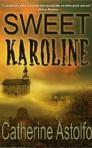
Sweet KarolineIn Sweet Karoline, I used this line from the song, Bad, Bad Leroy Brown, to both shock the reader and give some insight into my protagonist’s state of mind.

Lots of authors do the same. The Journal of Music and Meaning (JMM) states: “Music has played an important role in the fictional novel for centuries.” References to a song or a style of music can provide important information in a creative, interesting way. For instance, the reader might learn a great deal about the character’s emotions, tastes or age. Depending on the era of the music, we might deduce “the generation a character is from” (JMM). Or we might draw some conclusions about his or her mental health (or not).

Canadian author Peter Robinson refers so often to his main character’s musical interests that he includes playlists on his website.

Another Canadian, Rick Blechta, embeds music right into the plots, characters and setting (www.rickblechta.com). I’m sure you can think of dozens of other examples.

Many of our own Mesdames of Mayhem also use music in their writing. Below, you’ll get your chance to match up the author with the quote.

Whenever I read lyrics within a novel, I supply the music in my head. I believe this is the reason employing songs to enhance the experience is so successful. Suddenly the narrative is suffused with sensuality, danger, tenderness, comedy or grief. As Gerry Smyth says, “Standing for the un-writable and inexpressible, the novelist’s references to music nonetheless express emotions beyond the text, increasing the writer’s affective power by sleight of hand.”

An author can also lead a character back to a meaningful place and time through the use of a song. Haven’t we all got a lyric or melody that reminds us of a painful or hilarious or wonderful event? “Hearing” music in a book can connect us more closely to the narrative, the characters, or the time and place. Our experience is deepened. Our imaginations, our ability to visualize and relate, can be enhanced. After all, the creative side of our being loves any kind of stimulation, and combining two arts can certainly be stimulating.

I’m sure you know what to do with this little puzzle below. Connect the author to the quote. Send your answers to me at cathy@catherineastolfo.com. If you get it right, I’ll gift you with a free ebook!

Melodie Campbell “I’ll be using Lady Isabel and the Elf Knight by Steeleye Span in my novel.”
Joan O’Callaghan “I used Mozart’s Requiem.”
Donna Carrick “I used Beethoven’s Fur Elise in my short story.”
Cheryl Freedman “My books are full of music, from k.d. lang to Vivaldi.”
Jane Burfield “I used a song lyric for one of my titles!”
Rosemary McCracken “I do in almost every book! Mostly Italian!”
Catherine Astolfo “My main character plays the clarinet; there’s a spiritual connection to ancient music.”

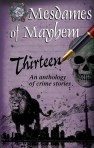
Thirteen, an anthology of Crime StoriesCatherine Astolfo is the author of The Emily Taylor Mysteries and Sweet
Karoline, published by Imajin Books. In 2012, she won the Arthur Ellis Award for
Best Short Crime Story in Canada. She’s a Past President and Derrick Murdoch
Award winner for service to Crime Writers of Canada. She’s a member of Mesdames of Mayhem and has a story in Thirteen (Carrick Publishing, 2013).

www.catherineastolfo.com

Posted in Uncategorized | Tagged , , , , , , , , , , , , , , , , , | Leave a comment

MESDAMES OF MAYHEM – BLOG DECEMBER 31ST ~ M.H. Callway

M.H. CallwayGreetings Readers!

What a year this has been for the Merry Mesdames of Mayhem – and we haven’t even celebrated our first anniversary yet!

Early in 2013, I had a little idea of how best to surf the tsunami of change in book publishing. Social media can give authors readers throughout the world, but how can readers find new authors? Several members of my two writing groups already had a strong web presence so if we all banded together, we could reach a truly staggering number of readers. And that’s how Mesdames of Mayhem came to be.

Today, less than a year later, the Mesdames have a vibrant website with a weekly blog on crime fiction. We are on Face Book and Twitter – all thanks to the enthusiasm and hard work of fifteen fabulous dames!

Thirteen, an anthology of Crime StoriesWe also brought out our first anthology of crime stories, Thirteen, (Carrick Publishing, 2013) in both print and e-format. Joan O’Callaghan and I dove head first into the mysteries of the cyber launch on September 5th. Twelve straight hours of terrific discussions with friends and fans as far away as Texas rocketed Thirteen to second place on Amazon’s mystery anthology best seller list.

On October 27th, the Mesdames launched the print version of Thirteen, at our favorite bookstore, Sleuth of Baker Street. The theme was Halloween and the Mesdames were out in force, if not in costume as witches, pirate queens and even a worm composter. The gothic decorations, flowing wine and the dark and delicious munchies helped make our book sales spectacular!

In November, the Mesdames ran a successful book selling co-venture with the Village Theatre in Waterdown. Murder by the Book is a light-hearted play about dastardly deeds in a writing group. Author, Mat Kelly, kindly inserted our name, Mesdames of Mayhem, into the script.

Thirteen is definitely The Mesdames’ lucky number. And 2013 proved to be a great year for publishing new books, bagging book deals, and winning awards and recognition.

Sweet Karoline
Mme Cathy Astolfo’s standalone novel, Sweet Karoline, was published by Imajin Books in July, 2013. It hit the bestseller list on Amazon Canada in the first week. She also has several short stories in the upcoming publication Uncle Tom’s Gabbin’ and So Am I.

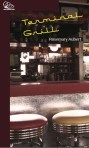
Terminal GrillMme Rosemary Aubert’s chilling novella, Terminal Grill, published by Quattro Books, received great response and acclaim from readers.

Mme Jane Burfield returned to writing with her story Triskaidekaphobia in Thirteen and warmly supported The Mesdames throughout all their ventures.

Mme M. H. Callway signed a contract with Seraphim Editions for her first mystery novel, Windigo Fire. Under different titles, it was short-listed for both the Unhanged Arthur and Debut Dagger awards. She was also co-editor of Thirteen.

Rowena and the Dark LordThe Goddaughter's Revenge, Melodie CampbellMme Melodie Campbell continues her reign as our very own Queen of Comedy. She published two books in 2013: Rowena and the Dark Lord with Imajin Books and The Goddaughter’s Revenge with Orca Books. Her short story, “Hook, Line and Sinker”, won the $3000 first prize in the contest held by Your McMurry Magazine. And her story, “Life without George” was short-listed for the 2013 Arthur and won second prize in the 2013 Hamilton Arts Awards.

Sept-Iles and other places
*
Mme Donna Carrick continues to build her company, Carrick Publishing, which now carries over sixty titles by diverse and talented authors. In addition to her work as publisher, she is the Mesdames’ webmaster, social media guru and co-editor of Thirteen.

A Cold White SunGold WebMme Vicki Delany saw two books published in 2013: A Cold White Sun, the sixth Constable Molly Smith book, by Poisoned Pen Press and Gold Web, the fourth in the Klondike Gold Rush series by Dundurn. Next year will be a big for Vicki. Not only will she be the Canadian Guest of Honour at Bloody Words, Canada’s mystery convention, but she’ll publish two new books: the seventh Molly Smith book, Under Cold Stone, and Juba Good, by Orca Rapid Reads. Recently she signed a three book contract with NAL, Penguin Group, for a cozy mystery series set in a lighthouse library in the Outer Banks of North Carolina.

Mme Catherine Dunphy created her story for Thirteen while researching and developing her novel set in Africa.

Mme Cheryl Freedman became President of the Board of Directors for Bloody Words. She is heading up the team that will put on the Toronto conference in 2014.

Black Water, a Pat Tierney mysteryMme Rosemary McCracken’s second Pat Tierney mystery, Black Water, was published by Imajin Books. Toronto Star mystery critic, Jack Batten, praised its “wonderful pace and invention”. Her short story, “The Pre-paid Funeral” appeared in the anthology, Nefarious North. At Bouchercon this year, she promoted Thirteen – though she had a story in each of the three crime fiction anthologies spotlighted.

The Book of Stolen TalesMme Dorothy McIntosh’s archeological mystery, The Book of Stolen Tales, was released by Penguin in Canada, Spain and Croatia. The second book in her acclaimed Mesopotamian trilogy, it was named Best Thriller of 2013 by Quill & Quire.

Mme Lynne Murphy’s manuscript was long-listed for the 2013 Unhanged Arthur award.

Mme Joan O’Callaghan is the Mesdames marketing maven. In addition to co-editing Thirteen, she completed a commissioned non-fiction project as well as her first crime novel. She spearheaded the co-ventures with community theatre and booked several readings for the Mesdames in 2014.

Mesdame Caro The Deja

Mme Caro Soles retired from Bloody Words after running Canada’s national mystery conference for fifteen years. She continues her animal rescue work as well as writing, teaching and travelling.

Find Me AgainMme Sylvia Warsh wrote her sinister story in Thirteen while continuing to work on her historical novel and other literary projects.

Wishing a Happy New Year to all our readers and expect even more scintillating news in 2014 from the Mesdames of Mayhem!

Posted in Uncategorized | Leave a comment

Writing Historical Fiction: Part II – by Sylvia M. Warsh

Sylvia Maultash WarshHow can we understand the world today unless we explore the past? I write historical fiction to try to understand why things happened. Lucky for me, I love doing research, though it’s a lot like eating potato chips. Once you start, it’s hard to stop.

Find Me AgainThe prevailing wisdom is you have to follow productive leads, while avoiding those roads that lead too far astray. But what is “astray?” During my historical digging for Find Me Again, my second book, a serendipitous discovery changed the direction of the story. I had gathered together some Polish history books to understand the background of several important Polish characters. But it was summer and we were at our cottage, so I began my reading with James Michener’s historical novel called Poland, which covers a thousand years of that history painlessly (if you overlook the melodrama).

I still remember sitting on the beach when I read about a young Polish count embarking on an affair with a married German noblewoman who later became Catherine the Great. Long after the affair was over, she ascended the throne and made him King of Poland for her own political reasons. In biographies of Catherine I discovered they had had a child together. Eureka! This material fit in surprisingly well with the theme of my book, lost children.

Delving more into the history, I became entranced with the Catherine story. She had kept detailed journals her whole life so there was no shortage of resource material. The lives of other notable figures in Catherine’s sphere, including Frederick the Great, enticed me. What to do with all this irresistible information? It became a story within the main story of the novel. After one of the 20th century characters is murdered, my protagonist, Rebecca Temple, finds a manuscript he had written about his family’s history. This book won the Edgar.

Season of IronPart of my third Rebecca Temple book, Season of Iron, is set in 1930s Berlin during the Nazi era. It turned out that memoirs were the best source of the information I needed because they contained details of daily life not found in history books. A surprisingly large amount of memoirs were written by German Jews who had escaped from Germany on the Kindertransport as children. They were often the only members of their family who survived and felt they had to tell their story. During my reading on the 1936 Olympics in Berlin, I came across a young high jumper named Gretel Bergmann, who would have won the gold medal for Germany if they hadn’t excluded her because she was Jewish. I based one of my characters on her, because, in this case, truth made the best fiction.

The Queen of UnforgettingMy fourth book, The Queen of Unforgetting, came about because I was so captivated by the history of Georgian Bay where we vacation. I have a small library on the subject, including archaeological finds. In the 1600s, Jesuits travelled here from France to convert the Huron to Christianity. Tragically they also brought with them European diseases. Those Huron who didn’t die from infection were massacred by their cousins, the Iroquois. For their efforts, the Jesuits were tortured and killed.

In the 1990s, I wrote a disjointed manuscript on the topic, then in frustration, put it away to write the Rebecca Temple books. After learning about plot structure from writing mystery, I returned to the Brébeuf novel and was able to sort it out. Again I structured my novel with a story within the main story. My protagonist, Mel Montrose, a beautiful grad student in 1972, writes a fictionalized account of historical events from the point of view of the enigmatic Jesuit, Jean de Brébeuf.

I have been collecting research for my latest project, The Book of Samuel, for several years because the setting and time period are unfamiliar to me: Washington, DC and a Virginia plantation in the 1840s. It has been a steep learning curve, which I have cheerfully climbed, but have paid for my pleasure with time.

Thirteen, an anthology of Crime StoriesSylvia Maultash Warsh writes the award-winning Dr. Rebecca Temple mystery series.

Her historical novel, The Queen of Unforgetting, published in 2010, was chosen for a plaque by Project Bookmark Canada.

Best Girl, a Rapid Reads book, came out in 2012.

Sylvia is a contributing author in the popular Crime anthology titled Thirteen. (Carrick Publishing, 2013)

She lives in Toronto where she teaches writing to seniors.

Visit Sylvia at her Website
or look for her books at Amazon.com

Posted in Uncategorized | Tagged , , , , , , , , , , , , , | Leave a comment