Author Branding: a sometimes “Mysterious” concept for Crime Writers ~ Donna Carrick

Donna CarrickFrom cryptic tales to cozies, from classic mysteries to thrillers, the scope of our beloved “Crime” genre is being magnified even as I write this entry.

The growing list includes: True Crime; Antiquities; Paranormal; Gumshoe; Literary Thrillers; Classic Mystery; Cozies; Romantic Capers; Comedic Crime… and many more that escape me at the time of this writing.

While it is wonderful to see our genre expand in this way, it does present many Crime authors with a minor dilemna: Where, oh where, do our stories and novels fit within this ever-shifting framework?

And does the answer to this question even matter?

It may be tempting to disregard the finer points that define our “Author Brands”. However, when we approach the question from a reader’s point of view, the distinctions become relevent.

Readers, when they enjoy our work, tend to be deeply loyal, returning time and again to a favoured author. They love to revisit characters, catch up with “old friends” and discuss the merits of a series with other bibliophiles.

As a life-long avid reader, I know this to be true.

In fact, some readers are so tied to their favourite styles, that many well-known authors choose to write under multiple names, in order to avoid reader-confusion.

For example, renowned Vampire author Anne Rice also pens under the names of Anne Rampling and A. N. Roquelaure. By doing so, she ensures that her loyal Vampire readers do not inadvertently pick up a copy of something…well…steamier.

So yes, in my opinion, “branding” does matter, even within the confines of our own Crime genre.

Here’s a challenge, and please feel free to leave your answers in the comment section below: As a writer, how would you define your personal “sub-genre”?
(I’ll begin by classifying all 3 of my published novels as “Literary Thrillers”.)

Tweet with @Donna_Carrick
Visit me at FaceBook
at my Amazon Author Page
or at Carrick Publishing

Posted in Uncategorized | Tagged , , , , , , , , , , , , , , , , , , | 13 Comments

ARE WRITING CLASSES GOOD FOR PUBLISHED WRITERS? ~ M.H. Callway

Just back from an intensive 5-day class, The Fiction Writers How To, taught at Loyalist College in Belleville, Ontario by master teacher and Best Friend of the Mesdames, Rosemary Aubert.

In attendance: Mesdames M. H. Callway, Rosemary McCracken and Joan O’Callaghan.

Now then, readers, you might ask, can a dozen published writers learn new tricks?

Well, if the published writers want to keep – and win – new readers, the answer is affirmatively YES!

Master teacher, and award-winning writer, Rosemary Aubert chose a novel approach to our class. We submitted questions about problems we’ve wrestled with – and need answers to. Rosemary received over thirty thorny issues from everyone: enough material for three week-long classes!

Some of the how-to questions we thrashed out during the week were:

How to write a sex scene – without laughing or cringing, or worse making our readers laugh and cringe
How to write a fight scene – without drowning our reader in cliché’s and revealing our far too theoretical knowledge
How to blend in research – without boring our readers to death

Rosemary led the roundtable discussions where we writers shared our solutions with one another. In addition, a few of us were asked to present on our personal areas of expertise, such as:

How to find a market for your short story – little money but many rewards
How to bag endorsements for your new book – and not offend established writers
How to give a book reading – without choking and turning off your readers

We spent half of our week sharing strategies on marketing in the new world of books. For MBA’s like myself, we see how publishing is evolving from a capital intensive business to one with a low barrier to entry: in other words, to a fragmented business. The challenges are many, but the opportunities are limitless.

Our biggest challenge: how do introverted authors transform themselves into salespersons?

In the afternoons, we gave feedback on each other’s work. Always so encouraging to see so much talent and to encourage new writers. Humbling to realize that becoming a writer means a long journey indeed.

Click here for a YouTube video: Lord of The Rings clip

Posted in Uncategorized | Tagged , , , , , , , , , , , , , | 2 Comments

Writing Courses: Are they Useful?

Joan O'CallaghanClose to 800 wannabe writers, all of whom had paid several hundred dollars to take the prestigious summer writing course and rub shoulders with some of the big names in Canadian letters, crowded into the auditorium at Humber College. The speaker that afternoon was the great and irreverent Mordecai Richler.

A member of the audience posed a question on the value of writing courses. Without skipping a beat, Richler told the audience he didn’t believe in them. There was a collective gasp. Why then, the questioner, persisted, was Richler teaching as a member of the faculty that week? That was easy, Richler responded. It was an opportunity to spend a week with his children who lived in Toronto.

What value is there to creative writing courses? Richler of course always flew in the face of convention. At the opening reception, he stood in front of a No Smoking sign, contentedly puffing on an odoriferous stogie.

Having experienced many writing courses, I beg to humbly differ with the late Mr. Richler. I think they can be of tremendous value. But not all writing courses are created equal. And to be successful, a writing course must have certain necessary components. For that I turn to the courses offered by Rosemary Aubert, herself an accomplished author (the Ellis Portal series, Terminal Grill, volumes of poetry, and more) and a gifted teacher. One of Rosemary’s stories will appear in our forthcoming anthology and we couldn’t be prouder!.

A good writing teacher tries to find out something about the level at which the students are functioning and plans the course accordingly. Have the students already been published? Have they completed a story or manuscript? Do they have an idea for a story but don’t know how to begin?

There should be time spent on actual teaching. This could include a lecturette on a relevant topic, again depending on the level of the participants, and/or actual writing exercises. For a group of beginners, a lecturette on how to begin a story so that it captures readers’ interest followed by examples and a writing exercise might be the subject of a class. For a more advanced class, the instructor may want to look at more subtle things like establishing tone or mood, or writing a credible sex scene without awkwardness or blushing.

The instructor should build in time for one-on-one mentoring since the participants in the course will likely be at different levels or places in their work and in need of some face-time devoted entirely to their own project.

An opportunity for participants to share their writing and receive feedback from the group is also necessary. Writers are often surprised at what readers like, don’t like, don’t understand etc. This feedback is invaluable. However there should be ground rules established by the instructor, shared with the class, and enforced. In other words, the instructor needs to establish the classroom environment as a safe space – safe to share one’s writing without being ridiculed or put down, and safe to voice criticism. I was once in a class where I offered some suggestions to an author whose work was being discussed. A classmate jumped up and told the author that her work was perfect and to disregard everything I said. The instructor did not intervene. Embarrassed, I clammed up. The classmate did apologize to me later, and the author e-mailed me to say how badly she felt about the incident because she was interested in what I had to say. However the damage was done. That class was not a safe space for speaking honestly, and for the duration of the course I kept my comments carefully neutral.

So yes, I am a believer in the value of writing courses. But do your homework first and pick one that promises to be a positive learning experience.

As for me, I am off to Loyalist College in Belleville next week with fellow Mesdames Madeleine Harris Callway and Rosemary McCracken to once again benefit from a week of intense writing and learning from our master-teacher Rosemary Aubert.

Posted in Uncategorized | Tagged , , , , , , , , , , , , , , , , , , , , , , | Leave a comment

WRITERS’ FESTIVAL IN BAYFIELD

Bayfield GroupIn two weeks time, Mesdames Cathy Astolfo, Melodie Campbell and M. H. Callway will be meeting aspiring writers and mystery fans in Bayfield, Ontario. They’ll be joining with friends Alison Bruce, Rene Natan, J. A. Menzies and Tanis Rideout to read from their work and to spread the word about the vibrant Canadian mystery scene.

The 2013 Bayfield Writers’ Festival is an annual event sponsored by the Village Bookshop in one of the prettiest towns along the Huron Coast. Do join us! And do help us spread the word by sharing on Facebook and Twitter.

Please share this link:
http://www.bayfieldwritersfestival.com
Thank you!

Posted in Uncategorized | Tagged , , , , , , , , , , , , , , , , , , , , , , | Leave a comment

How To Write A Review — OR: Apologies from a teacher who misguided you

Catherine AstolfoWhen I was an elementary school teacher, I assigned lots of book reviews. Depending on the grade level, I had certain outlines created by a committee or an individual teacher or even the Ministry of Education. None of these templates ever considered the Internet world. Why? Well, in my time, it didn’t exist. These days, the Internet is still ignored because writing a review in school has far different goals from writing a review on Amazon or Goodreads or any of the other myriad online sites.

The goals in school are two-fold. One, the student must prove to the teacher that s/he has actually read the whole book. Thus, a sufficiently detailed summary of the novel is a prerequisite. Two, the teacher focuses on certain skills to be demonstrated, all the way from the ability to predict outcomes based on clues to spelling or grammar.

A review for Amazon (I’m using the monster site to stand in for all the others) is entirely different. Firstly, there is only one major goal, although perhaps the reviewer may have a personal second. The major goal is to tell other readers about your own reactions to a novel you have read. If there is a second objective, it’s to promote/support the author (more on this later).

Let me wax prosaic on the first objective and make my apologies to students who have followed their teachers’ rules into the present. Here are some entirely new ones, from me. When you do an Amazon review, do NOT summarize the book. All the online sites, especially Amazon, provide excerpts, summaries, or synopses. As a reader, I can check out three whole chapters for free. I don’t need you to summarize. If you haven’t really read the book, you are just cheating yourself, or the author. And if you are a cheater or have an agenda to attack the writer, I’ll be smart enough to see very clearly through your subterfuge. So please don’t bore me with your perception of the novel’s plotline. Or worse yet, tell me the entire story. Leave the summarizing to the professionals.

What I am interested in is your reaction to the novel. This is your opportunity to write two or three sentences giving your opinion. You are not bound by the old rules. You are relieved of the summary task and you don’t have to prove any expert literary skill to anyone. (Although you may want to demonstrate correct spelling and grammar to be taken seriously.) Your only goal is to tell other readers what you thought of and how you felt about this particular book.

I want to know your reaction to the characters. Did you like them (especially the main ones)? Were you repulsed, yet fascinated, by any evildoers? On the other hand, did you find them dull or unbelievable (e.g. their dialogue was unnatural)?

Let me know if the plot held you spellbound, was based on fact/history/fantasy or whatever, or if it was slow, tedious or implausible. Again, I don’t want the details. I want descriptive reactions from you. “I couldn’t put this rollercoaster ride of a book down for one minute.” “I fell asleep every couple of pages.” “The history was fascinating and informative.” “The fantastical world of Astolfoland was beautiful, sumptuous and believable.”

Speaking of Astolfoland, you might want to focus on the setting. Was the landscape truly phenomenal? Pastoral, bucolic or frighteningly futuristic? Was the emphasis on the surroundings what turned you on or off the book?

Tell me what you thought of the author’s style. Did you enjoy their sarcastic wit? Was the funny, sardonic voice of the character hilarious? Do you like crisp, succinct writing that keeps a plot moving? Did you love the long, luxurious descriptive narrative?

You don’t have to use fancy vocabulary and you don’t, I repeat, don’t have the tedium and difficulty of writing a synopsis. You only have to tell the other readers how you personally reacted to the book.

This template translates into perhaps five minutes of your time. You don’t have to get very technical about each of these categories, but you can if you want to (e.g. search plot types and categorize the book if Amazon hasn’t done it to your liking). If you have more time, go ahead and Google. Otherwise, craft three short sentences about your personal opinion. Write about how you felt about the book and what you thought of the style (pick a focus if you want: voice, viewpoint, technique), setting, plot (thriller, narrative, type of conflict, romance) and/or characters (dialogue, description, actions). Cover all these categories or the one that affected you most and caused you to like/dislike the novel.

As a writer, I would be thrilled if everyone used this technique. Why? Because readers would then submit more reviews. Unencumbered by the difficult task of creating a synopsis or demonstrating a specific expertise, the reviewer knows exactly what to say. After all, their reaction to the novel is personal, unique and honest, and therefore easy to write.

One last thing: about the honesty. Of course it’s preferable to be truthful. But that doesn’t have to translate into mean, vicious and soul-destroying. There is a gentle way to say “that jacket makes you look fat”. A professional, responsible way to state that your reaction to the book was negative. I can say, “I disagree fundamentally with the viewpoint” or I can say, “The author takes a stupidly ridiculous stance”. One accepts responsibility for the opinion; the other blames and demeans. Another way to accept responsibility and be professional is to use your own name when you review a book. Don’t hide behind a moniker. If you are a friend/relative of the author, say so. As a reader, I will take your relationship into consideration. If you are one of my students trying to seek revenge for a low mark on a book report, let me know, and I’ll be sure to put an A on your review.

Now, go ahead and review your favourite author’s books!

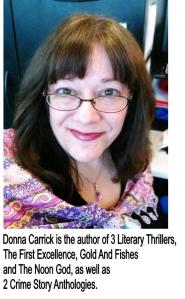
Everything you ever wanted to know about Catherine and her books (including contact links) is on her website. Come and visit! www.catherineastolfo.com

Posted in Uncategorized | 1 Comment

Two Great Sequels coming to you live from Mesdames Rosemary McCracken and Melodie Campbell!

Posted in Uncategorized | 1 Comment

It’s all a matter of point of view ~ Rosemary McCracken

Rosemary McCrackenBefore keyboarding in the opening sentence, a writer needs to decide what point of view that novel or story will take. I didn’t do this when I started to write Safe Harbor, the first book in my Pat Tierney series. I plunged into the story, telling it from the POV of a third-person narrator. For some vague reason, I felt the first person narrator was too common in mystery novels, especially those by North American writers. The late Robert B. Parker used it in his Spenser series. Janet Evanovich, Sue Grafton and Sara Paretsky use it. I enjoy the works of Parker, Evanovich, Grafton and Paretsky, but for some vague reason I was determined to be different.

I completed the first drafts of Safe Harbor in the limited third person, the form of narration that lets the reader see the events from the POV of a single character or a few characters at the most. Early in 2009 I entered the manuscript in Britain’s Crime Writers’ Association’s Debut Dagger competition, a contest open to English-language writers around the world who haven’t had a novel published. The CWA didn’t get back to me, which meant, in a competition that attracts hundreds of entries, often more than a thousand, that the manuscript hadn’t made its shortlist.

I went back to Safe Harbor and applied more polish. Later that year, veteran Canadian crime writer Gail Bowen had a stint as writer-in-residence at the Toronto Reference Library and she read the first few chapters of the manuscript. “This book needs to be written in the first person,” she said when we met. “We need to know what Pat Tierney is thinking and feeling every step of the way.”

I felt like a light had been switched on in my head. Safe Harbor is a murder mystery, but it’s also the story of Pat’s personal journey. She learns about her husband Michael’s infidelity and starts to get on with her life. The story’s events—Jude’s murder and the danger little Tommy faces—affect Pat deeply because of her personal involvement in them. Jude was the mother of Michael’s child. Tommy is Michael’s son and a reminder to Pat of her husband’s affair. I realized I needed to get deeper into Pat’s head. And the best way to do that was to let her tell the story.

I rewrote the book in the first person. I knew Pat well, so I felt completely comfortable jumping into her shoes. And right from the start, I knew I’d made right choice. I felt an energy emanating from the story that hadn’t been there before. I showed several chapters to members of my writers’ group, and they agreed.

Early the following year, I entered the rewrite in the 2010 Debut Dagger competition. Same title, same storyline as my previous submission, but this time it was told in the first person. That year Safe Harbor emerged as one of 11 novels—out of about 1,100 submissions from around the world—that were shortlisted for the award. I was astonished…and thrilled. Being on that shortlist has been one of the highlights of my writing life.

I’m sure that the intimacy created by the first-person narration made all the difference in attracting the judges’ attention, and I went on to write Black Water. The second book in the Pat Tierney series explores Pat’s relationship with her daughter Tracy. It’s also in first person. The Pat Tierney books will all be written in first person, at least the sections that deal with Pat.

Will I always use a first-person narrator? Not necessarily. Every standalone novel, every series and every short story demands a certain point of view, depending how far the writer needs to get inside certain characters’ heads. Here’s a useful strategy if you’re uncertain what POV to use at the outset. Try writing opening chapters from different points of view, and settle on the one that is most comfortable for you as a writer and is the most effective for the story you want to tell.

Rosemary McCracken has worked on newspapers across Canada as a reporter, arts reviewer, editorial writer and editor. She is now a Toronto-based fiction writer and freelance journalist. Her first mystery novel, Safe Harbor, was shortlisted for Britain’s Crime Writers’ Association’s Debut Dagger in 2010 and published by Imajin Books in 2012. You can buy it here.

Black Water, the second book in the Pat Tierney series, has just been released at the special introductory price of .99! You can buy it here.

To win a $50 Amazon gift certificate, enter the Black Water giveaway contest here. Deadline is June 15.

Posted in Uncategorized | Tagged , , , , , , , , , , , , , , , , | 1 Comment

Greetings, Readers! ~ M.H. Callway, May 24

M.H. CallwayComing up is the most exciting week of the year in Canadian crime writing. And the Mesdames are immersed in both upcoming national award events.
May has been a whirlwind month of book launches, readings and publicity, including two weeks on CBC Canada Writes. Two of our Mesdames of Mayhem, Cathy Astolfo and Donna Carrick were featured!

First off is Bony Blithe’s Gun Club and Quilting Bee Gala Award Reception. On May 29th, 6:00 pm at the National Club in Toronto, we find out who is this year’s winner of the Bony Blithe prize for best light mystery.
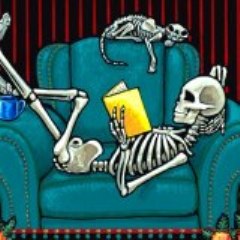
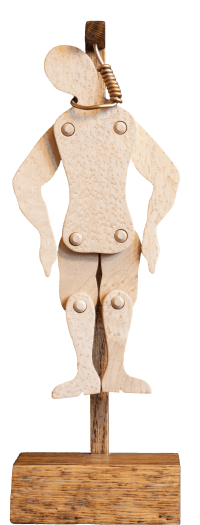
Bony Blithe

This will be a fun evening with a surprise MC, prizes and tasty noms. And best of all, a chance to meet and greet the finalists.

BB is a newcomer to the awards scene: this is her sophomore year. Her midwives, the four Mesdames, Caro Soles, Cheryl Freedman, Jane Burfield and M.H. Callway, worried that she’d have legs. But she took off and ran a marathon.

Nearly forty books competed for this year’s prize. The final field proved so strong there are no less than six finalists.

Visit BB’s website for more information. All finalists’ books will be on sale at the gala.

Arthur Ellis AwardOn May 30th, the Crime Writers of Canada present the Arthur Ellis awards for excellence in Canadian crime writing. Details on the finalists and tickets to the banquet are on the website.

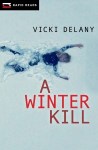
We are especially proud of Mesdames Vicki Delany and Melodie Campbell who are up for two of the awards. Vicki’s book, A Winter Kill, is nominated for best novella, and Melodie’s story, Life without George, is in the running for best short story. Fingers crossed, Mesdames!

Many kudos are also due to MM Cathy Astolfo, wizard organizer, and herself winner of two Arthur Ellis awards, for her hand in this year’s festivities.

We will be announcing the winners on the Mesdames website. Stay tuned.

Posted in Uncategorized | Leave a comment

The Sophomore – D.J. McIntosh, May 14, 2013

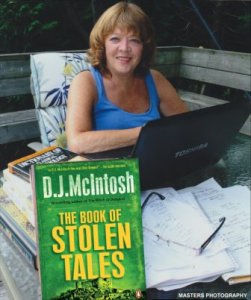
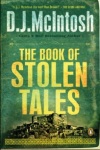
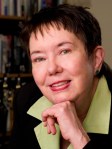
D.J. McIntoshThe Book of Stolen Tales, officially released by Penguin Canada on May 28th, is the second in the Mesopotamian trilogy. New York antiquities dealer, John Madison, hunts for a rare copy of a 17th century Italian book of fairy tales, the first European anthology of the famous stories that are now, so familiar to us. As Madison’s quest deepens, the dark origins of those tales seem to come to life and lead him to the ancient abode of the Mesopotamian god of the underworld.

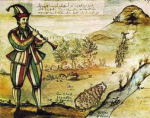
Researching and writing this book was really absorbing and it unearthed some fascinating facts. Here are just two of the many things I learned: There appears to be strong evidence that The Pied Piper was based on an actual historical event. The town of Hamelin really exists and the picture below is a reproduction of a stained glass window in the German “Market” Church. It includes a poem describing the children’s disappearance.

Pied Piper

French fairy tale author, Charles Perrault, set his version of Sleeping Beauty at the beautiful Chateau d’Uséé at the edge of the Chinon forest in France, not a Castle on the Rhine like the one Disney used.

Mesdames Dorothy Image Chateau

We’re very pleased with some early impressions: Chatelaine Book’s Editor Laurie Grassie tweeted this:

“Reading + loving @djmcintosh1’s upcoming The Book of Stolen Tales, 2nd in a trilogy. Clever + intriguing. Shades of Arturo Pérez-Reverte.”

The Book of Stolen TalesStart up of book promotion promises to be a lot of fun beginning on May 23rd with a launch at the Carlton Cinemas in downtown Toronto, a reception, followed by a private screening of Jean Cocteau’s classic Beauty & The beast.

And Penguin will be releasing my short story The Winter Wolf, a new twist on Red Riding Hood, as an e-story and promo for The Book of Stolen Tales.

Many thanks to my sisters of Mayhem for giving me so much help in spreading the word!

Looking for summer read? The Book of Stolen Tales is available for pre-sale at Amazon now!

Or Pre-Order now at Chapters/Indigo

Or through your favourite Indie Bookstore!

Visit D.J. McIntosh at her Website: www.babylontrilogy.com

Posted in Uncategorized | Tagged , , , , , , , , , , , , , , , , , , , , , , , , | 1 Comment

Greetings Readers! ~ M.H. Callway

M.H. CallwayMay is the month for Canadian crime writing – book launches and award galas aplenty. No less than three of the Mesdames of Mayhem have new books out:

Melodie Campbell, Rowena and the Dark Lord
D.J. McIntosh, The Book of Stolen Tales
Rosemary McCracken, Black Water (Cover to be announced.)

Rowena and the Dark Lord The Book of Stolen Tales Rosemary McCracken

And two of the Mesdames have works up for an Arthur Ellis, Canada’s national crime writing awards: Melodie Campbell for her short story, Life without George and Vicki Delany for her novella, A Winter Kill.
A Winter Kill

I have a warm place in my heart for a certain skinny lady, the fabulous Bony Blithe. She’s a relative newcomer to the awards scene, celebrating her second birthday this year. I was one of the midwives, so to speak, who helped bring Bony into the world.
Bony Blithe
Bony Blithe is the brainchild of Mesdames Caro Soles, Cheryl Freedman, Jane Burfield and myself. She bestows a generous prize of $1000 to the best Canadian light mystery. Our feeling was that light-hearted mysteries tend to get overlooked for the weighty Arthur and Edgar awards. Serious awards that require a serious, if not bleak, vision. In other words, noir!

Bony Blithe contenders are anything but. BB embraces comedies and cozies, thrillers, send-ups, supernaturals and gothics, just to name a few. Suspense is great, even a little naughtiness, and crossovers into fantasy or the paranormal are welcome. But please no gloom!

When BB turns the last page, she wants to close the book, smile and say, “Now that was a damn fine read!”

Discover more about the 2013 finalists for the Bony Blithe at her website: http://www.bonyblithe.com/
Or Join us on FaceBook.

Join us at the National Club in Toronto on May 29th, 6:00 pm for the Bony Blithe gala. Tickets are available via internet and snail mail.

Click HERE for tickets to the May 29 Gala!

See you there!

Posted in Uncategorized | Tagged , , , , , , , , , , , , , , , , , | Leave a comment