NOVEMBER STORY: The Iron Princess by Therese Greenwood

Therese Greenwood
Therese Greenwood

Therese Greenwood is an award-winning author of short stories and non-fiction. Her crime fiction has appeared many times in leading mystery publication, Ellery Queen Magazine. Enjoy her collected work in Kill as You Go (Coffin Hop Press).

In 2019 her memoir, What You Take with You (Wayfarer Press), about her family’s escape from the Fort McMurray wildfire was a finalist for the Alberta Book Publishing Awards.

Therese grew up on Wolfe Island near Kingston, Ontario, an area steeped in history. Her story, “The Iron Princess”, draws on Kingston’s notorious history of rum-running across frozen Lake Ontario to the USA.

THE IRON PRINCESS

BY

THERESE GREENWOOD

Norman tucked his hair under the brim of his hat. Some people thought red hair was a bad mark, but he liked standing out in a crowd except, of course, when he was robbing someone. He tied the blue spotted bandana around his neck, ready to slide over his mouth and nose, and thought how the classic outlaw disguise stood the test of time.

He had practiced it in front of the cracked shaving mirror at the boarding house, until even his mother wouldn’t recognize him. It had been five years since he’d last seen her, so she might not recognize him even if he were standing in broad daylight on her front stoop on Poulett Street. He recalled her standing and crying with the other women on the crowded platform at Union Station, when he boarded the troop train with the rest of the Canadian Expeditionary Force conscripts, headed for the ship that was headed for Flanders.

Now Norman was waiting for a different train. It had been a long trip from his mother’s Cabbagetown home to a Flanders trench to a rumrunner’s whistle-stop halfway between Montreal and Detroit. The old brick train station squatted at the end of a single-lane dirt road, its platform facing Lake Ontario and a wooden dock where coal had once been delivered from the American city across the channel. Now, the main cargo was whiskey from distilleries in Montreal, off-loaded to rumrunners in fast boats for the trip into the States. The station also took delivery of the monthly cash payload from Detroit, which was why Norman and his two partners were driving down the dirt road.

Lester Tremblay was a large man who filled up most of the front seat of Dutch Voss’s six-cylinder MacLaughlin Buick, leaving Norman pressed against the passenger door. They had ambushed the bootlegger’s car and left the two heavies who did the money train pickup in a ditch beside the Third Line Road. Lester, who had served in a mechanized cavalry unit, was crazy about engines and would have killed just to get his hands on the getaway car, a model so favored by bootleggers it was nicknamed a Whiskey Six. In the back seat, Wyoming McMullen, an old man of almost 40, reclined against the leather like Warren G. Harding waiting for a parade to start.

“Now don’t get cute, Norm,” Wyoming said, as Lester pulled the car in beside the station. “Stick to the plan.”

“It’s my plan,” Norman said.

“You stole the plan,” Wyoming said.

“I only steal the best,” Norman said. “You know me.”

“I do,” Wyoming said. “Let’s run it down again.”

“Time check,” Norman said, and the three men raised their wrists to synchronize timepieces stolen from a watchmaker in Napanee.

“It’s zero-seven-thirty,” Norman said. “Train comes in at zero-eight-hundred.”

“Zero-seven-thirty-two, I make sure the car is pointed down the escape route,” Lester said. “I stay behind the wheel, engine running, and watch the road till the train arrives.”

“I walk up the line to switch the signal to green, then return to a position on the railway platform wearing the cypher badge on my right arm,” Wyoming said, wrapping the bandana they had taken from one of the heavies around his upper arm. Luckily, the cloth was red, so the bloodstains didn’t show.

“I enter the railway station and capture the telegraph man,” Norman said, putting his hand on the pistol he had taken at Valenciennes from a German officer who didn’t need it anymore.

It took no time to run down the remainder of a plan so simple it was a work of art. As soon as the train pulled in, Lester would look after the engineer while Wyoming knocked—three long and two short—for the guards to open the mail car. After the guards were dealt with, Wyoming and Lester would unload the cash, while Norman forced the telegrapher to send a coded message that all was well. Then they’d make their getaway in the Whiskey Six. By the time Dutch Voss figured out his money train had been hit, they would be across the border and halfway to Florida.

Norman loved the plan, which had been presented to him by the Penitentiary Branch of His Majesty’s Canadian Department of Justice.

Norman was not much of a reader, more of a doer, but he ended up working in the prison library. The padre had put in a good word for him because of his war service and because he knew Norman’s mother back on Poulett Street.

Norman discovered he liked stories with action, particularly the dime-novel westerns of John Ross Cobb. He was particularly taken with a ripping yarn called The Iron Princess, named for a train carrying a gold rush payload. John Ross Cobb was a clever man, and his train robbery scheme made sense. The outlaws robbing the Iron Princess overlooked just one thing—they forgot to cut the telegraph lines. A wire was sent to the next town and when the gang rode in, they were cut to pieces in a hail of bullets.

Norman wished he had lived in the age of outlaws, with open skies, fast horses, and lawmen few and far between. Hiring on as a gunslinger. Robbing trains and banks. Moving on to the next town with saloons, dance hall girls, cheap liquor, and poker games. What a time to be a man.

He might have felt differently if, after the Armistice, he’d found a clerking job like his mother wanted and settled down with a schoolmarm who canned preserves from her own garden, made him go to church on Sundays, and smelled of lily of the valley. But there were no jobs, especially not for an ex-soldier who had been trained for only one thing since he was 18 years old. He’d barely hung up his uniform before he found himself doing a bit of this and that for men his mother would have called “shady.”

He turned 21 in Kingston Penitentiary, where he made the acquaintance of Wyoming and Lester. After he gave the Iron Princess book to Wyoming, and after Wyoming read it to Lester, they agreed that, with what they’d learned from the army and the prison library, the government was practically begging them to become outlaws. All they needed was a money train.

Norman was first to get his Ticket of Leave. Jobs were even harder to find after you had been a guest in His Majesty’s Canadian prison system, so Dutch Voss was not surprised when Norman showed up looking for work. It wasn’t long before he was riding shotgun on the money train payload.

By the time Wyoming and Lester walked out of the joint, Norman had the lay of the land, all the signals and codes to make the train stop and open the armored mail car. It was like John Ross Cobb was writing them into a book.

“Stick to the plan,” Wyoming said. “No funny business.”

“I’m the only one who can be recognized,” Norman said. He reached into the back seat[EP2]  and picked up a coil of rope stolen from the mercantile in Westport. He made a quick loop in one end, lasso-style, then pulled the coil over his head and across his chest, leaving both hands free. “Why would I risk my own skin?”

They got down to it, Norman walking up the four steps to the station platform, Lester turning around the car, and Wyoming heading down the tracks toward the signal switch.

Norman pulled the bandana over his nose and took out his pistol; then he opened the solid oak door and rushed in. He pointed the pistol where he expected to see the telegraph operator, a small man with tidy clothes and a green visor over his eyes as he sat before the telegraph key.

Instead, he saw a girl facing a gleaming telephone switchboard twice her size. Her back was to him, and she held up one finger on her left hand to show she knew someone had come in. She wore an operator’s headset over shiny brown hair cut in a bob that barely covered the back of her neck, and she was speaking French.

Oui, d’accord,” she said, then swiveled her seat so she faced Norman and the gun. Her mouth formed a lovely O , like Clara Bow when she acted startled.

Tabernac!” the girl said. She wore a white, short-sleeved shirt with a round collar that showed off a diamond pendant, a gold wristwatch on her left wrist, and no ring. She looked at Norman’s pistol with light brown eyes, a little furrow across her forehead.

“Stand up,” said Norman.

Pardon?” she said.

Norman tipped up the barrel of the pistol, a gesture German-speaking soldiers had always understood. The girl pulled off her headset with a practiced move and laid it gently on the desk next to a candlestick telephone, so new that the brass shone. She raised both hands to check that her hair was not mussed, smoothing a wisp that stuck out behind her ear, no doubt out of habit but making Norman wonder about the softness of her short, shiny hair.

When she stood, Norman saw she was wearing wide-legged tan trousers and shiny black boots. Norman had never thought about women wearing boots and trousers, but had to admit that there might be something to it.

“Bun-joor, mad-mooz-ell,” Norman said. “Par-lay voo English?”

Français,” she said, shaking her head.

Norman had learned some French after stealing his captain’s watch and doing 60 days in the stockade while the rest of his unit attacked machine guns at Hill 70. He got two meals a day, homecooked by the jailer’s wife, and a nice, dry cell he shared with a French-Canadian private who had broken a British officer’s nose. Now Norman could order bière or vin. He could ask the way to the train station, harder than he thought because the words for station and war, gare and guerre, sounded alike. Norman thought the station was implied, because in his experience war always found you, but Jean-Pierre told him the French found the mix-up comical. He also taught Norman a phrase to use with girls at French honky-tonks. It came in handy now.

“Vooz et sull?” he asked.

Oui,” said the girl. “Je suis seule.”

Now he knew she was alone. Norman motioned for her to sit back down and lifted his finger to his lips in the universal sign for shush[EP5] . The girl sat and mimicked the hush sign back to him. Norman liked smart girls.

“If you scream, I have a man out changing the signal lamp and another in the car.” Norman pointed to the end of the platform and then at the west wall. “You don’t want them to come in.”

The girl had not taken her eyes from the gun since he walked in, and Norman supposed she was in shock. He had seen new recruits go quiet before their first battle. Once the whistle blew, the quiet ones either tore out of the trench like avenging angels or folded like a cheap suit. Norman kept his eyes and the pistol on the girl as he walked to the door, opened it to signal all clear to Lester, then shut and locked it.

“My name is John,” Norman said, pointing to his chest.

“Babette,” the girl said. “Je suis Babette.”

“Well, Babette,” Norman said, “this is a very interesting situation.”

The plan called for Norman to tie up the telegraph operator, who was supposed to be a wiry Signals Corps veteran who laid telegraph cable in no-man’s-land[EP6]  at the Somme, and who had to stay alive long enough to send the coded message after the train stopped. But no John Ross Cobb outlaw hog-tied a woman, even one in trousers. Norman glanced at his watch. Fourteen minutes till the train arrived. He had to stick to the plan.

“I’m going to tie you up until the train pulls in,” Norman said. “I’ll loosen up your hands so you can telephone all clear[EP7] , then truss you up again before I take off with the boys.” John Ross Cobb could not have come up with a better plot twist.

Babette shifted her gaze from the gun to look directly into his eyes, and Norman hoped she was getting the gist. At least she hadn’t fainted or had hysterics. He pulled the coil of rope over his head with one hand and held it out so she could see the loop in the end. “To tie you up,” he said. He realized he was almost shouting, as if speaking louder made his words clear.

“Put your hands on the desk,” he said, miming the action. She put her hands on either side of the candlestick telephone and, as he walked up beside her, her eyes went back to the gun in his hand.

“Grab the rope,” he said, stretching out his arm so she could reach the dangling loop. He might be an outlaw, but he was no cowboy. John Ross Cobb’s heroes could toss a lasso 20 paces, but it would go a lot easier she draped the loop over herself.

Pardon?” she said. She kept her hands on the desk, while releasing a burst of French that meant she didn’t understand, or that he was a stinking rat. Or both.

Norman looked at the switchboard panel, a jumble of cables, circuits, jacks, and toggle switches. He would never send the message without her, and they would never make it to the border if the bootlegger got wind something was up. Time was ticking. He stepped beside her, turning the pistol aside as he used his right hand to grasp the dangling end, and that was when the polished black boot kicked up between his legs.

Norman fell over a trousered leg, still clutching the pistol as pain raced through him like an electric current. His hat fell off as he hit the floor, and the girl bashed him on the head with the brass telephone, over and over until he dropped his weapon. When she snatched up the pistol, Norman smelled her perfume, which was not lily of the valley or any flower he knew. It smelled expensive and European. When he managed to sit up, the girl had drawn a bead on him with a surprisingly steady hand.

“Give me that gun, Babette,” he said. “Before you hurt someone.”

“I am going to hurt someone,” she answered in unaccented English, “and this is a good pistol for it. Mauser semiautomatic with eight rounds, which I expect you reloaded after dealing with Bob and Harry, who were supposed to arrive five minutes before you.”

“Eight bullets,” said Norman, “but there are 10 men outside.”

“There are two men outside,” said the girl. “One heading back from the signal switch, and one in the boss’s car. Enough rounds for everyone.”

“You are a girl with hidden depths, Babette,” Norman said. “Where did you learn about German pistols?”

“I was a Hello Girl in the war,” she said.

Norman raised his eyebrows, his pain-soaked brain wondering if that somehow explained the trousers.

“Not that kind of Hello Girl,” she said. “A female telephone operator, trained to operate a battlefield switchboard while speaking two languages. The army trained us as soldiers, but the newspapers called us Hello Girls.”

“There were no women soldiers in France,” Norman said. “I would have noticed that.”

“Not in the Canadian army,” she said. “United States Signal Corps. General Pershing himself taught me to shoot a pistol on the front line at Argonne. I suspect that’s when you got your hands on this Mauser, during the Hundred Days Offensive. Valenciennes, maybe? Judging by your age, I’d say you were conscripted around 1917.”

“Did General Pershing teach you where to kick a man?”

“That was my aunt,” she said. “Before I left for basic training.”

“One comrade in arms to another, let’s think about this,” Norman said. “My partners are hard men and it will be two against one. Let me go, and I’ll tell them you’re dead. Keep the gun, lock the door, and barricade yourself in here until we finish with the train.”

“The train isn’t coming,” she said.

“That can’t be, Babette,” said Norman said. “Everything is going to plan.”

“Except me,” she said. “I left the telephone line open after you came in.”

Norman looked at the switchboard to see a jack plugged into a slot and a cable leading into the operator headset lying on the desk, with the mouthpiece transmitter facing him.

“Say hello to Mr. Voss,” the girl said.

Tinny threats began shrieking from the earpieces, and a cold chill clutched Norman’s heart when he heard his name.

“When I turn around to see a masked man with a gun, I don’t need Jack Pershing to tell me what’s up,” Babette said, the pistol unwavering as she picked up the headset with her left hand. She did not slip it over her shiny hair; instead, she held the transmitter up to her mouth as she kept her eyes on Norman.

“Hello, Dutch. I am now armed and have one prisoner,” she said. “Building is secure. One armed man is heading back from the signal switch. Another is in your motor car on the building’s west side. Roger that. Line remaining open.”

“How does a girl like you end up in a place like this?” Norman said, as she put the headset back on the desk.

“Peacetime offers few prospects for female wire experts trained in bilingual battlefront operations,” she said. “Luckily, Mr. Voss recognizes what the modern woman has to offer.”

“Is your name really Babette?” Norman asked, as he pulled the bandana from his face.

“No,” said the girl. “Babette is a codeword for armed intruder.”

“What happens now?” Norman asked.

“Reinforcements,” the girl said.

Norman heard the roar of a large truck rattling like a tank down the dirt road. Over the clatter, he heard Lester give three short blasts on the horn and Wyoming’s leather soles pounding on the stones along the railroad track. A car door slammed, and tires spun in soft dirt. The first shots rang out as the Whiskey Six sped toward the enemy inbound on the single-lane road.

“A hail of bullets,” Norman said.

“You’re safe with me until the boss arrives,” the girl said.

“Then what?” Norman asked.

“Then? Goodbye.”


Posted in News | Tagged , , , , , , , , | Leave a comment

MESDAMES ON THE MOVE, NOVEMBER 2023

Dear Readers

As the autumn leaves fall and the temperature drops, our Mesdames and Messieurs are in full swing with publications, a major book launch, library panels and a new film. Join us for a crackling good time.

MESDAMES ON THE MOVE

On Wednesday, November 1, from 5 to 7 p.m.  the Mesdames will be at the Parliament Street Branch, Toronto Public Library, 269 Gerrard Street East, to tell readers about the Life of a Crime Writer. Panel: Lisa De Nikolits, Blair Keetch, Lynne Murphy, Rosemary McCracken, Caro Soles. Moderator: M. H. Callway.

Lisa de Nikolits
Lisa de Nikolits
Blair Keetch
Blair Keetch
Lynne Murphy
Lynne Murphy
Rosemary McCracken
Rosemary McCracken
Caro Soles
Caro Soles
Madeleine Harris Callway
Madeleine Harris-Callway

On  Saturday, Nov. 11, from 10 a.m. to 4 p.m. Mme Rosemary McCracken will be a panelist and a break-out session leader at So…You Want to Write a Book?, a day-long interactive workshop for aspiring fiction and non-fiction writers at the Rouge River Community Centre, 12 Rouge Bank Drive in Markham, Ont. The break-out session she’ll be leading will be on Writing a Series. Those interested in attending can register by clicking on the link below.

CONGRATULATIONS AND PUBLICATIONS

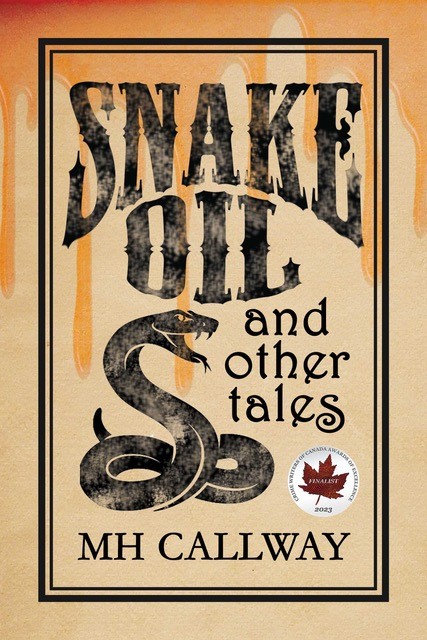
Congratulations to Mme M. H. Callway. On Saturday, November 4, from 2 to 4 p.m., she will be hosting the launch of her new book, Snake Oil and Other Tales (Carrick Publishing) at Sleuth of Baker Street Bookstore, 907 Millwood Road.

There will be cake! Also, lots of time to browse Sleuth’s fabulous collection of mystery books. More great news:

Sleuth’s will be continuing indefinitely as a used bookstore. Marian and JD will be happy to order books for you, as well.

Madeleine Harris Callway
Madeleine Harris-Callway

Congratulations to Mme Melissa Yi. Her Derringer-winning short story, “My Two Legs”, was a finalist for this year’s Macavity Award for BestMystery Short Story.

Her fantasy story, “Rapunzel in the Desert” will appear in the Years Best Canadian Fantasy and Science Fiction, edited by Stephen Kotowych. It will be available to book lovers everywhere December 5, 2023.

Year’s Best Canadian Fantasy and Science Fiction
Melissa Yi

Mme Cat Mills’ latest film, Do You Hear What I Hear? premiered at Hot Docs this year as part of the Citizen Minutes cohort, celebrating average people trying to change their community for the good. Cat’s film focuses on noise pollution in Toronto and follows activist, Ingrid Buday as she fights to change Toronto’s outdated noise bylaws.

https://www.citizenminutes.ca/series-2/do-you-hear-what-i-hear

Cat Mills

Join Cat Mills on November 8 at 6:30 p.m. at Innis Town Hall, 2 Sussex Ave. for a FREE screening of the film followed by a panel discussion with health experts, city councillors and citizen advocates as they cut through the noise before the bylaw review this fall.

NEWS AND EVENTS

Mme Lisa De Nikolits’s, literary review zine, the Minerva Reader, features a review of M. H. Callway’s Snake Oil and Other Tales and Melissa Yi’s new book, Sugar and Vice.

https://theminervareader.com/library-2023

CRIME WRITERS OF CANADA’S BREWS AND CLUES

Crime Writers of Canada’s Brews and Clues takes place on Thursday, November 9th at 6:30 pm at Stout Irish Pub, 221 Carlton Street.

This month, Des Ryan will be in conversation with author Robert Rotenberg.

THIS MONTH’S STORY

Our story for November is by Mme Therese Greenwood. Her historical thriller, “The Iron Princess”, appeared in the Mesdames‘ fifth anthology, In the Spirit of 13.

Posted in News | Leave a comment

OCTOBER STORY: Possessed by Cheryl Freedman

Cheryl Freedman

Cheryl Freedman is a professional editor of non-fiction and scholarly works and of crime fiction. She also writes crime, fantasy and speculative fiction. In 2004, she was awarded the Crime Writers of Canada Derrick Murdoch Award for service to the Canadian crime writing community. She was one of the mainstays of Canada’s long-running crime writers’ conference, Bloody Words and the Bony Blithe award for light-hearted crime fiction.

Cheryl’s sense of humor shines in her story, “Possessed”, about a dybbuk. In Jewish mythology, a dybbuk is the often malicious, lost soul of a dead person who can only be released after atoning for sins committed in life. “Possessed” first appeared in the Mesdames anthology, In the Spirit of 13.

POSSESSED

by

Cheryl Freedman

Sara Levine was not happy. In fact, she was irritated, exasperated, and ready to toss her computer out the window of her third-floor flat.

Only a moment ago, she had been ecstatic. Not only had she finally overcome a truly megalithic days-long writer’s block, but the horrible headache that had been plaguing her for the past couple of hours had disappeared, a weird headache that felt as if someone was inside her head, scratching and clawing at her brain.

She looked at the time on her computer screen. Almost 7:15 on a Friday night in late November, which meant that her Monday morning deadline for submitting her essay to a comparative mythology anthology was looming. Now she’d have to spend the whole weekend writing.

On the other hand, Jewish demons have a particular cultural bias that is unique among other demons. They…

Suddenly, the computer screen blanked out. She only had time to think, What the hell? when the cursor reappeared, followed by vostutzichoyvaiizmir.

For a moment she gaped at the screen. She hit the Delete key. Nothing happened. The gobbledygook just sat there, sneering at her. She smashed Delete again, and again nothing.

 Sara had long been convinced that machines, particularly electronic equipment, were out to get her. Her VCR, for instance, would frequently record the wrong program, especially when she had set it for a show she really wanted to see. Or she would carefully program the Nespresso to go on at 8:00 in the morning, only to find cold water sitting in the reservoir when she stumbled into the kitchen at 8:15.

 But her computer had been remarkably cooperative…until now.

Unplugging and replugging in the computer was often the answer, and to Sara’s relief, that worked. Relieved, she had just started to type when ichzolazoyvissenfuntsoresahzespunim appeared on the screen.

She felt her frustration rising and her motivation for writing ebbing. If she did not get down to work again soon, God only knew whether she’d be able to get back to it.

She spent the next eternity trying to make the computer cooperate. Reboot again…gibberish…blinking cursor…reboot… It wasn’t a virus; at least, that’s what her anti-virus app told her.

“I’m cursed,” she moaned.

She began pleading with the computer, “If you let me finish this paper, I’ll never procrastinate again. I won’t mock my ferret when he’s being an idiot. I’ll stick to my diet. I’ll date Jewish guys. I’ll go to shul on the High Holidays. I won’t even get mad at my mother when she phones for the fifth time in an hour.”

But she had the nagging feeling that there was something about the gibberish on the screen that she should understand. It was almost as if she should know what to do…almost…

Trouble, her ferret, nipped at her heels. “Yowp!” she yelped. Reaching down, she grabbed the little animal and brought him up to her face—nose to nose, eyeball to eyeball—as she frequently did to have a talk with him. Trouble was a notoriously poor conversationalist…until now, when he opened his mouth and squeaked, “A nechtiker tog. Got vet shtrofen! Me hot alain ungekocht, traifener bain!

Sara dropped the little animal. Trouble tumbled bonelessly to the floor, then stood up and continued to chatter. As he squeaked on, she finally realized what had been bothering her about the whole weird sequence of events. The strange writing on the screen, the even stranger speech coming from Trouble’s mouth—holy shit, the language was Yiddish.

“Oh my God! My ferret’s speaking in tongues, my computer’s possessed…and I’m not even on drugs.” And she actually did feel quite calm, a feeling she recognized from the time she had been in a car accident and had been in shock.

Now Sara knew she wasn’t the world’s most observant Jew. The High Holy Days were frequently something that just happened in the fall; Passover was a time to chow down at her parents’ even though she never bothered getting rid of the bread in her own flat; Saturday was a day to go shopping. But if she wasn’t a religious Jew, she was a cultural one and reasonably well-read in Jewish history and folklore.

Books started to teeter precariously on either side of her as she searched the bookshelves for her Yiddish-English dictionary.

 Grabbing Trouble again and holding him up to face her, she demanded, “Who are you?”

 “Ich bin Shlomo Finkel,” the ferret said.

Leafing frantically through her Yiddish phrasebook, Sara found the words she needed. “Ich vais nit Yiddish. Can you speak English?”

 “Yes, why should I not be able to speak English?”

“Because you’ve been speaking, well, actually until now you’ve been typing, in Yiddish,” Sara pointed out. She felt quite proud of herself: It wasn’t everyone who could deal with a possessed computer and a possessed ferret and an interrupted soon-to-be overdue essay with such equanimity.

“I prefer Yiddish because it is my mama loschen—sorry, my mother tongue,” squeaked the ferret. “But I live here in Toronto since my family moved here in 1923—to this very flat, to be precise.”

 “Mr. Finkel, you should pardon my, uh, nosiness, but just out of curiosity, would you be a…uh…?”

Dybbuk,” the ferret finished the sentence for her. “Yes, I am. I died on November 29, 1937, and have been denied any rest since that time.”

But before Sara could ask Shlomo Finkel’s spirit what he meant, Trouble started squirming and panting in her arms. She knew from previous experience what would come next. “Get out of my ferret right now,” she demanded of the dybbuk. “He’s about to have a seizure.”

“But you must help me,” pleaded the trembling ferret/dybbuk.

 “Back in the computer, then,” Sara ordered.

 “But you can’t type. It’s Shabbos!”

  “My phone. Get into my phone. Then we can talk.” Sara turned on her Samsung.

  “How do I get into the phone?”

  “How should I know? How did you get into my computer? Just do the same thing with the damn phone.”

Trouble relaxed, then squirmed to be let down; obviously Shlomo had departed. After a minute or so, the phone screen lit up and an accented voice said, “I’m in.”

Sara wondered whether having a dybbuk in her phone would prevent the phone from making and receiving calls but didn’t think this was something she could ask tech support. Her immediate objective was to find out what Shlomo wanted and then to send him on his ghostly way ASAP because the deadline for getting her essay to the anthology editor wasn’t going to suddenly disappear.

“So, Shlomo, how about telling me why you’re here.”

“You need to help me, Sara.”

“With what? And why me?”

“I have to find my wife’s body and free her soul that’s trapped there.”

“Whoa! Freeing trapped souls is definitely not my area of expertise. Besides, why is her soul trapped in her body and why is it up to you to free it?”

“Because I murdered her and buried her body without the proper rituals.”

Holy shit, Sara thought. I have a frickin’ murderer in my phone! She felt a stress headache coming on, which reminded her…

 “Did you try to possess me about an hour ago?”

“My apologies, but yes. I couldn’t get in, but your computer seemed to be an extension of you, so I could enter it.”

“But why me? And why did you murder your wife? And why weren’t you caught? And why has it taken so long for you to decide you had to free your wife’s soul? And why ha­—”

“STOP!” the dybbuk interrupted. “Too many questions. Give me a chance to explain, I beg you.

“Our families were friends back in Lithuania. We came to Canada from our small village in 1923 to escape the pogroms. The name of the village is not important because it no longer exists. Both my wife, Malka, and I were young children at the time, and in Toronto, we lived very close to each other in The Ward among all the other Jewish refugees from the old country.

“Malka and I married in 1923 and we moved to Kensington Market, to this very flat you live in now. She got a job as a baker.” His matter-of-fact voice changed. “Oy, and what a baker she was! The most beautifully braided challah, the most delicious bialys, perfectly shaped rugalach—”

“Shlomo,” Sara said, “please, we don’t have all day.” She had the impression that if he had been corporeal and standing before her, he would be shaking his head to get rid of the memories.

 “My apologies again, Sara. Malka was my gentle, beautiful queen. I adored her and she said she adored me. We certainly weren’t wealthy because I couldn’t seem to hold a job, but we were happy…or so I thought.

“Eventually, I found a job in a warehouse, but it meant working mostly at night, and Malka worked during the day, so the only time we really had together was on Shabbos. But it’s hard to hold a marriage together when you see each other for only a day and a half, and Malka found another man…”

 The dybbuk’s voice died away and Sara thought she heard a sob coming from the phone.

 “Well, I found out and didn’t go to work one night. I got drunk and came home and heard my wife and this other man talking. I waited till he left, then confronted Malka who admitted she no longer loved me. So, God forgive me, I stabbed her. It was very late at night, and I managed to get her away from the houses and buried her in some park, I think. I still can’t remember where it was, but somehow I got back home and….”

Yes, those were definitely sobs Sara heard coming from the phone. This was an ages-old story that the dybbuk was telling, but that didn’t make it any less painful to listen to. What was more painful, however, was that time was passing, her deadline was not, and she wasn’t writing.

After a few minutes, she said gently to the phone, “Shlomo, I’m sorry you have to dredge up painful memories, but if we want to find Malka’s body, we have to move on. Did you try to find where you had buried her? Did you somehow let her family know what had happened?”

“Malka’s family was dead, died of the flu in 1919. God forgive me, but I couldn’t bring myself to look for her body, to at least take her to the chevra kadisha to be washed and prepared for a proper burial. I went back to work but never remarried, and when I died in 1937, my soul was condemned to wander the earth until I found my Malka’s body and freed her blameless soul from her earthly remains. You see, you might think my sin was murder, but my greater sin was that I treated her body like a dog’s and didn’t grant her any of the burial rites to let her soul depart.

“Now, Sara, you are my last hope. I’ve entered other bodies since my death, but they were either no help or managed to have me exorcised. But you…I think you can help.”

 Sara wasn’t so sure about that.

“Shlomo, I don’t want to offend you by giving you the details, but I have to do something tomorrow, so why don’t you, I don’t know, sleep – do you sleep? – till tomorrow night and then we’ll work out a plan. I have a friend with the Toronto police, so I’ll ask him about cold cases and we can see if anyone found Malka’s body.”

 The Samsung gave one last sob followed by “Until tomorrow night” from the dybbuk and then silence.

#

Saturday morning arrived, and Sara was on a roll with her writing, even though every time she stopped typing, she thought about Shlomo Finkel’s dilemma and how she could help his and Malka’s souls ascend to Heaven.

By six o’clock Saturday evening, she had finished her third and final draft of the essay and was ready with a potential plan of action.

 “Schlomo,” she said into her phone, “you there?”

The dybbuk must have been waiting for her because he responded immediately and with the anticipated accusation. “You were working today, weren’t you? I tell you, Sara, your soul is in danger if you work on Shabbos.” He gave a bitter laugh. “I apologize. You must have been working because of me, so I willingly take your sin upon myself.”

“Thanks, Shlomo, but not to worry. Tell me about Malka: How tall was she? Was she a large or small woman? What colour was her hair? What was she wearing that night? Did she have any scars or birthmarks?” Sara continued questioning the dybbuk until she was satisfied that she had what she needed to go to her cop friend, Ryan.

“Just one more thing. Do you remember the date when you, uh, did it?” She had a hard time saying bluntly: ‘When did you kill your wife?’ It sounded so crass. “Now let’s come up with a story about why I’m interested in a woman who was murdered in 1932.”

#

“Ryan, you busy at the moment?” Sara asked when her cop friend answered his phone. It was Sunday afternoon, but the Toronto November weather was at its usual gloomy worst, so she hoped to find her friend at home.

 “Not particularly. What’s up, Sara?”

 “Got a cop question for you. Cold cases: How long do you guys keep them on the books?”

“Till they’re solved. Why’re you asking? You kill someone years ago and are wracked with guilt now?” He chuckled but Sara sensed a touch of suspicion behind the laugh.

“Ha, ha, very funny. Killing people isn’t my thing. But seriously, Ry, what about a stabbing that happened in, say, 1932? And the murderer was never caught. Would this murder still be considered a cold case?”

“Are you asking hypothetically, or do you know something about this murder? If you know something, stop right there because what you’re saying now becomes evidence and not something to be discussed between friends on a Sunday afternoon.” The joking tone was gone, replaced now by full-out suspicion.

“Hypothetically,” she said, but she had paused long enough before speaking that Ryan pounced on her hesitation.

“You’re lying, Sara. What the hell have you gotten yourself involved in?”

 Think fast, Sara thought. Do I tell him about the dybbuk or… Or what?

 “You’re correct, Ry, my case is real. The murderer is definitely dead. But we need—”

  “We?”

Sara had never heard her friend sounding so suspicious. Must be an occupational hazard, she thought.

“All right. Are you sitting because there’s an interesting story behind my question? But you have to promise not to tell anyone, not your friends, not your colleagues, no one!”

“You know I can’t make that promise if what’s behind all this mystery is something illegal.”

“Look, someone told me about a man who murdered his wife in 1932. She was cheating on him, he found out, he got drunk, and he killed her. Yes, I know, same old, same old. He managed to get her out of their flat and he buried her somewhere in the Kensington Market area. Probably not the Market itself but likely in a park nearby. He was so bombed that he could never remember where.”

“Okay. Go on. Why are you interested in this case?”

“Hey, I’m being a good citizen. I’m offering to help you clear up a cold case.”

“You’re full of it, Sara.”

“Probably. Will you help me? At least, will you tell me where to go and whom to speak with?”

“Against my better judgement, okay.”

“I owe you big time for this, Ry. Thanks.”

He told her where the truly ancient cold case records were kept, mentioning that there was also a Website where people could look up cold cases, and added that she’d need a detailed description of the victim.

“Been there, done that,” Sara said, listing what she knew about Malka, ending with “and she had an egg-shaped reddish-brown birthmark on the right side of her tush, and a four-inch long burn mark from a bakery accident on the inside of her left forearm.”

#

The Toronto Police Services cold case Website was, as Sara suspected, less than useful because it went back only to 1959. However, the officer she spoke with at police HQ bought her story that she was doing research for a mystery she was writing about a Jane Doe murder case in the early 1930s. After going through a number of cold cases from the thirties, they came to one Sara thought fit Shlomo’s confession.

The officer told her that because the killer had covered the victim’s body with only a thin layer of dirt and leaves, it had been found the day after the murder by some kids playing in the park. They’d notified the police, who picked up the body and tried for months to learn her identity. Eventually, she was declared a Jane Doe and buried in a public cemetery north of Steeles and west of Dufferin.

Wandering through a cemetery looking for an unmarked grave on a cold, overcast day in November wasn’t Sara’s idea of a good time. Nor was she sure she and Shlomo could even locate Malka’s remains because the bodies, as befit their John or Jane Doe status, were buried without markers. The cemetery itself was uncared for, with no discernable paths, long grass, and tree branches lying willy-nilly on the ground. Each step Sara took, phone in hand, made her even more depressed and uncertain.

“We can find her, Sara,” the dybbuk assured her. “We loved each other once, and our souls will reach out to each other. Just watch.”

 And damned if Shlomo wasn’t right, although considering that soul and spirit stuff was his bailiwick that made complete sense, because after an hour or so, the dybbuk shouted, “Stop! We’re here!”

Sara pulled out the pages of Psalms and prayers for the dead she had found online, and she and the dybbuk started reciting, she in English, he in Yiddish: “The Lord is my shepherd, I shall not want…” As they prayed, she felt a change in the air, a calmness overlaid with anticipation that something right and holy was about to take place.

They were reciting the last words of the Mourners’ Kaddish: “He who creates peace in His celestial heights, may He create peace for us and for all Israel; and say, Amen,” when Sara sensed something – Malka’s soul? – rising from the ground.

 “Malka! Malka, my love!” cried the dybbuk. “Thank you, Sara.”

  And then the two souls were gone.

THE END

Posted in News | Tagged , , , , , | Leave a comment

NEWS FLASH: Can Con 2023, October 13-15th, Ottawa

Madona Skaff

Check it out! Can Con 2023 takes place this weekend, October 13 to 15th in Ottawa, Ontario at the Sheraton Hotel, 150 Albert Street.

And Mme Madona Skaff, who writes speculative fiction as well as crime/mystery, will be there! She’ll be signing her books on Saturday, October 14th at 12 noon and participating on two panels.

The first panel, Writing Animal Companions, is on Saturday, October 14th at 7 pm and the second, Refusing the Call, on Sunday, October 15th at 2:30 pm.

Posted in News | Leave a comment

MESDAMES ON THE MOVE, OCTOBER 2023

Dear Readers,

New books, library panels, author readings and a double book launch! Along with pumpkin spice, the fall season is in full swing for the Mesdames and Messieurs.

CONGRATULATIONS AND PUBLICATIONS

Mme Madeleine Harris-Callway’s new book of short stories, Snake Oil and Other Tales (Carrick Publishing) went live on September 30! It’s now available in ebook, paperback and hardcover. Snake Oil and Other Tales eBook: Callway, M.H.: Amazon.ca: Kindle Store

 Snake Oil and Other Tales is the second collection of short stories by author M.H. Callway. These dark tales include strange guardians, mysterious bakeries, faithful dogs and yes, the slithery reptiles that strike fear in even the toughest bro’s heart. Many were finalists for the Crime Writers of Canada Awards for Excellence. They stretch from traditional mysteries to thrillers to speculative fiction and even to horror. What unites them are the characters struggling for justice–or their own warped perception thereof.

Danny Bluestone and Corazon Amorsolo, the protagonists of Callway’s debut novel, Windigo Fire, return in the thriller, Last Island. And Dr. Benjamin Amdur, the hero of Amdur’s Cat, has a second adventure in Amdur’s Ghost, a finalist for the 2023 CWC Best Novella Award.

 Mme Melissa Yi’s September Kickstarter was a big success. Look for a December release for Sugar and Vice, Melissa’s latest book in the Hope Sze Seven Deadly Sins series.

Do feasts and fiction make you drool? Do dragons delight you? Want to catch bad guys and eat happily ever after? Sleuth Hope Sze tastes murder at Montreal’s Dragon Eats Festival in this sweet culinary thriller of food and the fantastic.

Sugar & Vice: A Mystery of Death, Dumplings, and Dragons by Melissa Yi — Kickstarter

MESDAMES ON THE MOVE

The Mesdames and Messieurs of Mayhem will be at the Beaches Library, 2161 Queen Street East, Toronto on Wednesday, October 18th at 6:30 p.m. We’ll be talking about Chills, Thrills and Fun Facts of Crime Writing and share the ups and downs of being a crime author in Canada. The panel features Mesdames:Lisa De Nikolits, Blair Keetch, Rosemary McCracken, Lynne Murphy, and Caro Soles with M. H. Callway moderating.

Lisa de Nikolits
Lisa de Nikolits
Blair Keetch
Blair Keetch
Rosemary McCracken
Rosemary McCracken
Lynne Murphy
Lynne Murphy
Caro Soles
Caro Soles
Madeleine Harris Callway
Madeleine Harris-Callway

BREWS AND CLUES

Brews and Clues, the Crime Writers of Canada monthly author pub reading event, launched on September 14th with M. Blair Keetch as guest author. Brews and Clues takes place on the second Thursday of every month. This month, it’s on Thursday, October 12th at Stout Irish Pub, 221 Carleton St., Toronto at 6:30 pm.

SAVE THE DATE!

Saturday, November 4th at 2 p.m.

Mesdames  M. H. Callway and Caro Soles are hosting a book event at our favourite bookstore, Sleuth of Baker Street, 907 Millwood Road, Toronto on Saturday, November 4th at 2 p.m. Mad is launching her new book, Snake Oil and Other Tales and Caro, her latest book in the Merculian series.

There will be cake and possibly a special guest!

Madeleine Harris Callway
Madeleine Harris-Callway
Caro Soles
Caro Soles

Wednesday, November 1st

The Mesdames and Messieurs of Mayhem will be back at the Toronto Public Library, this time at the Parliament Street Branch, to present Chills, Thrills and Fun Facts of Crime Writing. Time TBD

A FRIENDLY REMINDER

The deadline for submissions to the 2024 Crime Writers of Canada Awards is December 15th Starting this year, all submissions must be in digital form. Please see the CWC’s website for the submission rules and required forms.

https://www.crimewriterscanada.com/awards/submissionrules

OCTOBER STORY

Our October free short story will be one of Mme Cheryl Freedman‘s always clever mystery scribbles. Title to TBD.

Posted in News | Leave a comment

NEWS FLASH: Mme Lisa de Nikolits to Host Tartan Turban on September 22nd!

Lisa De Nikolits

Mark your calendars! Mme Lisa de Nikolits is curating the next Tartan Turban Secret Readings on Friday, September 22nd at 7 pm, Ste 301, 577 Kingston Road, Toronto.

The event features writers, Anita Jack-Davies, Rummana Chowdry, Mark Sampson and Gavin Barrett as well as visual artist, Peter Owusu-Ansah.

Tickets are free, but required. Get tickets through eventbrite here.

Sponsored by the Canada Council for the Arts, The League of Canadian Poets and TWUC.

Posted in News | Tagged , , , | Leave a comment

SEPTEMBER STORY: Winona and the CHUM Chart by Catherine Dunphy

Cathy Dunphy
Cathy Dunphy

Catherine Dunphy is a critically acclaimed biographer and author of young adult novels. After a long career as a journalist, she retired to take up a life of crime…fiction.

Cathy adores bookshops and libraries. Her crime-solving librarian, Winona, is the hero of her stories in the Mesdames anthologies. Enjoy “Winona and the CHUM Chart” from our fourth collection, In the Key of 13.

WINONA AND THE CHUM CHART

by Catherine Dunphy

Tuesday morning was brisk, the kind of weather that telegraphed winter was coming, dammit. But Winona didn’t mind as she nudged aside some of the lingering leaves in the park path behind the Millartown Library. She loved Tuesdays, her day to open the old building situated in the treed dip near Main Street.  She loved its early morning serenity and silence and that’s why she always paused when she came inside the library’s back door before flicking on the series of switches that illuminated her workplace in a sudden magical flash.

She let out a satisfied breath. She twirled on her toes, arms outstretched; this was all hers. She had ninety minutes alone, alone, alone until 8:15 when her boss arrived. She hustled into the staff room, tossing her shaggy cape over her office chair. In the ‘70s someone else who was plus-sized had cherished that alpaca cape. Winona believed its somewhat mangled state made it all the more worthy of her own Size 18 love now.

With a practiced swoop, she gathered her colleagues’ used coffee mugs and lunch dishes, dropped them into the antiquated, extremely noisy dishwasher and turned it on. The racket was, as expected, excruciating.  Wincing, Winona wiped the counter and filled and set the coffee machine to start ten minutes before the others were due in.  They’d be happy to have the stuff freshly brewed for a change. Usually she’d bash the button right away for her own morning hit, but for some reason, she had gone off coffee.

Whatever. It was time for her favourite part of Tuesday. She hurried out to the main area of the library and hauled the book return bin just inside the windowless front doors back to the staff room, kicking shut its door behind her. She emptied the contents onto a long table and sat down. Here be treasures.

Winona almost rubbed her hands in glee.  She still had more than an hour to go through the  bin’s contents and remove all the pressed flowers, bobby pins, twenty dollar bills – yes, it had happened to her — love letters and gas bills with which people marked their place in books. The library never threw anything out. Well, maybe the bobby pins. Winona had seen women weeping over reclaimed mementos they’d thought gone forever and agitated men breathing more easily when that white envelope containing a large cheque was handed back to them. What people leave in library books never ceased to astound – and sometimes disgust – her. Like the time she found a condom. And that desiccated pizza slice.  

Still she eagerly fanned the pages of the book at the top of the pile, then another and another. Just bus transfers today.  She ignored the sounds of the dishwasher’s squeals and shrieks as she worked steadily , flipping open the cases of the CD discs and movie cassettes to ensure they weren’t returned empty and checking the children’s picture books to check for torn pages. She kept cello tape handy for that. 

Hang on. Winona picked up her library’s only copy of The Library Book.  In fact, Susan Orleans’ latest bestseller was the library’s newest acquisition, dropped into circulation just the day before.  People were clamouring for it.  And here it was back already. It was 336 pages; someone read it that fast?  Winona picked up the book and automatically fanned it. Its binding cracked. The book hadn’t been opened. It hadn’t been read. But there was something in it. She turned the book pages down and shook. A piece of yellowed paper fluttered and dropped onto the table.

Winona picked it up gingerly.

It was an odd shape, almost but not quite square.  Chum 30 it said in a weird puffy lower case typeface she recognized from her posters of ‘60s psychedelic concerts. It was a CHUM chart for the week ending September 14, 1974.  Winona swooned.  This was retro gold, the real thing from a time when one of Toronto’s – hell, Canada’s — biggest and brashest Top 40 hit-playing radio stations gave them away every week. She knew that most CHUM charts were small and folded, the kind you stuffed in the big back pocket of your jeans and opened up to read.  This one was different. One page front and back. Interesting, she thought. Likely a short-lived experiment before they reverted to the tried and true pocket sized version. Bet there weren’t many of these around.

There were streaks on it and she had to look closely to see that “I Shot the Sheriff” by Eric Clapton was at the top for a second week in a row beating out songs by Elton John. Paul Anka, Donny and Marie Osmond – Winona shook her head in disgust – but also Guess Who and, yes, ABBA.

 Wow. This was so cool. There was no way she was adding this to their lost and found file. And it really was a mess. The brownish red streaks almost obliterated the top album listings.  She removed her turquoise cat’s eye glasses for a quick clean before holding it up to the light so she could make out the famous names: Endless Summer Beach Boys; Band on the Run, that would be McCartney. She peered closer. Who or what was Golden Earring?

A door slammed. Winona dropped the paper which fell to the floor; she knew she hadn’t unlocked the front door yet.   

Then the door to the staff room swung open so forcefully it hit the wall.  It was her boss.  Roseann Mills was usually elegant and pulled together but this morning her hair was falling out of a messy ponytail and she’d thrown a ratty black cardigan over workout clothes. And there was a man close behind her.

 “This will disrupt our entire week. People count on the Library being open.” Winona had never heard Ms. Mills sound as upset.  “And I don’t appreciate your people putting that yellow tape all over the place.”

A look of annoyance flashed across the man’s face then vanished.

“Well, it is a crime scene,” he replied.

Winona rocked back in her chair.  “What the –,” she gasped. “What happened?”

“A woman died on your doorstep,” came the laconic reply. “Jogger found her. Beaten to death.”  He sat down opposite Winona and shoved a business card across the table. It said he was a detective and that his name was Hendricks.  His calculating eyes said he meant business.

“What time you get here this morning?”

Winona glanced over at her boss, who was leaning against the wall looking very worried.

“Winona gets in around seven o’clock on Tuesdays,” she said. “By the back door, right?”

Winona nodded, unable to speak.

“You didn’t go round to the front? See anything unusual. I don’t know, maybe like a dead body?” The detective didn’t look like he was joking.

 “I got here before 7 o’clock,” she finally managed to squeak. “But I didn’t open the front door or anything. I’ve been inside, right here working.”

The cop raised an eyebrow.

“Lady, you’ve had two police officers and an ambulance at your front door already this morning. But you didn’t hear anything.” 

“For goodness sakes.”  Ms. Mills strode to the dishwasher and shut it off mid groan. “How could she hear anything over that?”

Winona came to life. “You mean someone was killed when I was here?”  She grabbed the edge of the table

The policeman relented.  “A woman. Late thirties. Maybe early forties. We think the time of death might have been earlier this morning. Much earlier.”

“And I didn’t even know.” Winona felt sick to her stomach.

“I think Winona needs to go home now, Officer,” Ms. Mills said, gesturing to the man to follow her into her office. “She has your card.”

The man nodded at Winona and got up. “I’ll be in touch.”

The door to Ms. Mills’ office closed behind them with a click. Still Winona didn’t move. Couldn’t. Finally managing to get up from the table, she slowly retrieved her cape and bag stumbling over the CHUM chart.  She bent down to retrieve it and shoved it in her bag.

Jason was leaning on the kitchen counter, drinking coffee and deep into his computer when she walked into their kitchen.

“Knew you’d be back,” he exclaimed. “A woman found dead at the library’s front door.  F–king amazing. It’s breaking news all over the ‘net. “His dark goatee was vibrating he was so excited.  “Guess we get the day off.”

Winona threw off her cape for the second time that morning.  Jason was not the library’s most dedicated employee. He didn’t need to be. He was heir to the fortunes of the richest family in town. But he shouldn’t be treating this like something on Netflix.

 “Jason, for God’s sake. The police say she was murdered.” Winona dropped into the chair beside him.

Jason stopped tapping on his laptop, his six foot six lanky frame suddenly taut.

“Murdered. It didn’t say that on the news.” His voice was a whisper.

Then, “You okay?”

Winona took off her Princess Leja hairband and toyed with it before answering. “Yeah, I guess. I didn’t see her. It was outside at the front and I went in by the back, the way I always do. The detective said it probably happened way before I got into work.”

 Jason wrapped an arm around her. “Still, you might have been in danger.”

Winona smiled at him. “I wasn’t. Ever. “

They sat silently until she suddenly had a thought. “I think I might be able to find out who she is – was.”

“How?”  Intrigued, Jason turned back tohis laptop and fired up his search engine. “Did you see something?”

Winona reached into her Peruvian woven shoulder bag and withdrew the yellowed brochure.

“I found this old CHUM chart today in the returns.”

“Gro-o-ovy.” Jason drawled as he picked it up. “Maybe it’s one of the more valuable ones. You can get ten, twenty bucks for some of ‘em.  The ones that had coupons you tore out and mailed in are really rare—“

He stopped. “What’s this stuff on it?”

Winona sighed.  Deep down she’d always known what the reddish brown streaks were. That lingering metallic smell. The aura of violence and despair.

 “Blood,” she said, more to herself than to her live-in. “And it’s got something to do with that woman’s murder.”

Jason raised an eyebrow as Winona went into the living room to retrieve her own computer. As the library’s IT specialist, it was easy for her to find who had taken out The Library Book.  A few swipes and she was looking at the library profile of a Susan Dalgleish who lived at 29 Rummer Road – definitely not the best part of town anymore. Winona scanned the extensive history of the books Susan had borrowed. She certainly read a lot.

 And lately Susan had been reading about Canadian and California pop culture.  

“Jason,” she called out. “I think I might have known her.”

He was by her side in a flash.  “Phone the cops.”

Winona said nothing, remembering the woman she’d recently helped find old touring schedules for bands, current websites for aging rock stars and more.  Although grateful for Winona’s help, she’d been so diffident, always hiding behind her curtain of dull dark blond hair. She could have been 20; she could have been 40.  Winona had noted with approval her clothes were thrift-shop finds, not her own retro punk’d style but from the classic tweed era. And with her lean frame, she rocked the look. Once Winona had tried to tell her that but the woman had immediately retreated, flushed and flustered. Winona had kept it purely professional from then on.

“Phone the cops?” Jason repeated.

Winona shook her head. She thought of Susan and how desperately she had been to receive whatever Winona could locate for her.   She thought of Detective Hendricks and his cool assessing eyes. “Not yet.”

Then, before Jason could stop her or even ask where she was going, she grabbed her cape and bag and ran out of their apartment.

The house at 29 Rummer Road had once been beautiful. No, Winona thought, looking at its curved front window and the ornate iron railing leading up stone stairs to a burnished oak door, it had once been grand.  

Now it was tired and divided into flats. Small flats, Winona thought, looking at the double row of buzzers. She pushed the ones on either side of the button labelled Dalgleish, hoping for a friendly neighbour. No response. Then she pushed the buttons of all the ground-floor flats, hoping for a nosy neighbour.  And got lucky.

“Hello?” The voice was rusty from age and lack of use.

“I’m a friend of Susan Dalgleish.” Winona rationalized that she wasn’t lying; she would have been her friend had the woman allowed it. “May I speak to you about her?”

The woman didn’t reply but the door buzzed and Winona walked in. The musty hall was dim save for a streak of light at the end coming from an open door. The tall white-haired woman standing there was gesturing to Winona.

 “I knew she was in trouble,” the woman proclaimed as Winona found herself in a surprisingly large but empty room.  Winona realized it had not always been so. She could see the outline of ornate settees and large paintings in the faded wallpaper.  “I just knew she would come to a bad end after that awful man kept coming by.”

 Winona’s head swirled.  So she was right. The dead woman was Susan Dalgleish. And the police had already talked to this woman.  But what awful man?

“I told those police officers about him,” the woman said as if reading Winona’s mind – or perhaps the look on her face. This woman was alert and shrewd. “Not that they paid any heed.  You know, the ramblings of another rattled old woman.”

Her clear gaze swept over Winona.

“But you might be different,” she said, turning away. “Although I know you were not her friend.”

Winona flushed.

The woman waved away Winona’s embarrassment.

“She didn’t have any friends.  Didn’t want any, either.”

Winona followed her through bevelled French doors to another grand room centred on a carved alabaster fireplace made golden from the morning sunlight filtering through stained glass windows. A single chair and matching sofa were the only furnishings in a room designed for entertaining.

The woman opened a side door to an office, no, a magnificent library. Book shelves lining three walls were interrupted only by a massive roll top desk, at which the woman sat herself.  She seemed to have regained her composure; in fact, she was positively regal. It was here where she belonged.  

“My name is Alice Hornsby and my family has lived in this house for more than one hundred and fifty years,” she stated as her fingers stroked the desk’s burnished wood. “I live on the main floor. All of it. The other buzzers are there to keep people away.”

Her upraised hand cut off any comment.

“I take in one or two paying guests who live on the second floor. Quite comfortably I might say. They are all carefully vetted. I insist they be quiet and cultured. Susan has – had – been with me for the past two years.”

Ms. Hornsby commanded her to a chair by the desk. “And now, you will tell me how you really know Susan.”

And so Winona told her about helping Susan in the library. But not about what she held in her purse.  The woman listened impatiently as if waiting for something specific but also something Winona wasn’t saying.  Two spots of colour appeared on the woman’s patrician cheeks.

“There’s something I think you should see,” she announced.

She unlocked the roll top and unveiled thick piles of plastic files. CHUM charts. Hundreds of them.

 Winona gawked.

 “It’s a complete set.  Worth something.  A good something.”  Alice Hornsby had noted Winona’s reaction and seemed satisfied by it.  Her eyes bore down on her. “He wanted these. I know he did. He wanted them from Susan.”

***

 “Yeah, like I would kill for another CHUM chart? She’s batty.”  Morty was as miserable and  grimy as his namesake  hole- in- the- wall music memorabilia shop in the far end of Old Town.  “I can’t give away the ones I have.”

Jason had easily tracked down Susan Dalgleish’s mystery man.  Millartown wasn’t home to that many guys with a salt-and- pepper waist-length beard still dressing as if it were the tie- dye ‘60s, a fashion decade Winona loathed.  After Jason had let her know how he felt about her running off, he had calmed down enough to insist he go to see Morty with her. As the library was still closed and they both had the day off, Winona couldn’t see a way out of it.

“You’re not the only one who gets to play detective,” Jason had said as they hoofed it across town. Winona had pulled a face but now she was glad Jason was here because Morty wasn’t looking her in the eye.

Winona knew he was lying. She just didn’t know what he was lying about.

She decided to find out.

“Look,” she said, laying aside an armload of old newspapers so she could sit. She almost regretted it when the chair swayed and tilted under her weight. She fought a wave of vertigo by   keeping both feet on the floor for balance. Then she took out the stained CHUM chart from her purse.

Morty recoiled.

“It’s ruined! How could you – Let me see.” He reached towards her.

“Not so fast,” Jason put an arm between Winona and the grasping dealer. “I happen to know that some of Canada’s most famous people collect these charts. Mike Myers. Martin Short.”

Morty snorted.  “Been reading up online, have you?”

“So what if I have?” Jason parried. “It’s a goldmine of information. Speaking of gold –” he gently took the chart from Winona. 

Morty exhaled. “Give it to me and maybe I can tell you what you want to know.”

After a moment Jason relented and handed it over. Winona noted Morty’s sudden grace and care as he turned the CHUM chart from front to back, frowning in concentration.

Then a start. A double take.  Wonder crossed his face.

“What is it? What’s there?” Winona wanted to know. She could feel Jason grow tense next to her.

Morty removed his cold coffee mug from the vicinity before lovingly placing the chart in its place. His shrug was forced.

“Nothing,” he said. “For a minute I thought – but no, it’s just one more CHUM chart that’s been disrespected. Where did you get it?”

His rheumy eyes followed the chart as Winona very carefully put it back in her bag and got up to leave.

“The library,” she said. “Where I work.”

A phone message from Roseann Mills was waiting for her when they got home.  It was back to work tomorrow.  The library was re-opening. The yellow tape was gone. So were the police. The police. Oh God. Winona sank onto a chair, stomach roiling. The CHUM chart somehow held the key to whoever killed Susan Dalgleish.  She should never have kept it; she should have handed it over then and there to that cop, but it was too late now.  She could be charged with obstruction of justice.  Maybe Jason too. And that mustn’t happen. Not to him. He was the good guy in this.  It was up to her – not him — to find out why Susan had hidden the CHUM chart in the book. Then she’d tell police everything. But first —

Alice Hornsby.   She would know.

***

The library was busy all day – crowded with gawkers checking out the scene of the crime and those who made sure to lodge their complaints at being inconvenienced by the closure.  Winona was exhausted at the end of it but needed a word with her boss before heading home.

 Ms. Mills looked equally worn out. Winona glimpsed Hendricks’ card on her desk.

“Any word from the police?’ Winona asked.

A shake of the head.

“I know who she was.” Winona plunged ahead. “Susan Dalgleish. She was in here a lot recently looking things up.”

Winona was not going to say that she’d done some looking up herself to find that out.  And that inside her Peruvian shoulder bag she had stashed some of the heavy library books Susan had been using for references. Maybe tonight at home she could figure out what the dead woman might have found in them.

Ms. Mills reached for the card and picked up the phone. “Thanks.”

Winona felt better as she left the library, much better.  Of course the police had already identified Susan even if they hadn’t made it public, otherwise why would they be talking to Alice Hornsby? But Winona wanted the cops to think she was helpful.

  And Ms. Mills hadn’t asked her how she knew it was Susan.  Finally, some luck. She straightened her shoulders and shifted her heavy bag as she crossed into the park. Tomorrow she didn’t start work until noon so there‘d be time to drop in on Alice Hornsby again. Winona had a gut feeling that the woman could help her shake the truth out of Morty.

“Hey. You. Stop.”  A hand gripped Winona’s shoulder from behind.

“Let go of me,” she yelled, whirling to face her attacker, ready to swing her purse strategically.

It was Morty, holding up both hands in surrender.

“I just wanted to talk with you,” he whinged, as if she were the aggressor.

Winona willed her heart to stop racing.

“You said you worked at the library. I waited for you to come out.”  

Winona gazed at him with disgust. To think she’d been frightened of this weasel – but steady there, she told herself. Proceed carefully now. Susan Dalgleish probably thought the same thing about this weird guy with his strange eyes and crumb-filled beard. And he may be carrying a weapon in his canvas army bag.

“What do you want to talk about?”

He looked around him.  Office workers were filling the street at the end of their work day.

“Not here.”

 Winona thought fast. “The CHUM chart. “

“You have it with you?”  Decades dropped from his voice in his eagerness.

Winona drew her bag closer to her. “Come with me.”

They walked in silence until they turned onto Rummer Road. Morty jerked to a stop as Winona had known he would. She was ready with a lie.

“Just moved in here. You know the place?”

“Nope.”

You lying scumbag, Winona thought.

 She stepped between him and the door and used her Peruvian bag to cover up the fact she was pushing Alice Hornsby’s buzzer, not unlocking the door to her phantom flat. The door clicked open. Morty reluctantly followed Winona down the hall to where Alice Hornsby stood.

The woman’s cool eyes went past Winona to Morty. A tilt of her head indicated they were to follow her and Winona grabbed Monty by the arm, practically dragging him through the empty room into the room with the fireplace and the only places to sit. Alice Hornsby strode to the arm chair beside the darkened hearth leaving Winona and Morty no choice but the sofa.

Something didn’t feel right, Winona thought as she tried to make as much space as possible between her and Morty. I am supposed to be on her side, not his.

She tried to catch Alice Hornsby’s eye. Failed.

“So, you’ve come to your senses?” Alice Hornsby said to Morty. Her voice sneered. Her face twisted into cruelty. Winona tightened, confused. Thoughts spun out of control.

“Hand it to me.” Alice Hornsby snapped her fingers.

“She has it.” A shaking Morty indicated Winona beside him.

The already dim room seemed to darken more as Alice Hornsby turned to Winona. Her long arm reached out and strong fingers wrapped themselves around the fire poker.

“How long –” Alice Hornsby knocked the poker against the fire stand and glared at Winona. “I suppose you are going to tell me that Susan – your very good friend — gave it to you?”  Her voice oozed scorn.

She rose from her chair. “You stole it. “

She crossed the floor to the sofa in two swift steps. “I would like it back.”

Winona shrank into the couch, instinctively holding her bag against her.  Alice Hornsby understood.

“It’s there,” she cried. “You have it in your bag.”

Winona saw the madness in those furious eyes before she felt the first blow of the poker.  She felt waves of pain. She heard her own screams. Her arm covered her head, trying to block the trajectory of the iron weapon.  Morty was screaming.  Stop, stop. Again, stop. I’m calling the police.  But the blows kept coming to her shoulders.  Hard metal.  Somebody pulled at her bag. Now there was nothing to protect her.  A voice urged her to turn fast, turn her back to the blows. Protect. She must protect.

A thud, gasp and it stopped. The beating stopped.  

“You okay? You okay? Tell me you’re okay.” Morty’s rasping voice sounded far away. Winona shuddered, then turned.

 A panting Morty was holding her bulging Peruvian bag over the figure on the floor. Alice Hornsby had been felled by a blow of her Peruvian bag containing Susan’s reference books.  The fire poker lay on the floor near her outstretched hand.

Then the door burst open.

“Hands up where we can see them.”  The police. They were here. Winona was safe.  But they were arresting Morty.

Winona recognized Detective Hendricks.  “Not him. She –“

Hendricks held up a hand.  “We need an ambulance,” he said into a phone.

***

“Ready to tell me now?”

Winona squinted at the police officer standing at the end of her bed. Then remembered. Hendricks.  His name was Hendricks.

She sighed, then winced.  She’d been in hospital for two days. Her broken left arm was in a cast and her fractured ribs made it hurt to breath let alone talk. Other than that everything was fine.

 “Tell you what?”

The cop echoed Winona’s sigh as he pulled up a chair by her bedside.

“Let me catch you up on things,” he said, leaning forward. “Alice Hornsby has decided to talk. Now that she no longer has a complete set of these CHUM charts — It had been desecrated is how she put it – she doesn’t care.  She won’t get the money and she can’t hang onto her house so she’s lost the fight. As well as her grandniece, but she doesn’t seem as upset about that.”

He was watching Winona carefully as he spoke.

“Susan Dalgleish was her grandniece.  Her only relative.”

Winona’s eyes widened.

“Seems she didn’t bother to tell you that.”

Winona shook her head.

“Susan was the only other person who knew about the collection.” Hancock became very still. “Besides Taubman.”

Winona  frowned. Taubman?

Hendricks tilted the chair back onto two legs. “I believe you know him as Morty. He says that a complete set of CHUM charts – like that one – was worth a lot of money. Quarter, half a million maybe. ”

That was a crazy amount of money for something they used to give away, Winona thought.  But in a way it made sense.Otherwise none of this would have happened and Susan Dalgleish might still be coming to the library.

“The girl — well she wasn’t a girl, she was 41 – knew it too. She used to drop by Taubman’s   shop. Pick his brain.” Hendricks cleared his throat. “Even took him to her place once to show him what she had.  Seems Susan figured the collection was hers because it used to belong to her mother, not Alice Hornsby.”

Hendricks’s upended chair legs hit the floor.

“Susan’s mother died when she was a kid.  Just 12. Seems that Ms. Hornsby swooped in and took everything – except Susan. She had to go into care.”

Winona let out a sigh.  What a cruel thing to do to a child.

Hendricks cleared his throat.  “She moved into Rummer Road with Hornsby last year.  She told Taubman her aunt needed her rent money because she was too proud to rent rooms to just anybody. “

That jibed, Winona thought. But Susan also may have been plotting the whole time to get back at the aunt who didn’t want to raise her. Wrecking a complete set of charts would do that, nicely.

“So here’s where you might fit in,” Hendricks said. “Hornsby has said she saw Susan filch one of the charts and stick it in a library book. Who knows why?  Maybe revenge is sweeter if just one thing is missing from an otherwise perfect set.  Maybe she wants the soon-to-be- missing chart to be somewhere safe like a library. Maybe she thinks it’s easy to get it back.  Or maybe she thinks it’s gone forever when she pushes it through the Returns slot.

“We’ll never know because Hornsby picked up that poker from her fireplace set – I think you’ve had a nodding acquaintance with it – and followed her. Tried to stop her when she figured out Susan was dumping the chart off and, well, we know what happened next.” Hendricks stood by the bed.  “We think Susan got the book into the library somehow – even while she was being bludgeoned to death. “

He stopped.  Let the silence unsettle her. “We think you may have found the missing CHUM chart that morning at work. Do you have it?”

For a moment, just one moment, Winona was tempted to tell the truth. 

But the cops had their confession. They didn’t need the CHUM chart and they didn’t need to know she had it.  Or that she had had it from the beginning.  

“No,” she said.

***

It was later afternoon, hours after the detective had left and Jason was slumped by her bedside. His go-to grin had been replaced with all the signs of worry and exhaustion. Winona reached for him.Yesterday, after they had run tests, taken X-rays, assessed all the damage Alice Hornsby had inflicted, long after she’d been cleaned and bandaged and attached to intravenous tubing, a beaming nurse had appeared by her side.

“Your baby is fine,” she’d said.

Winona had cried happy tears and reached for the phone to call Jason and tell him she now knew why the floor sometimes tilted and coffee tasted strange when the nurse removed the receiver from her hand, reminding her it was 3 a.m.

Now she took his hand.

Jason was insisting on Spock for a name, be it boy or girl, when Winona spotted a droopy figure at her doorway. Morty Taubman looked so hangdog his beard was close to brushing his knees. He thrust a bouquet of grocery-store daisies at her, which Jason deftly intercepted as he stood to escort him out of the hospital room.

“No, let him stay,” Winona said. “I think Morty saved my life.”

Morty looked sheepish. “Whacked her with your bag.  Sorry for grabbing it. Got her right on the head.  Good thing you had those books in it. Thought she was really going to kill you. “

 “Touchdown,” Jason pumped the man’s hand and gave him the seat by the bed. Morty lowered himself carefully onto it.

“Sorry,” he said again, waving a floppy hand at cast, the tubing and the rest of the medical paraphernalia.

“Yeah,” Winona grimaced. “All this. For a CHUM chart?”

Morty looked away.

“What’s the deal with it anyway?” she asked.  “Was it worth dying for? “

A weak smile. “That’s the $64,000 question,” he said. “Actually I guess it’s now more like a quarter of a million dollar question.”

Winona got the reference to one of television’s first game shows, all right – except she still didn’t get it.

“But why?”

“First of all it was a complete set. That’s big. And that chart – the one with the streaks, the one that’s missing – turns out it was pretty special too.”

Jason and Winona exchanged a look.

“Why?” they both said.

Morty looked at his rapt audience. “Because of Golden Earring.  A Dutch band. Had a big single called “Radar Love” and the No. 6 album that week.”

“And?”

He sighed elaborately. “There are a lot of people out there who dig this stuff, ya know. “ A look of cunning crossed his face. “People with money.”

Winona signalled Jason to hand over her Peruvian bag hanging on the back of the door. 

“Look, Morty,” she said, fishing out and holding up the CHUM chart with her good arm. “Why this chart? You better tell me right now.”

Morty went pale. “I thought it was gone.”

 Winona waved it impatiently. “It’s not.”

“Here.” Morty reached towards the chart and pointed at the bottom of the page, where Winona now saw there was a scrawled signature, numbers that looked like a date and the letters S.M. “That proves it.”

“What?” Jason and Winona asked at the same time.

“That Golden Earring really did play Santa Monica on September 19 in ’74. Santa Monica. S.M.  See?   And that signature.  Band founder. And look. Nine. Nineteen, Seventy –four.  Month, day, year. The way Europeans write dates. Americans do it the other way — day, month. People have been arguing about whether this concert actually happened for a long time.  Check the ‘net.”

“So that’s what Susan found out in the library,” Winona said. “That this CHUM chart was valuable on its own.”

“Filching it would ruin her aunt’s collection but it would also make her some money? A CHUM chart?” Jason sounded as if he couldn’t believe it.

 Morty nodded. “Okay, not nearly as much as a complete set of CHUM charts. But I know some people who’d pay just to see this, let alone own it.”

He eyes lost focus as he looked past them out the hospital room window.

Like you, Winona thought to herself.

She held out the chart to Morty.

“Take it. “

“You don’t want it?” Morty was gobsmacked.

She could never look herself in the mirror if she cashed in on Susan’s death but there was more.

“Morty,” she said. “You saved our life. I’m here because of you.”

He looked embarrassed.

“Now go,” Winona said.

He sped out the door.

“Maybe he thought you were going to change your mind,” Jason said with a smirk.

For yet one more time today, Winona rested her hand on her stomach. Slowed her breathing.

 “I think I can feel something.”

Jason loped to her bedside and put his hand over hers.

“Me too,” he said.

THE  END

Posted in News | Leave a comment

NEWS FLASH: Mme Melodie Campbell in Globe and Mail!

Melodie Campbell

Mme Melodie Campbell is today’s featured author on First Person, a regular part of The Globe and Mail.

Find out why Melodie is our Queen of Comedy when you read this hilarious take on eloping – and how your grown kids react!

Here are the links: https://www.theglobeandmail.com/life/first-person/article-who-elopes-at-65-we-did-because-well-why-not/

or http://funnygirlmelodie.blogspot.com/2023/09/the-globe-and-mail-by-melodie-campbell.html

Posted in News | Leave a comment

MESDAMES ON THE MOVE, SEPTEMBER 2023

What a busy month, Dear Readers!

Awards, books published and launched, writers’ events, interviews and author readings, a new Kickstarter for a new book, our September story and a series of writer workshops and panels at Toronto Public Library.

CONGRATULATIONS AND PUBLICATIONS

Mme Melissa Yi is having a fabulous year!

On August 19th, she won the Canadian Science Fiction and Fantasy Association’s Aurora Award for Best Poem/Song for her work, Rapunzel in the Desert, published in On Spec Magazine, Issue 122

The Aurora Awards celebrate the best in Science Fiction and Fantasy.

Melissa’s YA novel, Edan Sze vs The Red Rock Serial Killer, was a finalist for the Killer Nashville Claymore Award for Best Juvenile/YA.

 Melissa’s Derringer-winning story, My Two Legs, is nominated for a Macavity Award! Stay tuned as the winner will be announced online soon.

 M. H. Callway’s latest book, Snake Oil and Other Tales, published by Carrick Publishing, is available through Amazon and can be pre-ordered on September 1st!

The official release date for all versions: e-book, soft cover and hard cover is September 30th.

The date for the official book launch event in October will be confirmed shortly. 

Madeleine Harris Callway
Madeleine Harris-Callway
Caro Soles
Caro Soles

Congrats to Mme Caro Soles and her friend, gothic author, Nancy Kilpatrick, for their success and stamina in hosting their vendor’s book booth at this year’s Fan Expo, August 24 to 27th. The daily crowds were at capacity and eager to make up for the lost COVID years.

 MESDAMES ON THE MOVE   

Mme Melodie Campbell is busy this month!

 Mme Melodie Campbell will be hosting a book event for her fab historical mystery, The Merry Widow Murders (Cormorant, 2023), at A Different Drummer Book Store, 513 Locust St., Burlington on Saturday, September 9th at 1 pm. There will be cake!

Melodie Campbell
Melodie Campbell

On Sunday, Sept. 10,  join Melodie at the Hamilton Supercrawl, Music and Arts Festival! The 2023 festival takes place on the weekend of September 8, 9, and 10. Festival hours will be 6 p.m.-1a.m. on Friday, 12 p.m.-12 a.m. on Saturday, and 12 p.m.-8 p.m. on Sunday

You can catch Melodie in Conversation with Scott Thornley at 1:30 p.m. on Sunday, September 10th in the Author Tent, at 280 James Street North, Hamilton.

On September 25th Melodie is guest author at the Canadian Federation of University Women Oakville’s ‘Crime and Caffeine’. Time and location to be announced.

CRIME WRITERS OF CANADA

 Crime Writers of Canada have launched Brews and Clues, monthly readings of Canadian mysteries, at 6:30 p.m., every second Thursday, starting September 14thM. Blair Keetch will be there for the inaugural on September 14th! Enjoy a pint at Stout Irish Pub, 221 Carleton St., Toronto and listen to some great writing. Organized by Des Ryan.

Jayne Barnard

Mme Jayne Barnard’s The Falls Mysteries, and her character with ME/CFS, are highlighted in this great article on post-viral illness.

Jayne will discuss the article, the book, and the illness on the National Online Reading Club on September, 11th at 7 p.m. ET

Watch this space for a live link closer to the time.

ANNOUNCEMENTS

 Mme Melissa Yi’s Kickstarter for Sugar and Vice starts Sept 5th!

Sugar & Vice: A Thriller of Death, Dumplings, and Dragons is a sweet culinary thriller where Hope Sze tastes murder at Montreal’s Dragon Eats Festival of food—and the fantastic.

AWARDS

Submissions for the Crime Writers of Canada Awards of Excellence are open as of September 1st. This year, all submissions must be digital. For all submission details, please visit the CWC website at: https://www.crimewriterscanada.com/awards/submissionrules

SEPTEMBER STORY

Our September 15th free story is Winona and the CHUM Chart by Mme Cathy Dunphy. It was published in our fourth anthology, In the Key of 13, Carrick Publishing, 2019.

Posted in Anthologies, Awards/Achievements, books, events, News | Leave a comment

AUGUST STORY: Watermelon Weekend by Donna Carrick

Author, publisher, editor, podcaster, mentor to emerging authors Donna Carrick is our Renaissance person! And, of course, she is the co-founder of the Mesdames and Messieurs of Mayhem.

Donna is the award-winning author of three novels and a collection of short stories. Through Carrick Publishing she has edited and released several outstanding short fiction anthologies. Her mentoring has helped launch the careers of leading Canadian crime writers.

In her spare time, she holds down a full-time job and looks after her family and two dogs!

“Watermelon Weekend” was published in our first anthology, Thirteen and was a finalist for the CWC Best Short Story Award.

WATERMELON WEEKEND

My mother believed in the irrepressible power of love.

Some might have called her a romantic, but that wasn’t the case. When it came to distinguishing between love and romance, she could not have cited the definitions. She wasn’t able to manipulate semantics in that way.

But she knew the meaning of the word.

I was the eldest of four boys raised by Elizabeth “Bessie” Fender.

I appeared on the scene when she was nineteen. At four months pregnant, she married my father, John Fender, for whom I was named. Dad finished high school and enlisted in the Armed Forces to provide for us.

Eighteen months later he was dead. The only mementos I have are a pair of pictures on my nightstand. There’s one of him with my mother, laughing on my grandfather’s porch, and another where he’s in full uniform about to ship out to Cyprus.

Oh, and the story of how he died – that’s mine as well, though I usually keep it to myself. There’s nothing noble in the concept of friendly fire. When his Canadian peace-keeping unit was hit that day, he wasn’t the only casualty. A couple of civvies went down, but they aren’t listed by name in the letter Mom received.

That’s another story, and not one I like to dwell on. I never knew Dad, but I have to give him credit. According to my mother, he was handsome and brave, and, like her, he believed in love.

Because I had no father, Grandpa did his best to step into the role. He taught me to fish and how to fix things. He wasn’t a violent man. I don’t believe I ever saw him angry, not really. Still, he took the time to talk to me about self defense, in the way I imagined my own father would have if he’d lived.

“I don’t go for weapons,” he said. “If your enemy is bigger and stronger than you are, he’s going to take your knife and use it against you.

“If you must fight with a weapon, don’t let go of it no matter what. Consider it an extension of your hand. And don’t hesitate to use it.”

I nodded as if I understood.

“And Johnny,” he added, “never forget: It’s always best to walk away from a fight. A real man doesn’t have to prove himself.”

In my childish mind, I knew he was wrong. A man did have to prove himself.

“If you find yourself in a situation where you have to fight, for God’s sake, fight hard. If you knock a man down, make sure he stays down.”

“Have you ever been in a fight, Grandpa?” I asked.

“Once or twice, son.”

He smiled, pointing at the kitchen cupboard. “Go get me the Phillips screwdriver,” he said. “That hinge is loose. I know your mother. She’ll be nagging us if she sees it.”

It was Friday morning more than twenty years ago, when I was twelve going on thirteen. I could hear my eight-year-old brother, Nicky, crashing around in the bathroom. He was supposed to be brushing his teeth, but it sounded more like he was dismantling the plumbing.

The twins, David and Dale, were five. They were good boys, self-sufficient, although they liked to follow Nicky around at times, to his annoyance.

David was the quiet one, content to be in a room with his family. Dale was more talkative, interested in what was going on around him.

Nicky, for the most part, was a sullen child. He didn’t cause trouble, but I guess you could say he had a chip on his shoulder. He liked to be left alone. The only person he really related to was our mother.

That Friday morning more than twenty years ago, we were packing for a weekend at the cottage. Grandpa owned a place up in Muskoka. Mom had a key and a standing invitation to take us there any time she liked.

We spent many weekends at Grandpa’s cottage. In the old days he used to come with us, doing all the things a father would do. He taught us to play baseball, hauling out his pride and joy: a collectable 1938 Louisville Slugger his father had bought him when he first joined Little League.

He used to kid us, saying we had to be “this tall” before he’d let us hold the bat.

He always relented, to our delight. That’s what Grandpas are for.

By the time I was twelve, Grandpa wasn’t well anymore, and he didn’t come up too often. He still liked to know we were using the place, though.

Mom had recently started dating Phil, a thirty-something salesman who was employed by a drug manufacturing company. No one at the pharmacy where she worked knew they were seeing each other. She’d told us about Phil earlier that week, but warned us not to say a word to Grandpa, at least until she was sure it would work out.

Even though Mom was a knockout at thirty-one, a single mother of four boys doesn’t get many romantic offers, so she was excited to be dating again.

It was to be our first weekend together with Phil. He seemed like a nice enough guy. I could tell Mom was hoping it would get serious.

“Remember,” she confided, “let’s not put any pressure on the relationship. It’s our secret for now. Don’t mention it to Grandpa, or anyone.”

I nodded.

I was glad to see Mom happy.

Not so my brother, Nicky. He’d been in a foul mood all week.

“Come on,” I said, tapping on the bathroom door. “I need in there. The twins are already in the van.”

Nicky didn’t answer. A moment later the door opened and he came out, deliberately bumping into me.

I tended to make allowances for my half-brother. According to Grandpa, who seldom had a hard word for anyone, Nicky’s father was a “no-good womanizing bum gambler”. Steve did time for petty theft and car-jacking. His brief marriage to my mother had ended badly.

A few years later she met Brayden, a handsome musician. He was a nice fellow who paid attention to me and Nicky, which most guys wouldn’t do.

When the ultra-sound revealed Mom was carrying his twins, Brayden screwed off. We have no idea where he went. We haven’t seen him since.

I think the twins have it worse than Nicky does. At least Nicky’s father didn’t disappear. It must really suck to be so low on the totem pole.

Mom said the responsibility was too much for Brayden.

I have my own opinion. There are men who face their duties – men like my father and Grandpa – and there are those who don’t. It’s as simple as that.

I seldom think of Brayden. When I do, I admit it’s with a certain measure of disdain.

“Get your stuff,” I said. “Tell Mom I’ll be right there.”

Nicky grabbed his bag and stomped down the stairs.

So that’s how we ended up in Mom’s minivan on a sunny Friday morning in July. Two adults, four boys and one big hairy dog – our golden retriever, Fanny.

Nicky’s mood lifted once we were on our way. He and I played Mario on our Gameboys. Dale fell asleep and David worked on a word search.

“Where do you want to shop?” Phil asked.

We were in Barrie with still a long way to go.

“There’s a Sobeys up ahead,” Mom said. “Do you boys want anything in particular?”

“Watermelon,” Nicky said, smiling at the thought.

“Yes, watermelon,” I agreed.

“Watermelon it is!” Phil said.

David clapped his hands.

Phil grinned at us in the rear view mirror. I wasn’t sure why Mom had let him drive. After all it was our car, and Mom was a good driver.

But he seemed to know his way around, at least so far.

“Do you boys want to come in?” Mom said.

 “No, we’ll be all right here,” I said.

“OK. Keep an eye on your brothers. If the car gets too hot, open a door.”

“I’ll stay with the boys,” Phil said.

As soon as Mom went into the store, Phil pushed his seat back and closed his eyes. It could be a tedious drive if you weren’t used to it.

Mom was in the store about a half an hour. When she returned, Nicky let out a low whistle.

“Holy crap!” I said.

Mom had gone all out. The buggy was piled high with food.

Nicky and I helped load the groceries into the van.

At the bottom of the buggy were three big green watermelons.

I should mention, Grandpa’s cottage has a dock where he kept his boat tied up. The water there is deep and not too full of reeds.

That’s where we learned to swim, doing cannon-ball jumps into the cold lake on a hot day.

Some of my best memories involve munching on watermelon with my legs dangling over the edge of that dock.

So yes, we were happy to see the watermelon.

I caught Nicky’s eye. He was smiling for a change.

David fell asleep north of Barrie. I lost interest in playing with the Gameboys. I’d recently been teaching myself to play chess, so I challenged Nicky to a duel.

He was a better sport than I was, losing without complaint.

Before we knew it, we could see Go Home Lake. Within twenty minutes we’d be at the cottage.

What could be more thrilling for a boy than arriving at a crystalline lake with hours of sunlight still ahead and nothing to do but run, swim and play?

We hurried to change into our trunks and headed for the dock.

“Keep an eye on your brothers,” Mom said.

“I will.”

“Dale has trouble climbing out of the water.”

“I know.”

“I’ll bring down some watermelon in half an hour.”

“Hooray!” the twins shouted.

That evening Mom surprised us with a rare treat – six huge steaks on the barbecue. We ate till our stomachs were distended: baked potatoes, sour cream and corn on the cob.

“Anyone want more watermelon?” Phil asked.

Without waiting for an answer, he went to fetch a large bowl from the fridge.

Nicky and I groaned at the sight of the juicy red melon. Still, we couldn’t help ourselves.

“You boys will be awake peeing all night long,” Mom laughed, reaching for a piece.

“Let’s hope not.” Phil winked at Mom.

She giggled.

I bit into another piece of melon.

Nicky and I washed the dishes while Mom and Phil set up the DVD player.

It wasn’t easy finding movies we all liked. Nicky and I would watch just about anything, but the twins got frightened easily. Especially Dale.

Mom finally decided on Mrs. Doubtfire.

“Be careful with that knife,” Mom said.

I glanced at Nicky, who was carrying the big carving knife toward the sink. It was slick with watermelon juice.

Worried he might hurt himself, I reached for it.

He turned the handle toward me and I dipped the knife into the soapy water, careful not to cut myself.

We have a rule in our house: only Mom and I are allowed to handle the sharp knives. Rather than drying it, Nicky left it standing in the rack.

“Who wants popcorn?” Mom asked.

“We do!” my brothers shouted.

It isn’t easy keeping boys fed. Grandpa used to accuse us of having hollow legs.

“Where’d you put your dinner?” he would joke, watching us go back to the stove for seconds.

The movie was a lot of laughs. Even Nicky enjoyed it. By comparison with Steve and Brayden, Robin Williams as Mrs. Doubtfire looked like some kind of Super-Dad.

The northern air was weighing on us, so after the movie Mom ordered us to brush our teeth and get to bed. Nicky and I shared a room near the kitchen, closest to the bathroom. Fanny usually slept on the floor between our single beds. David and Dale had bunk beds in the middle room. The third small room off the living room, farthest from the kitchen, was Grandpa’s.

Mom had the master bedroom off the other sideof the living room. The cottage had been designed by Grandpa back when Grandma was alive. The big room had belonged to them in those days, but Grandpa seldom came up anymore. When he did, he was happy to use the little room.

Being the oldest, I sometimes stayed up late watching movies with Mom, but it was obvious she wanted private time with Phil, so I didn’t argue. Besides I was tired, and Nicky’s mood was getting dicey. I lay awake, listening to adult chatter in the other room. The sound was alien to me, but not unpleasant. Mom and Phil kept the TV volume low. Nicky was asleep in no time and I followed not long after, seduced by the honest fatigue of a day spent in the sunshine.

I don’t know what woke me. Maybe it was some minor twitch of Nicky’s or maybe Fanny rolled over on the floor. Our dog wasn’t much of a talker. When she needed attention, she would give me a look. I don’t think I ever heard her whine, and I could count the times she’d barked on one hand.

For whatever reason, I found myself suddenly awake, long after everyone else had gone to sleep.

Nicky had a tendency to get cranky if he didn’t get his ten hours, so I crept silently out of bed to the kitchen to check the time.

The clock on the stove said 2:15 am.

I turned toward the bathroom and, as I did, I heard a whisper coming from the twins’ room.

I thought I must be imagining it – there was no way either David or Dale would be awake at that hour. I was about to dismiss it when there it was again, the unmistakeable sound of a whisper coming from the middle bedroom.

David normally slept on the top bunk, being the braver of the two, and Dale was on the bottom.

Not sure of what I’d heard, and not wanting to wake them, I tiptoed to the doorway and peeked inside.

The twins had a nightlight, a plastic cartoon image, plugged into the outlet near the baseboard. By its light, and to my shock, I saw Phil stretched out on the bottom bunk beside my little brother.

I couldn’t see his hands.

Dale saw me before Phil did. My brother’s eyes were frightened, and there were tears glistening in the faint light.

Innocent me – I had no idea what was going on. But it didn’t look right.

“Dale, are you sick?” I asked.

Phil stood, knocking his head on the top bunk and waking David.

“Dale was crying,” he answered, too quickly. “I came to check on him.”

“I’ll get Mom.”

“No need. Everything’s all right now.”

Dale still hadn’t said a word.

“Was it your stomach?” I asked. Dale was sometimes prone to gas, which made him whiney.

He shook his head.

“What was it?” I insisted.

“I want to sleep with you and Nicky,” he said.

“Me too,” David chimed in.

Something wasn’t right. I glanced at Phil and was not reassured by what I saw in his eyes. He was wearing a guilty look, the kind Nicky wore when we caught him red-handed eating the last of the cookies.

“I’ll get Mom,” I repeated.

Phil grabbed my shoulder as I turned.

“I said there’s no need to wake your mother. Everything’s all right now.”

I have a real thing about being touched by strangers. The only man I’d ever admired and felt loved by was my Grandpa, and he wasn’t the touchy-feely sort. He was far more likely to hand me a tool and let me work beside him. That was how we expressed our affection.

I shook Phil’s hand off, probably with more force than I intended.

“Hey there,” he said. “Just wait a minute.”

“Leave me alone.”

“What’s going on?” I heard my mother’s sleepy voice calling from the master bedroom. “Is everyone all right? I knew someone would have trouble sleeping after all that watermelon.” She approached the twins’ bedroom, pulling her robe over her shoulders.

“Everything’s all right,” Phil said. “I got up to use the bathroom and heard Dale crying. I came to check on him.”

“I want my Mommy,” Dale said, becoming hysterical at the sound of our mother’s voice.

“There, there, baby. It’s all right. Mommy’s here now.”

“Stay with me, Mommy.”

“Stay with me,” David repeated Dale’s request, minus the tears.

“Is your tummy OK?”

Dale nodded.

“Do you need to use the bathroom?”

He shook his head.

“Do you have a headache?”

Again, the head shake.

“I think you’ve had a nightmare, sweetheart,” she said, hugging my brother. “You close your eyes now and get back to sleep.”

“It wasn’t a nightmare, Mommy. It was Phil. He scared me.”

My stomach tightened.

By now, Nicky was awake as well. He turned on the light and stood in the kitchen near the counter, a wary look on his face. Fanny was at his side.

“Phil was checking on you, dear,” Mom said to Dale. “There’s nothing to be afraid of.”

“He hurt me. I want to sleep with John and Nicky.”

Mom let go of Dale and stood, her full height falling short of Phil’s by nearly a foot.

“What do you mean, Dale? How did Phil hurt you?”

“He wouldn’t leave me alone.” Dale began to wail uncontrollably. It was obvious we weren’t going to get anything coherent out of him.

“What did you do?” Mom said to Phil, her voice cold in a way I’d never heard before.

“Oh, for Christ’s sake, Bessie, the boy had a bad dream. I was checking on him. You baby them all too much.”

“Mom,” I said, reluctant to interfere, but unable to remain silent, “I saw Phil. He was under the covers with Dale. Dale was crying.”

“What do you mean, under the covers?”

I looked at my feet. My vocabulary would not allow me to elaborate.

“Go.” My mother pointed at the doorway, her eyes fastened on Phil’s face. “Get your clothes on and get out.”

“Where can I go?” Phil said. “We only brought your car.”

“You can sleep in the van for tonight. In the morning, we’ll call you a cab, and you can catch a bus in town.”

“This is ridiculous!” he shouted. “I didn’t do anything wrong.”

“I don’t know whether you did or didn’t,” Mom said, “but I want you out of my house. Do I need to call the police?”

I edged closer to the phone.

“Police?” Phil said, stepping towards our mother. “Are you threatening me?”

Fanny barked – only once. It was such an unusual sound I couldn’t help but jump.

Nicky’s shoulders stiffened. He slid closer to the dish rack. He caught my eye, and I knew what he was thinking.

Silently, I shook my head. I remembered my grandfather saying a weapon is only as good as the person holding it. If your enemy is bigger and stronger, he will likely take it and use it against you.

It was always better, according to Grandpa, to simply run, and if you couldn’t run, then use your brain.

“Let’s all settle down,” I said in what I hoped was a smooth voice. “Come on, Dale. You’ve had a bad dream. You and David can sleep with me and Nicky tonight.”

In my mind’s eye, I saw the privacy latch my grandfather had attached to our bedroom door. “A boy your age needs to be able to lock the door every now and again,” he said. I figured once the boys were in our room, we could lock it. If necessary, we could use my cell phone to call the cops.

Phil had other plans.

“Settle down?” he mimicked. “Who the hell do you think you’re talking to?” Phil pushed Mom out of the bedroom. She hit her head on the door frame and fell onto the living room floor.

Fanny leapt forward, placing her body between Phil and our mother. Her efforts won her a kick in the ribs. She yelped, but did not move.

“That’s enough,” I said.

Nicky took another step toward the kitchen counter.

David scrambled down from the top bunk and ran to our mother.

“You little shit,” Phil snarled in my direction, his congenial mask now long gone. “I could kill the lot of you and no one would even know I was here.”

Dale let out a fresh howl.

“You hear me? I could start with Dale here, snap him in half with one hand and keep on going till I put every one of you miserable bastards down.”

Phil reached for Dale, pulling him from the bottom bunk. He dug his fingers into Dale’s fragile shoulder and pulled him past our mother into the living room.

“What’s with this brat?” he said. “Doesn’t he ever stop whining?”

He lifted Dale into the air and shook him, yelling, “Shut the fuck up.”

Dale held his breath, doing his best not to cry.

Mom stood up.

“Please, Phil,” she said, in her most reasonable Mom voice, “let’s get some sleep. We’re wound up. It’s probably the watermelon.”

“You stupid cow,” Phil sneered, still holding Dale. “You think you’re going to call the cops on me? A desperate bitch like you with your snivelling litter? Who else would have you?”

Nicky’s hand moved quickly and quietly, lifting the knife from the dish rack. I don’t think Phil noticed.

“I’m sorry, Phil,” Mom said, remaining calm. “I didn’t mean it. Let’s go to bed. We can sort it out in the morning.” She pushed David toward me with one hand. I grabbed him and shoved him behind me, into the kitchen.

Mom stepped towards Phil and Dale, nudging Fanny out of the way. She had to diffuse the situation before it got any more dangerous. She caught my eye. I knew she was counting on me to take care of the boys, get them to safety down the road, once she convinced Phil to join her back in bed.

Then, as if changing her mind, she suddenly stepped past Phil, heading toward Grandpa’s room.

“What are you doing?” Phil shouted.

Mom didn’t answer. She didn’t have to. I knew what she was up to.

Grandpa always said a weapon was only as good as the person holding it. He didn’t own a gun. He always said a determined criminal could overpower an honest man every time. A lethal weapon like a gun could be taken and used against you.

That didn’t mean we shouldn’t defend ourselves.

Nicky stepped past David and stood beside me, holding the large kitchen knife. For a second I thought he meant to pass it to me. After all, I was bigger and stronger.

When it came right down to it, though, he was probably tougher than I was. Squaring his shoulders, he prepared for battle.

“You’ve got to be kidding,” Phil said. He looked at the knife in Nicky’s hand. Holding Dale in front of him, he said, “I could snap your brother’s neck like a twig. Is that what you want?”

“Nicky,” I said, “give me the knife.”

Reluctantly Nicky stepped back, handing me the weapon.

“That’s more like it,” Phil said. “Now, you boys get on the floor. Face down, side by side.”

Nicky and I stood together, neither of us moving. I could hear David whimpering behind us, but I couldn’t take my eyes off Phil long enough to check on him.

Nicky saw Mom come out of Grandpa’s bedroobedroom. When he realized what she meant to do, I could feel his energy change.

She had the advantage of surprise. With Phil focused on Nicky, me and the knife, she was able to bring up the rear.

She moved swiftly, leaving no chance for Phil to react.

In her hands was the only weapon Grandpa would allow in his house – the 1938 Louisville Slugger, the very one his father had given him. The same one he used when he taught me and Nicky to play ball on those long sun-filled days at his cottage, when he would be the father we never had, laughing and playing until we’d used up the last of his youthful vigour.

Phil never saw it coming.

One strike and he was out.

I ran for Dale, lifting him out of reach of the man we now knew to be a monster.

Phil groaned softly, stirring on the floor.

“Damn,” Mom said.

“I can tie him up,” I said.

“To hell with that.”

She raised the bat once more, with steady surety, pausing for only an instant before bringing down the fatal blow.

Spent, she fell onto the couch. I think she was in shock. Her robe hung loosely, and she shivered. Her face was deadly white.

“Are you all right?” I asked.

Nicky brought a blanket from our room and covered her. I lifted her feet onto the couch.

“I’ll be OK,” she said. “Just give me a moment.”

“We have to get him out of here,” Nicky said, nodding at the bleeding mass that had been Phil.

I tried to take control of the situation, assuming my best television persona.

“I’ll check his pulse,” I said.

“Don’t bother,” Mom said, sitting up. “He’s finished.”

I thought she was probably right. His eyes were open, glazed over, staring blindly at the overhead fan.

“Give me the bat,” Nicky said. “I’ll clean it up.”

“Good thinking,” I said.

“I’ll get dressed,” Mom said.

“Me too. We can take him down to the dock.”

“We have to take him further than that,” she said. “We can use Grandpa’s boat.”

“I’ll get the plastic tarp from the shed.” My grandfather kept a couple of tarps, the kind you can tie to four trees to make an awning. We liked to sit under them when it rained, listening to the drops above our heads, all the while cheating nature by remaining outdoors and dry.

“There are rubber boots in the basement. Bring a pair for both of us.”

“OK.”

She headed for the master bedroom to get changed.

On my way to the stairs, I peeked into the bathroom. Nicky was doing a good job of cleaning the bat.

“I’m going to help Mom get rid of him,” I said.

Nicky nodded.

“We’ll leave Fanny with you and the boys. Can you clean the floor while we’re gone?”

He nodded again.

“We can’t leave any blood stains on the wood.”

He knew what I meant. We both watched a lot of television.

“I’ll move the furniture and make sure I get it all.”

“Good. You’d better throw Mom’s nightgown and robe into the washer. Dale and Fanny might need cleaning up, too. We’ll try not to be too long.”

“There’s a deep spot over near where Mr. Branson likes to fish,” Nicky said. “No one swims out that way.”

“I know the spot.”

“And John,” he said, still scouring the bat, “make sure he stays down.”

“I’ll make sure.”

In Grandpa’s shed I found the wheelbarrow, some yellow nylon rope, a good, strong tarp and a cement block that had been broken in half.

I carried the tarp into the house. Nicky helped me roll Phil onto it. The floor under his head was still warm and slick. Then Nicky and Mom took one end of the tarp and I took the other, and together we carried him out to the yard.

We got both parts of the broken cement block into the tarp with Phil, then sealed it firmly with the heavy duty yellow rope before tipping the wheel barrow and rolling what was left of Phil into it. In the dark, we couldn’t be sure we hadn’t allowed any blood to escape, but we had no immediate neighbours. In the morning I’d come out and water the area, making sure to clean the wheel barrow.

“Boys, you mind Nicky while we’re gone,” Mom said to the twins. “Don’t go into your room till you’re clean.”

They nodded.

I pushed the wheel barrow down to the dock. Phil was heavy, especially with the added weight of the cement block.

“That was good thinking,” Mom said.

          “Thanks.”

          She helped me get him into Grandpa’s boat.

          “I’ll row,” she said.

I was already bigger than she was, but I could tell her nerves were shot, so I didn’t argue. Rowing gave her something to do.

We didn’t talk much, at least not that I recall. When we were about half way to Branson’s fishing spot, she paused in her rowing and looked up at the sky.

“Nearly a full moon,” she said, taking care not to raise her voice. Sound carries easily on the water.

I looked to where she was pointing.

“I think it’s supposed to be tomorrow night,” I said.

“Johnny, tell me the truth. Was Phil molesting Dale?”

I looked away, studying the black water.

“I think so,” I said.

“Me, too.”

We found the spot, or near enough to it, and taking care not to tip the boat, we managed to roll him up and over the ledge.

He made a loud splash. It was over in a second. There aren’t many people up that way, and even if anyone was awake, a splashing sound isn’t unusual when you live near a lake.

“Well, that’s that,” Mom said.

“He’ll stay down,” I said.

“Would you mind rowing back? I’m kind of tired.”

She traded spots with me and closed her eyes, turning her pale face up to the moonlight. I’d always thought of her as beautiful, and she was only thirty-one, but in that moment I could see the onset of age – the roots of tiredness spreading in tiny lines around her eyes.

Her blonde hair shone a ghostly silver, and I imagined: This is how she’ll look as an old woman. This is how she’ll be in those last years before she dies.

The thought made me sad.

I got us back as quickly as I could. Nicky was a tough bugger, but I knew the twins would be inconsolable, needing their mother.

I don’t remember the rest of the weekend really. Mom called Grandpa on Saturday morning, spilling the whole story. He reminded her to go over everything with bleach, and he talked to me and the boys, telling us to stay calm.

“Don’t panic,” he said. “Cool heads will always prevail. Make sure you get rid of his belongings.”

We stayed till Sunday night. Mom didn’t want to raise suspicion by heading home early. We didn’t do much – stayed in the cottage, close to Mom.

The drive back was long and quiet. We didn’t make any stops.

We were all different somehow after that night. We went about our business in the usual way, keeping our routines. But a secret like that wears you down. We looked at each other with more knowing eyes.

Grandpa died a few years later. I don’t know how I would’ve endured my teens without him – what kind of man I’d have become without his steady influence.

Nicky was, if possible, even more sullen in the years that followed, although he was a big help to Mom and me with the twins. He didn’t like to leave them on their own – ever vigilant, I suppose – so he stayed close to home in the evenings, especially after I started dating.

Mom reported that a new salesperson from the drug manufacturing company had started calling on the pharmacy where she worked. A chatty young woman by the name of Selina. She and Mom became friends.

According to Selina, the previous salesperson, Phil, had up and disappeared, leaving the company without notice.

When police came around to speak to his co-workers, it was revealed Phil had a questionable history. He’d been accused on two separate occasions of impropriety towards children. In both cases, the victims and their single mothers had recanted. Charges were dropped.

Most likely, he’d been able to silence his previous victims with threats.

Phil met the wrong single mother the day he hooked up with Bessie Fender.

And now, more than twenty years later, I look out over the gathered congregation. Nicky isn’t there. He joined the forces after high school and, like my father, never came back.

Dale and David remained bachelors. They have a house not far from Mom’s. Today they’re sitting in the front pew, together as always, near my wife, Samantha, and our daughter Bessie.

“My mother,” I began, “believed in the irrepressible power of love.”

My eyes sting. I’m not sure I can finish the eulogy.

But I know I must, and so I reach down deep inside myself for the courage to say goodbye…

…to the strongest, most loving person I will ever know.

Posted in News | Tagged , , , , , , , , , | Leave a comment